
Medtronic earnings beat estimates, company talks up pipeline

Strong third quarter is expected to fade in the fourth, but R&D efforts leave it feeling optimistic.

February 20, 2019 at 1:43AM
Some of the world's largest medical device companies, including Minnesota-run Medtronic, are trying to pull their most advanced coronary heart stents out of India, in response to dramatic price caps.
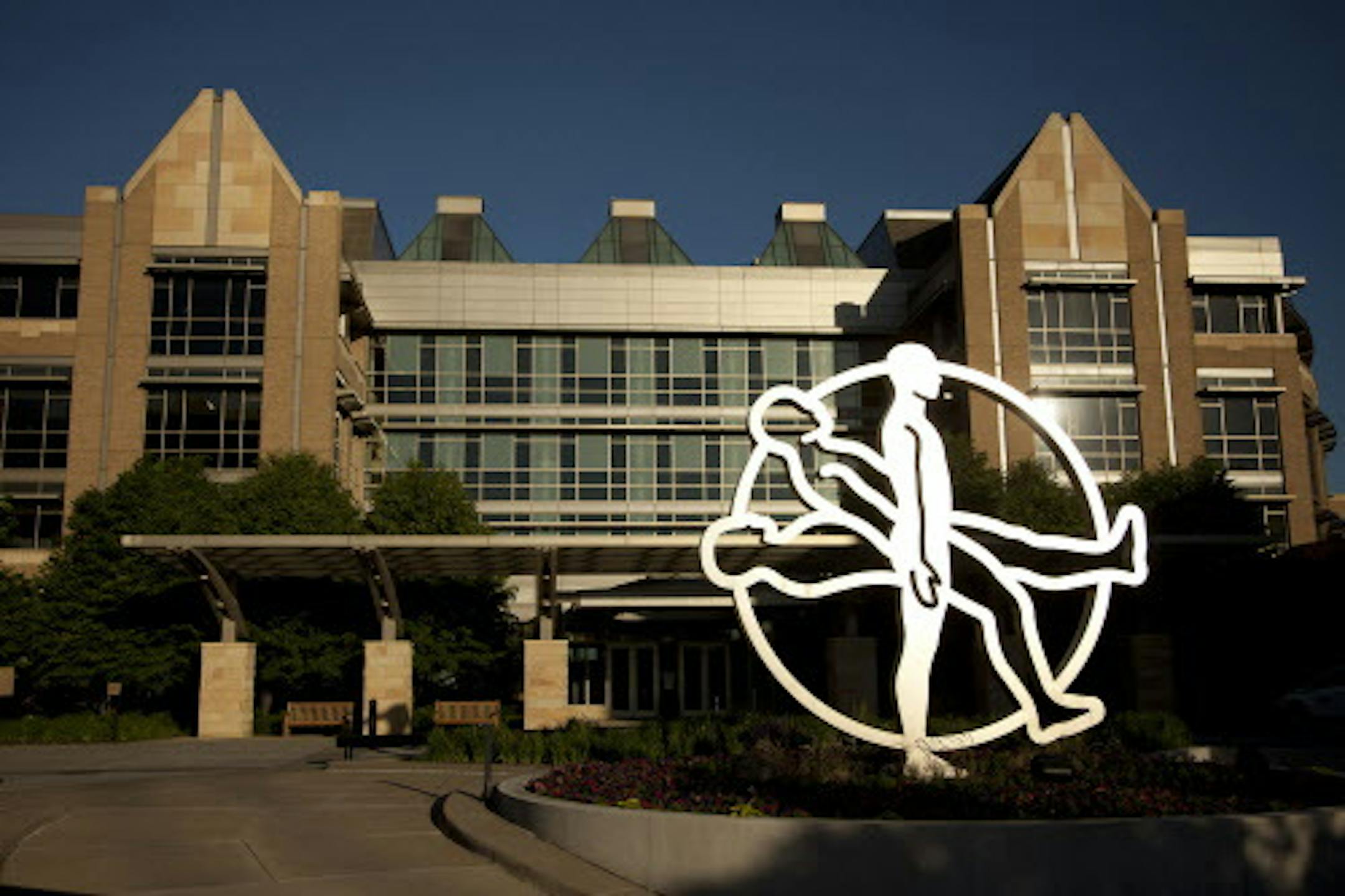
Medtronic's diverse portfolio of products paid off with bigger sales amid demand shifts in the November-to-January period. (Bloomberg/The Minnesota Star Tribune)

With next quarter's revenue growth expected to slow, Medtronic executives spent Tuesday morning emphasizing the depth of the medical device maker's product pipeline for near-term and long-term growth.

"Our pipeline is funded," Chief Executive Omar Ishrak told investors during the company's quarterly earnings conference call. "We're spending R&D money to fund our pipeline, and we will make sure that that happens. As we see overall operational success, the first place we will put our money is into its organic R&D spending because that's the highest return that we can get out of any kind of investment that we make."

Medtronic on Tuesday reported third-quarter results that beat expectations by 5 cents a share and revenue that kept pace with estimates.

To keep the strong results coming, the Minnesota-run company said it's investing aggressively in research-and-development projects like its homegrown Micra transcatheter pacemaker, a tiny device that will have a new version approved around spring 2020 called the Micra AV that could potentially meet the needs of 55 percent of the pacemaker market, up from 16 percent today.

And Medtronic's diabetes division is slated next year to launch its most advanced automated insulin pump, the 780G with Bluetooth connectivity, on the heels of blockbuster growth of the 670G series.

The company plans to announce results for two "landmark" clinical trials next month. One trial is testing the use of transcatheter aortic valves in patients at low risk for complications from aortic stenosis, which would expand the lucrative minimally invasive therapy to a large new market segment. The second trial is examining the use of Medtronic's $1,000 Tyrx antibacterial envelope for cutting heart-device infection rates.

Longer-term, Medtronic officials are excited about ongoing projects to create and test a transcatheter mitral-valve replacement device and a revamped spiral-shaped electrode for a high blood pressure treatment called renal denervation. Mitral valve disease and hypertension are both considered huge untapped device markets.

"As I commented last quarter, we believe we have more opportunities for growth than at any time in our company's history," Ishrak said Tuesday.

For Medtronic's next fiscal quarter, which ends April 26, revenue growth is expected to come in at "plus or minus" 3 percent, Chief Financial Officer Karen Parkhill said. "That's what we're referring to as our low point," Parkhill said.

Analysts with Leerink Partners estimate that the broader med-tech market is growing about 5 percent per year, positioning Medtronic to potentially accelerate revenue growth in coming quarters. Leerink estimated that Medtronic stock trades about 17 times its estimated full-year EPS-to-share price ratio, compared to price-to-earnings ratios of 22 times to 23 times at other large med-tech companies.

"We do think, with solid execution, [Medtronic's] multiple should move to be more in line with the group," Leerink analysts wrote. "Ultimately, we believe [Medtronic] will have to drive more consistent operating margin expansion to drive a premium med-tech multiple."

Announcing quarterly results for the three-month period that ended Jan. 25, Ishrak noted that strength in some divisions offset the performance elsewhere in the company, even as Medtronic overall exceeded Wall Street forecasts for EPS growth.

Medtronic reported net income of $1.27 billion for its fiscal third quarter, compared with a loss in the year-ago period. Adjusted earnings of $1.29 per share beat the consensus estimate of analysts by 5 cents. Its $7.55 billion in revenue was up 2.4 percent from the same period a year ago and in line with estimates.

Though sales of some heart devices were flat or down for the quarter, that performance was offset by strong sales of products to close surgical wounds and treat breathing problems in Medtronic's $2.1 billion minimally invasive therapies group, as well as 14 percent adjusted growth in $1.18 billion in emerging-market sales.

Overall, minimally invasive therapies sales grew 7 percent to $2.12 billion and restorative therapies grew 6 percent to $2.03 billion. Diabetes sales had the highest sales growth, with sales of $610 million, or 7 percent organic growth.

Cardiovascular device sales overall grew just 2 percent to $2.79 billion in the quarter, with heart-rhythm device sales falling 2 percent organically to $1.4 billion, balanced out by sales of vascular devices, which grew 6 percent to $1.39 billion.

Joe Carlson • 612-673-4779

Omar Ishrak, chairman and chief executive, Medtronic PLC
“Our pipeline is funded,” CEO Omar Ishrak said of Medtronic’s R&D. (The Minnesota Star Tribune)
about the writer

about the writer

Joe Carlson

Team leader

Joe Carlson wrote about medical technology in Minnesota for the Star Tribune.

See Moreicon

More from Business

See More
MMR virus vaccine (measles, mumps, rubella) at Logan Square Health Center in Chicago, Ill. on Thursday, May 9, 2019.
Tns - Tns/The Minnesota Star Tribune

The decision means Minnesota parents must obtain more vaccinations than federally recommended for their children to attend K-12 school, or file official exemptions.

FILE - This 2011 electron microscope image provided by the Centers for Disease Control and Prevention shows H3N2 influenza virions. In January 2019, the flu season was shaping up to be one of the shortest and mildest in recent U.S. history. But a surprising second viral wave has just made it the longest, according to the flu statistics released on Friday, April 19, 2019. (Dr. Michael Shaw, Doug Jordan/Centers for Disease Control and Prevention via AP)
card image