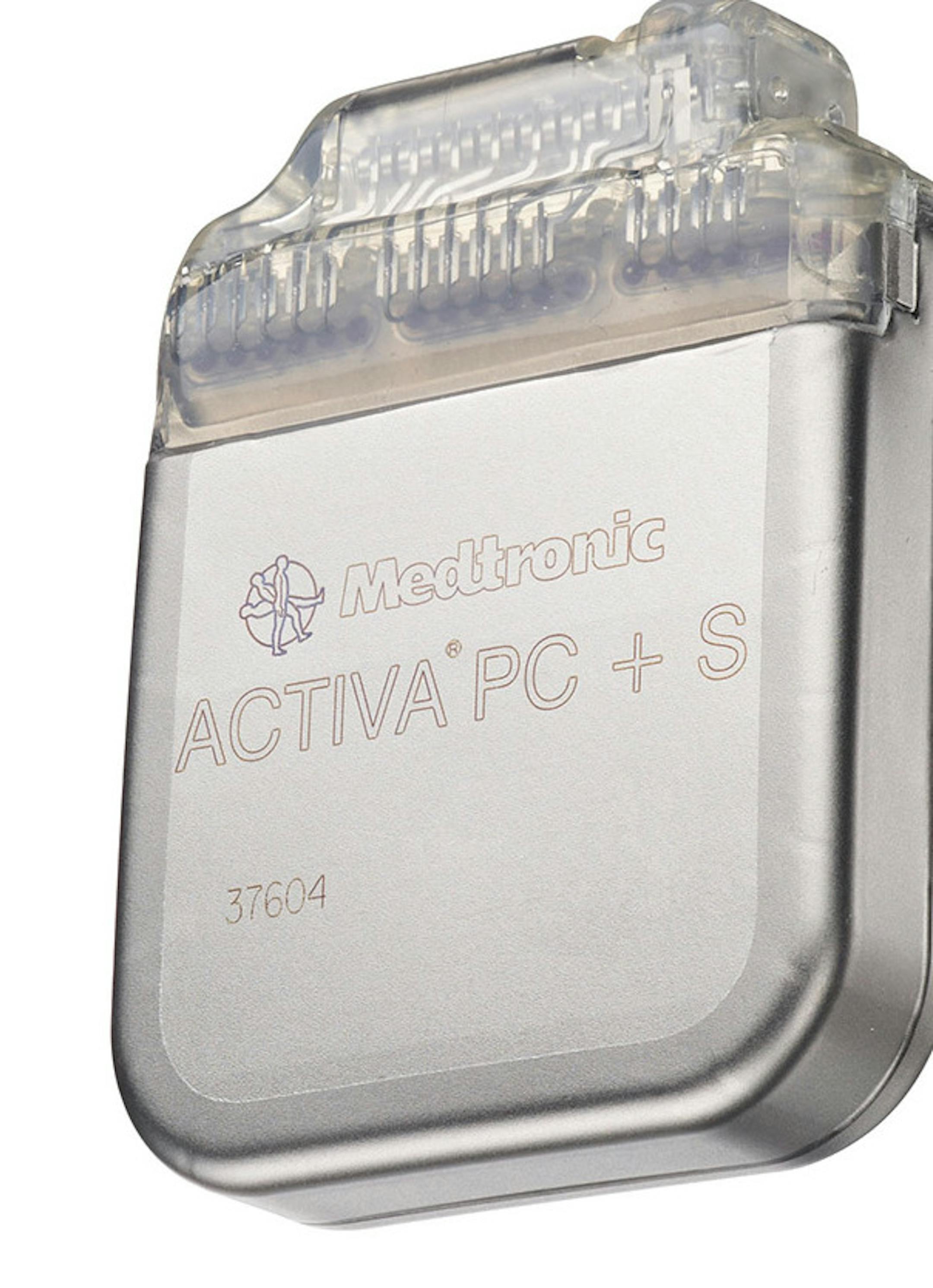
American doctors have begun implanting a new deep-brain stimulation system by Medtronic Inc. that senses and records brain activity at the same time it delivers therapy to treat Parkinson's symptoms, essential tremors and epilepsy, the company announced Thursday.
The Activa PC+S deep-brain stimulation system may allow researchers to actually make the link to brain signals that cause the devastating and debilitating shaking related to Parkinson's — or to a host of other neurological and psychological disorders.
In much the same way that doctors 40 years ago used what they learned about heart rhythms to develop pacemakers that automatically adjust to patient activity, neurologists hope they can eventually develop technology that can automatically adjust therapy to what's happening inside a patient's brain.
"The hope is, in the future, we can understand what brain signals are related to the abnormal movements," said Dr. Helen Bronte-Stewart, a neurologist who is using the Activa PC+S DBS device for research at Stanford University. "Then we won't need to stimulate constantly with one set of parameters, but can automatically adjust therapy. Like a sophisticated thermostat."
The first European implants of the technology took place in Germany in August.
'More and more real'
"It's really now becoming more and more real," said Lothar Krinke, vice president and general manager of the deep-brain stimulation business in Medtronic's neuromodulation division. Medtronic hopes to conduct research at up to 20 centers worldwide.
Deep-brain stimulation (DBS) therapy uses a surgically implanted medical device, similar to a pacemaker, to deliver mild electrical pulses to targeted areas of the brain to control symptoms of movement disorders and other diseases. More than 100,000 patients worldwide have received Medtronic's DBS therapy.
The Activa PC+S system received CE Mark approval for use in the European Union in January. It has not yet been approved by the U.S. Food and Drug Administration for commercial use in the United States, but doctors can now begin implanting the device for research purposes.