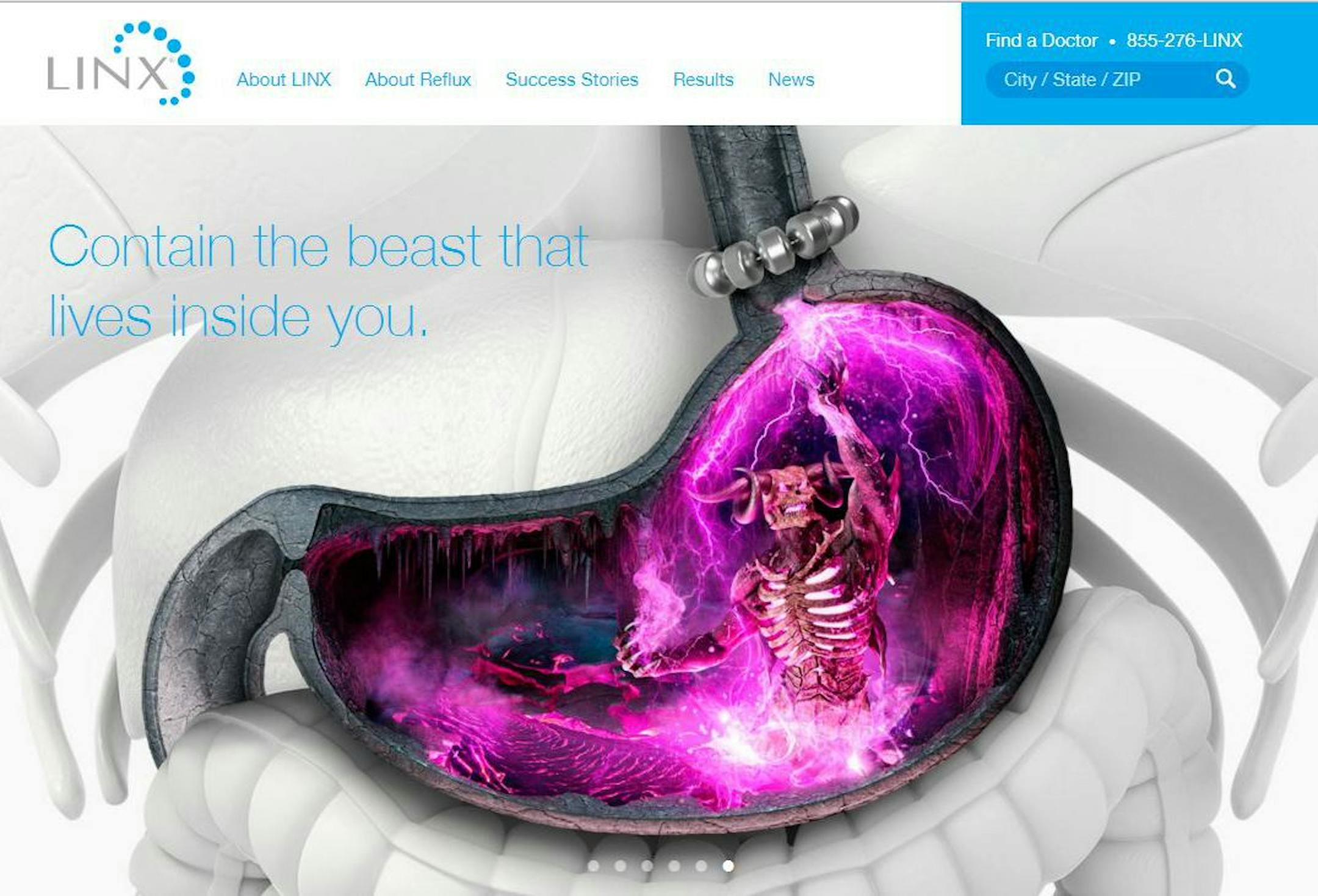
Giant gray stomachs filled with toxic waste and flame-wielding archers have appeared in the skies above Twin Cities highways, courtesy of a medical device maker in Shoreview called Torax Medical.
The billboards are intended to advertise a Torax medical device, the Linx, which treats painful acid reflux by using magnets to clamp down on the lower esophagus when drugs and natural bodily mechanisms can't control stomach acid. Torax hopes the colorful billboards spur people with gastroesophageal reflux disease to visit an educational website, and then prod their doctors (and insurers) about the therapy.
"We'd like patients to be more educated with their disease," Torax Chief Executive Todd Berg said, regarding the five billboards installed above busy Twin Cities highways this month and related online advertising. "No one should be afraid of an educated patient."
The billboards, however, are an unusual step in the medical device industry, which usually markets its products to doctors, not consumers. By putting up signs along the highway, the company joins a debate over whether such ads benefit patients, and whether they should even be allowed.
The nation's largest and most influential physicians group, the American Medical Association, has called for an outright ban on direct-to-consumer ads for prescription drugs and implantable medical devices. If device companies start to advertise alongside the $4.5 billion in ads that drugmakers buy, disagreements about the role of advertising in building demand for health care are likely to grow.
Although such ads can have positive effects, the AMA's governing body reasoned, they are outweighed by the risk of artificially inflating demand for new and expensive treatments that may not be appropriate for every patient with the advertised disease. Only the United States and New Zealand allow direct health care product advertising to patients.
"Today's vote in support of an advertising ban reflects concerns among physicians about the negative impact of commercially-driven promotions, and the role that marketing costs play in fueling escalating drug prices," future AMA Chairwoman Dr. Patrice A. Harris said in a Nov. 17 news release.
AMA officials declined an interview request to flesh out the specifics of the recent policy. It's not yet clear how the 235,000-member trade group for medicine plans to implement the governing body's recommendation.