
Meat industry launches legal assault against new U.S. labeling rules

A U.S. government mandate to list where animals are born, raised and slaughtered violates the First Amendment, an industry lawyer told federal appeals court judges.

January 13, 2014 at 3:27PM
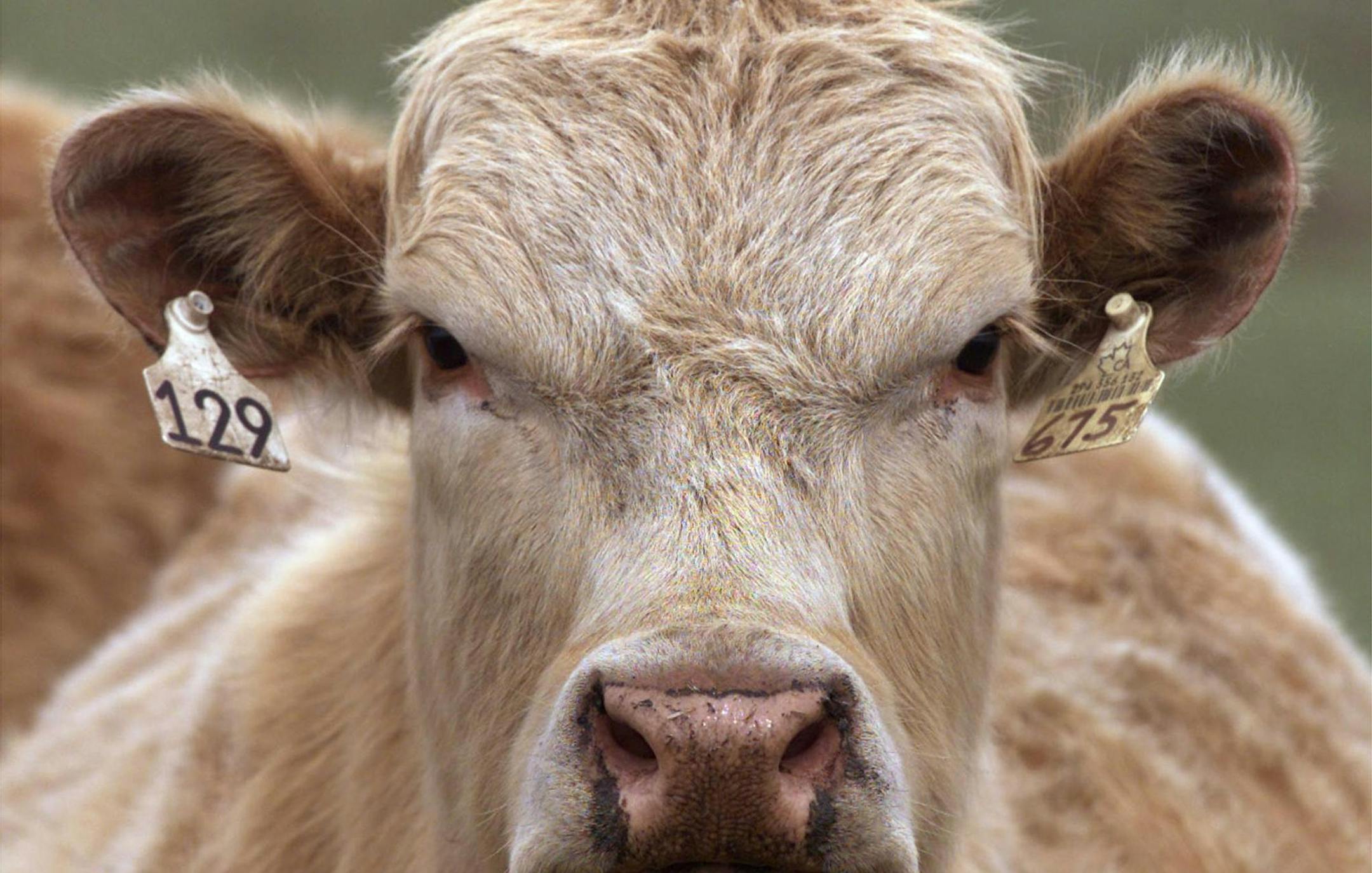
A cow is shown on a farmer's field in High River, Canada, Thursday, May 22, 2003. Seven herds of cattle are now under quarantine in Canada, investigators said Thursday as officials broadened their search for the origins of North America's first case of mad cow disease in a decade. (AP Photo/CP, Adrian Wyld)
This cow scowled in a farmer’s field in High River, Alberta. (The Minnesota Star Tribune)

WASHINGTON – The meat industry launched a legal assault Thursday against the nation's food labeling laws that, if successful, could significantly limit consumers' ability to learn the origins of what they eat.

The move came in a federal appeals court hearing where trade associations representing meat companies such as Minnesota-based Cargill Inc. and Hormel Foods Corp. attempted to kill new government labeling standards.

Their lawyer said the labeling rules violate companies' free speech by forcing them to reveal information that will not protect the public, but will cause "irreparable" financial harm to the largest segment of U.S. agriculture, which generates hundreds of billions of dollars a year in sales.

At issue are newly implemented U.S. Department of Agriculture rules that force meat producers and processors to list the countries where animals used in their products are born, raised and slaughtered.

Industry attorney Cate Stetson told a three-judge panel that the USDA has not demonstrated that meat producers, processors and retailers have deceived consumers by not offering specific information about animals' countries of origin.

A government lawyer countered that new labeling rules are not about "misleading information, but incomplete information."

"Consumers have expressed an interest in knowing where their meat is coming from," said Department of Justice attorney Daniel Tenny.

The high-profile case is a vital test of labeling laws and regulations. It came after a lower court judge refused to delay implementation of the new rules.
The meat debate boils down to the availability of information. The government says people have a right to know where the meat they eat comes from. The meat industry says that "vague consumer interest" alone does not justify what it considers an infringement of its First Amendment protections.

The appeals court panel will not render a decision for weeks. But the judges ­questioned Stetson extensively about the meat industry's take on consumer rights, as well as the need to share information with federal regulators.

Stetson told the judges that absent any specific, substantial evidence of health and safety problems or misleading advertising, the mere desire of Americans to buy American products was not enough to make the labeling rules constitutional.

Chief Judge Merrick Garland said that such an interpretation could make all reporting requirements unconstitutional. He also pointed to the desire of the U.S. House and Senate in passing food labeling laws to let Americans purchase American products for health and patriotic reasons.

"What if there was an outbreak of mad cow disease in Canada?" Garland asked Stetson. "How would you know where the meat was from … without the labels?"

Health and safety issues could be solved by "other mechanisms," such as the USDA's Food Safety and Inspection Service, Stetson answered.

The meat industry has sliced and diced disclosure — known as country of origin labeling, or COOL — in several ways. Companies like Cargill and Hormel have argued that costs of compliance are an unjustified governmental burden that could drive up prices for U.S. consumers and lead to retaliatory tariffs by foreign countries.

Presently, meat companies use catchall labels that do not specify where animals were born, raised and slaughtered. They co-mingle animals from several countries in processing meat and label them with all the countries involved with general designations such as "Product of U.S., Canada."

Country-of-origin labeling has angered Canada, Mexico and other foreign nations that supply animals to the U.S. food chain. They fear discrimination by U.S. consumers wary of buying foreign products.

Canada and Mexico even protested U.S. catchall labeling to the World Trade Organization. The new, more restrictive rules that were at issue in court on Thursday grew out of that protest.

The WTO is now considering a second protest by Canada and Mexico based on the born, raised and slaughtered mandate. Officials expect a decision in the next few months.

Jim Spencer • 202-383-6123


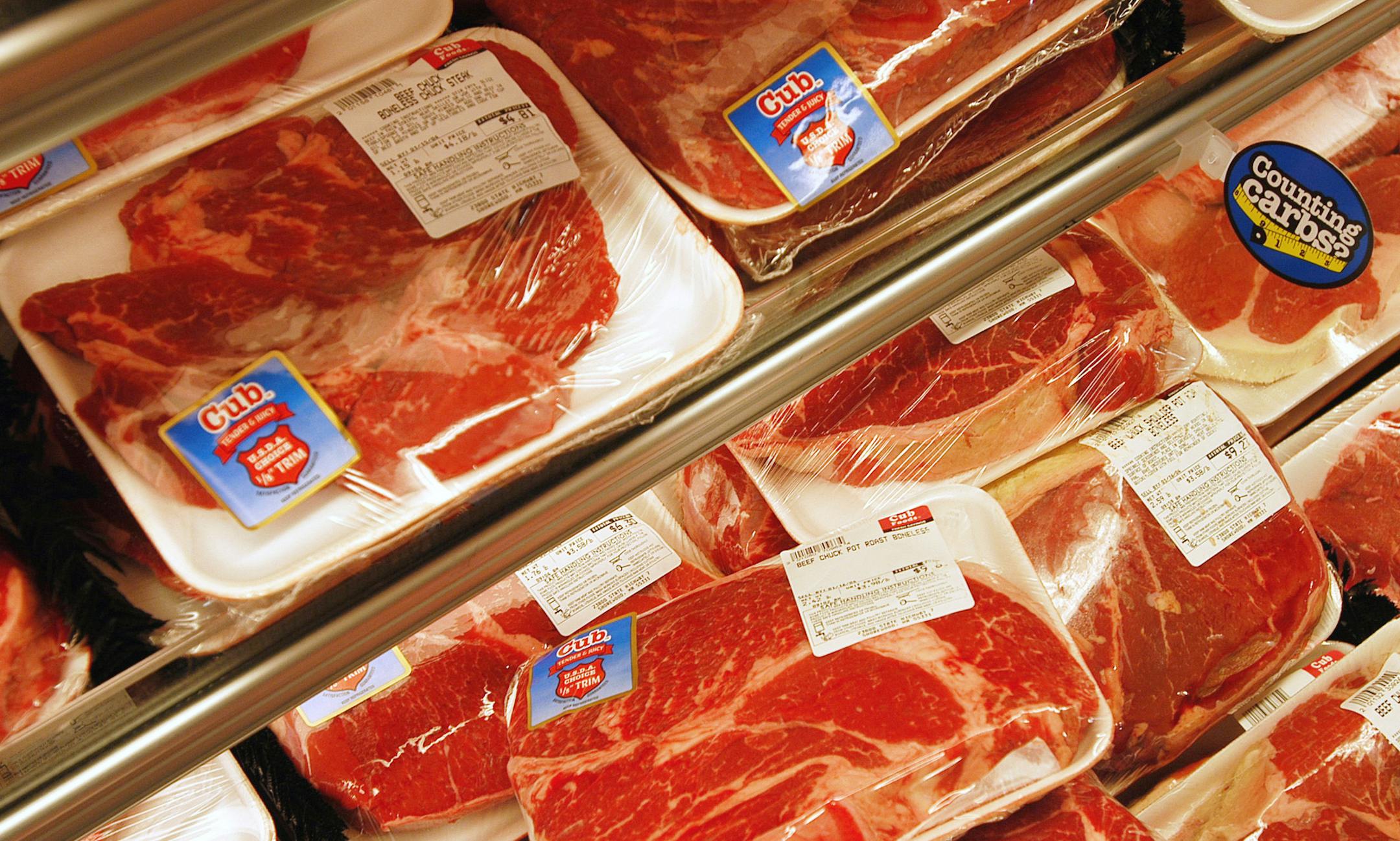
If federal country-of-origin rules survive a court challenge, shoppers will be able to determine where a cut of beef was produced. Lawyers for the meat industry are fighting to kill the requirement.
If federal country-of-origin rules survive a court challenge, shoppers will be able to determine where a cut of beef was produced. Lawyers for the meat industry are fighting to kill the requirement. (The Minnesota Star Tribune)
about the writer

about the writer

Jim Spencer

Washington Correspondent

Washington correspondent Jim Spencer examines the impact of federal politics and policy on Minnesota businesses, especially the medical technology, food distribution, farming, manufacturing, retail and health insurance industries.  

See Moreicon

More from Business

See More
card image
Aaron Nesheim/Sahan Journal

Nonprofit leaders say they have had to lay off staff and take other measures to shore up finances as the Trump administration’s attacks on diversity, equity and inclusion efforts have chilled corporate giving and led to cuts in federal and state grants.

card image
card image
