

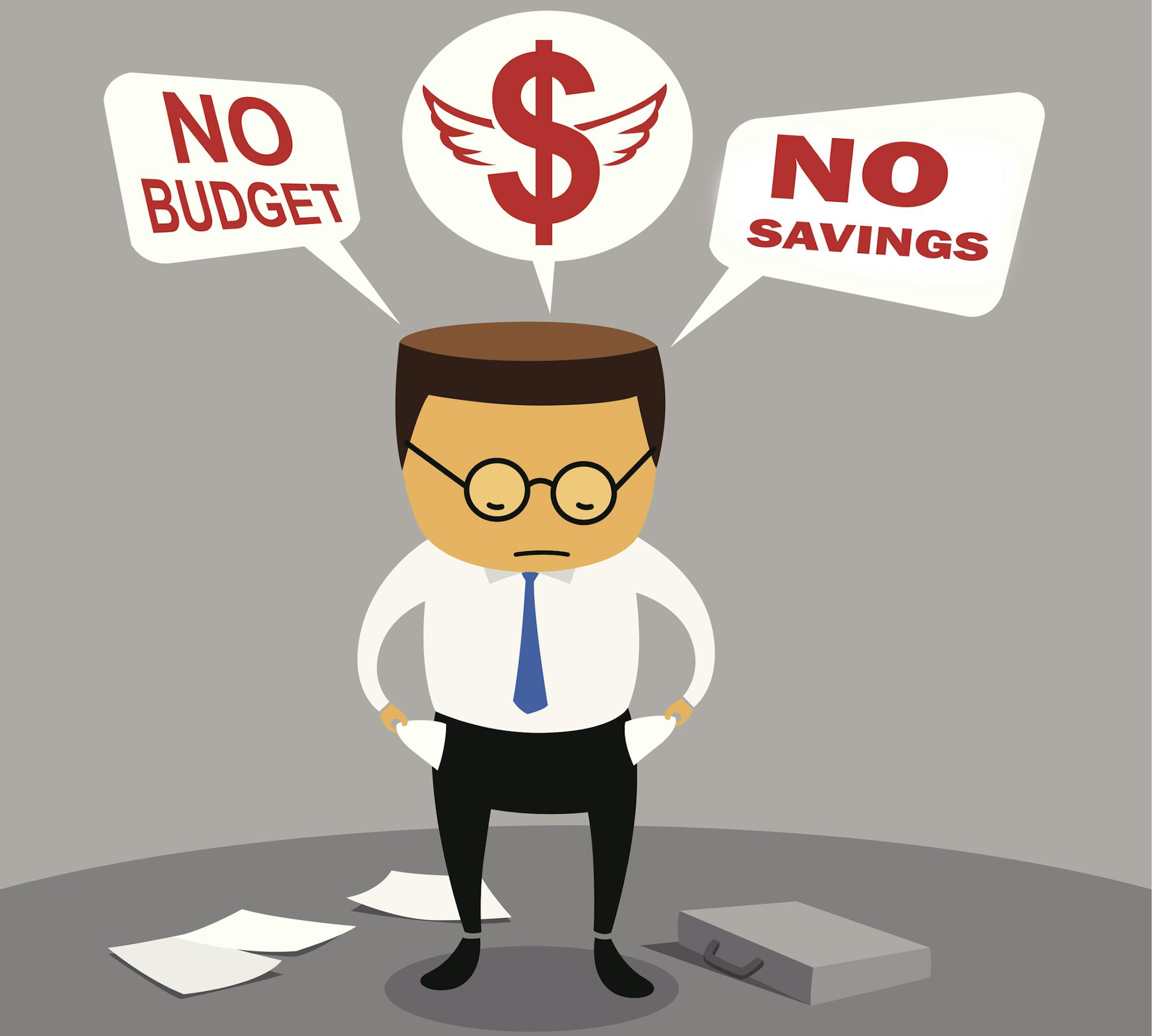
What's the worst barrier to a comfortable retirement? You, me, us.
We're spendaholics who live powerless to rein in our spending. Few of us are taught to save as kids, so it never becomes an innate habit, said Nathan Dungan, founder of ShareSaveSpend, a Minneapolis-based program that teaches families about money strategies.
"We have enormous pressures to spend rather than save," Dungan said. "Spending will always be sexier than saving."
We start our adult work lives in a pattern of paying the monthly bills first — rent or mortgage, food, utilities and transportation — and saying anything left over we'll squirrel away in savings. But something new or unexpected always comes along to squash the savings bug in its pupal stage — the hot water heater leaks, the transmission goes out, Ethan needs braces.
Then five or 10 years go by and savings are meager or nonexistent. Nearly all Americans must have laughed or heaved a woeful sigh at recent reports that even $1 million in savings at retirement isn't going to be enough. Most of us won't even have 5 percent of that amount.
That's why saving for retirement or a rainy day ought to be mandatory or at least automatic. Some of you are thinking that we already have that — Social Security. True enough. Each of us and our employers pay 6.2 percent of salaries up to $116,000. The average monthly check in 2013 was $1,296, according to the Social Security Administration.
But some employers are taking things one step further. Several years ago they were given the OK by the government to automatically enroll employees in the 401(k), usually deducting 3 percent from their paycheck. One big caveat? Employees can opt out at any time.
Jean Chatzky, a personal finance expert and the founder of Jean Chatzky's Money School, thinks the auto-enrollment is a good start for a 401(k). "But there should be auto-escalating so people are contributing more than 3 percent of their income," she said. Experts recommend saving between 15 and 20 percent.


