Superheroes superseded princesses as this year's top Halloween costume, retailers announced Thursday. And so far "Captain America: Civil War" has the second-best box office in 2016. Indeed everybody, it seems, likes a hero.
Not all heroes, however, wear capes. In fact some just barely have the clothes on their backs, like the mother of five in the besieged Syrian city of Madaya that ABC News recently reported on.
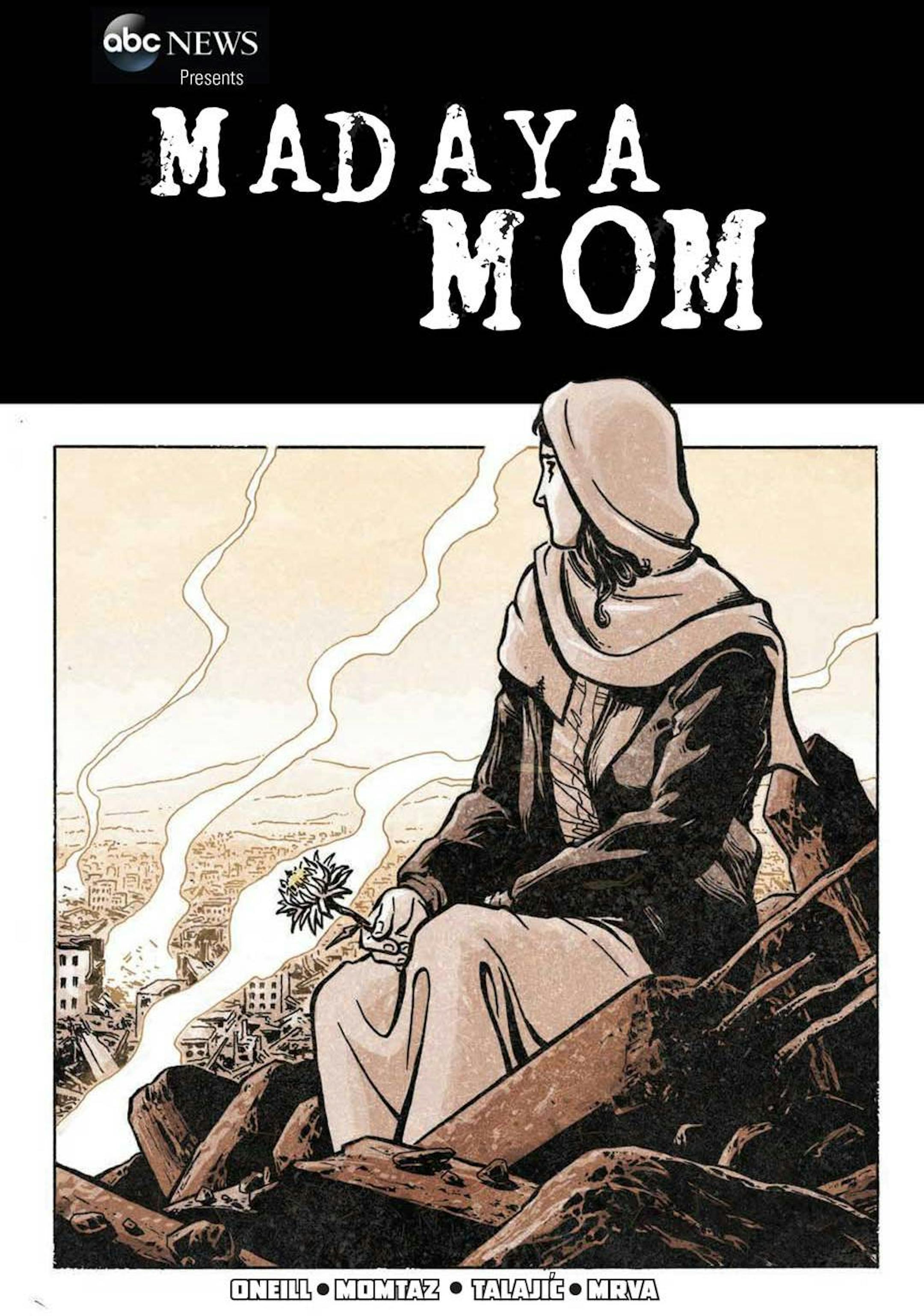
But because cameras couldn't get into the war-torn city, her story was depicted differently in "Madaya Mom," a new online comic book from Marvel. Yes, the same publisher behind Spider Man, Captain America, and other iconic comic-book good guys.
The compelling collaboration between corporate cousins ABC and Marvel (both owned by Disney) began with a series of searing text messages Madaya Mom sent to ABC News producer Rym Momtaz. The mother, whose anonymity is necessary to protect her and her family from Assad regime forces, detailed a desperate struggle for food, heat, medicine and that rarest of wartime commodities — hope.
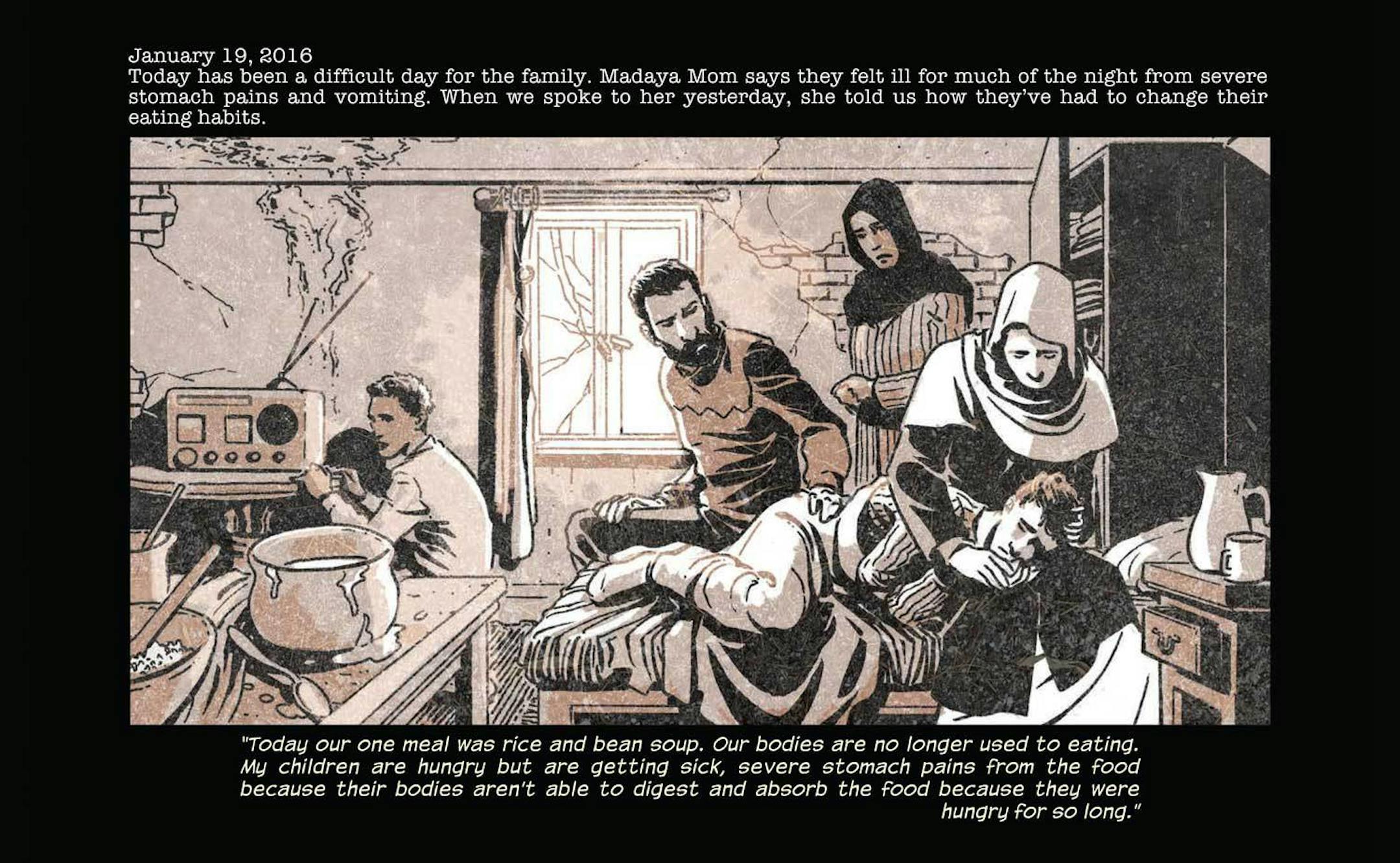
"Our bodies are no longer used to eating," Madaya Mom writes. "My children are hungry but getting sick, severe stomach pains because their bodies aren't able to digest and absorb the food because they were so hungry for so long." Other panels detail death at the hands of the Syrian government, as well as the major powers' paralysis. "I feel truly depressed and that the world has abandoned us because we are weak," she wrote.
"What she was saying was incredibly compelling, but no one could get into Madaya," said Dan Silver, executive producer for ABC News Digital. So Silver approached Marvel Editor-in-Chief Axel Alonso, who instantly agreed, and then chose an illustrator familiar with warfare — Dalibor Talajic, who lived in Yugoslavia as the Balkans broke up violently in the 1990s.
Dalibor's "Eastern European" style is "representational without being photorealistic," Alonso said. The images' impact is amplified by Madaya mom's texts giving context to the ceaseless and senseless Syrian war, as well as some sparse narration, including the U.N. saying starvation is being used as a "weapon of war."
"It started with the fact that we would be bringing 'our camera' into a war zone where cameras weren't allowed," said Alonso, a former journalist. "If we got our details right and our research right, which we did, we looked at it as a unique opportunity to show what couldn't be shown. And in some small way the very fact that you can't get cameras in this area makes these images all the more potent."