

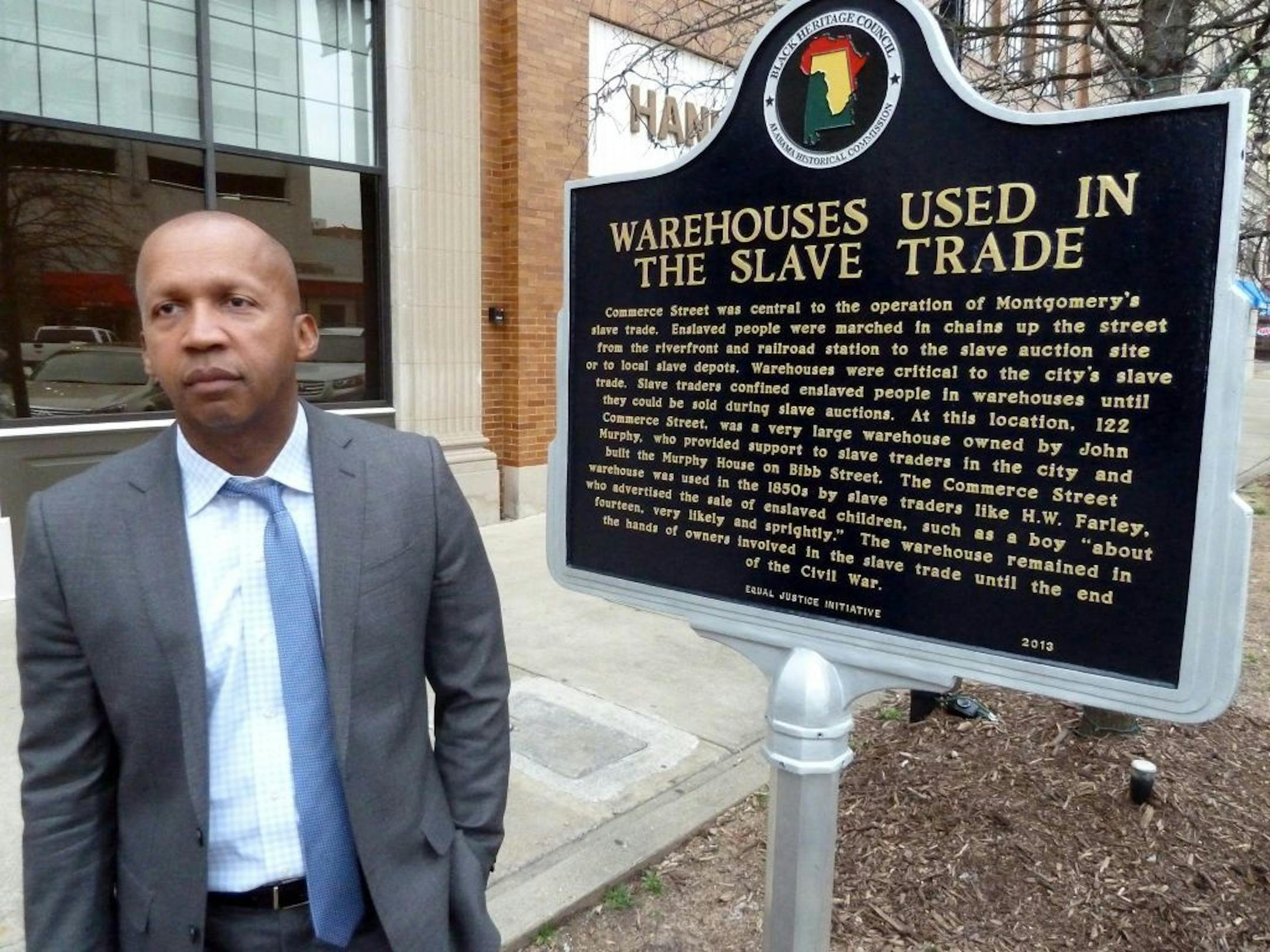
Free tickets to social justice attorney Bryan Stevenson's Mia talk went in 10 minutes, so it's probably no surprise that he gave the greatest speech I've ever heard.
The founder of the Equal Justice Initiative, a force behind the National Lynching Memorial and the Legacy Museum in Montgomery, Ala., Stevenson talked about America healing its problem with racism. The much-sought-after Stevenson appears to have been attracted by the opening of "Art and Healing: In the Moment" at Mia, as the Minneapolis Institute of Art is now called. The exhibit features art inspired by the police shooting of Philando Castile. Local artists gave their pieces to his mother, Valerie Castile, who proposed the exhibit that will be open through July 29.
Stevenson's speech recalled passages from his bestselling memoir, "Just Mercy." "I don't think we're free in America," he told the Mia crowd. "I think we are burdened by a history of racial inequality that has created a kind of pollution. It's in the air everywhere. It doesn't matter whether you live in Minnesota or Mississippi. It has corrupted the environment and it keeps us from being free."
I attended high school in Montgomery and know people, black and white, who are appalled by a lynching monument. Still, I support the project honoring the lives of more than 4,000 murdered. The Rosa Parks and Freedom Riders museums are nice, but Alabama/America needs a striking reminder, a counterbalance to the glorified Deep South's "good old days."
For months I've been trying to interview Stevenson, so when I heard he was coming to Minneapolis, I started working through friends, phone calls and e-mails to get an 8-minute interview. I got 3 minutes, during which my camera mike failed. There's video, but you'll probably have to do some reading.
Q: Whose brilliant yet disturbing idea was it to hang the markers at the lynching memorial?
A: It's something that our team wanted to do. I just don't think people appreciate the trauma and terror that occurred, created by the system, until they begin to understand the dynamics of it. People who engaged in that horrific terrorism could have buried bodies. But that really wouldn't have accomplished the purpose. They weren't just killing these individuals, they were trying to terrorize the entire African-American community. So we wanted to replicate the geography of that. When you come to our memorial we thought it was important to have that relationship.
Q: Do you think virulent racism could be a mental illness?


