

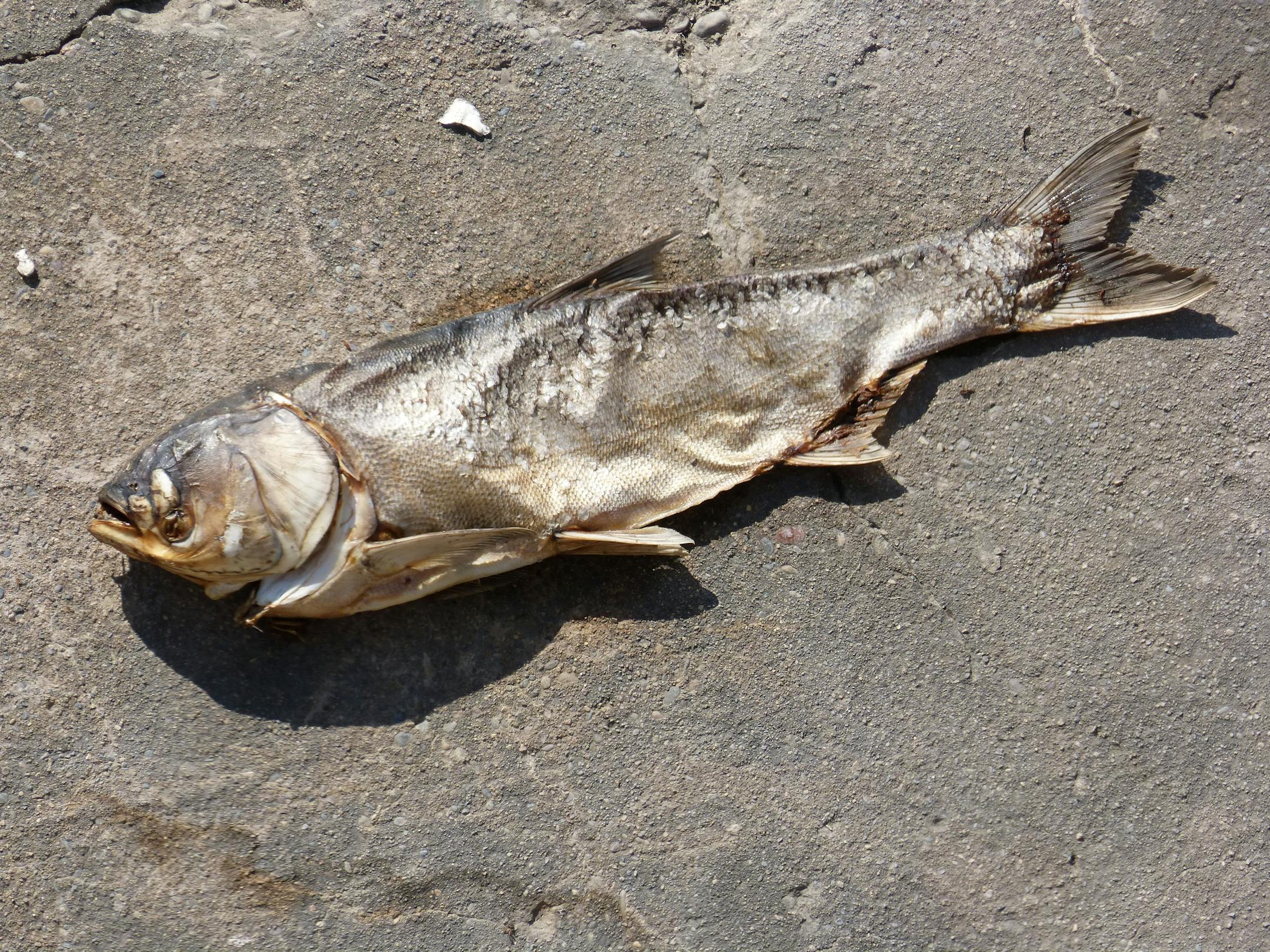
This was no ordinary dead fish found perched atop a concrete dam abutment on the Mississippi River near Winona last month.
The 30-inch carcass was that of a voracious Asian carp, an invasive species threatening Minnesota's waterways. More alarmingly, it was a type of Asian carp known for its spectacular leaping ability. This piscine athleticism may help the silver carp hurdle barriers on its journey up the river — the carcass on the dam abutment underscores this — but it also creates a serious hazard to boaters, who may be injured when motor-startled fish jump out of the water.
While other types of Asian carp have been found further upstream on the Mississippi and the St. Croix rivers, this was the farthest north that the silver carp has been detected on the nation's marquee river. Its discovery is one of the most alarming reminders to date that the clock is ticking on desperately-needed congressional action to halt the Asian carp's steady march north.
Minnesota's two senators and four of its U.S. House members (Keith Ellison, Erik Paulsen, Tim Walz and Rick Nolan) have been pressing hard on legislation that offers the surest way to stop the carp: closing the Upper St. Anthony lock near the Stone Arch Bridge in downtown Minneapolis. While significant progress has been made in the U.S. Senate thanks to some smart legislative maneuvering by Sen. Amy Klobuchar, the silver carp's discovery last month signals that Minnesota's entire House delegation needs to join in a fall push to get the bipartisan measure passed in that chamber before it's too late.
At stake are the beloved streams and lakes of the Mississippi's vast Minnesota watershed, including the sprawling Lake Mille Lacs, and the state's vibrant $11 billion a year tourism industry. Infestations of the leaping silver carp have decimated water recreation on rivers south of Minnesota. The Asian carp's endless appetite also leaves little for other fish to feed on, potentially crowding out walleye and other sport fish that bring anglers to the state.
It's hard to imagine a more pro-business piece of legislation than a bill that would protect the nearly 240,000 jobs in the state dependent on tourism, particularly the many small-business owners who make their living providing accommodations and other services for anglers. Federal action is needed because the U.S. Army Corps of Engineers oversees the Mississippi locks system.
So far, the destructive carp have swum upstream faster than policymakers from other states have moved to stop them. That's why those boating on the Illinois River encounter sad, surreal scenes like this:
"Barges like the ones we see along the Mississippi's banks are covered with decomposing carp. Marina docks are carp covered, too. So boaters have left. The recreational boating businesses have vanished,'' wrote Paul Olson of St. Paul in a recent Star Tribune commentary about a trip on the Illinois River.


