

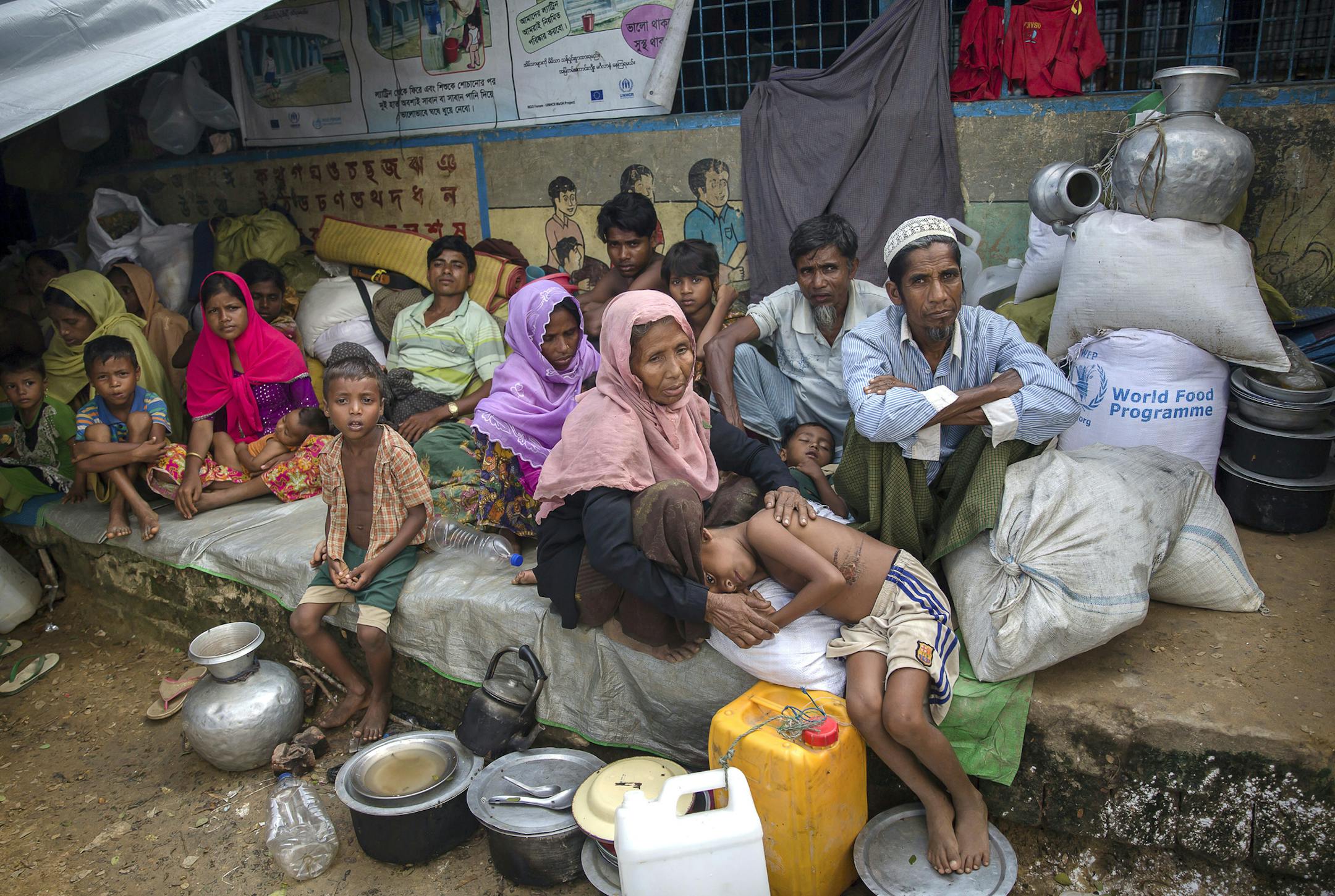
We see the images in the media: people sometimes halfway across the world in desperate situations, fleeing their homes because of war, famine or natural disasters. Not since World War II has there been such a large number of people displaced from their homes, stranded in camps or placed in countries where they don't know the language or culture and find themselves facing a whole new set of challenges.
The desire to help with the global refugee crisis is palpable, but knowing how to help can be daunting. Displaced people are often far away, and many different organizations are aimed at providing help. Becoming informed about the issue, and the many arms at work to help refugees, is the first step.
The United Nations High Commissioner for Refugees clearly outlines the staggering numbers of the current world refugee crisis: 65.6 million displaced people worldwide, of whom 22.5 million are refugees, 10 million are "stateless" and 189,300 are resettled.
The state of Minnesota also provides information about refugee populations in the Twin Cities and in places like St. Cloud and Rochester. You can connect with resettlement agencies (see sidebar) that provide support to refugees remaking their lives here.
"We are at the forefront of what's happening, just as a source of information," said Jane Graupman, executive director of the International Institute of Minnesota (IIMN). "We are willing to educate about what the facts are."
Graupman adds that far from being a burden, refugees coming into the United States end up contributing to the economy. According to the New York Times, a draft report from the Department of Health and Human Services this year found that refugees brought in $63 billion more in government revenues in a decade than they cost. "Immigrants have always been a part of our economic engine here," Graupman said.
Volunteering
Another option is to interact with refugee communities themselves. "One challenge with dealing with the refugee crisis is that it is so vast," said Michele Garnett McKenzie, advocacy director for Minneapolis-based Advocates for Human Rights. "No amount of philanthropy can solve it, so it makes it hard to think you should chip in." Garnett McKenzie suggests volunteering as a first step. "Through volunteering you are getting to know refugees," she said. "You get to know why you are giving."
You might volunteer to mentor a newly arrived family, or help with driving to medical appointments. IIMN volunteers sometimes make lunch for young immigrant students. It's a chance for new Americans to get to know local folks, Graupman said. "People in the [refugee] community are really scared. [Anti-refugee rhetoric] really scares people, so we need to have a community that is trying to reach out and reassure people."

