

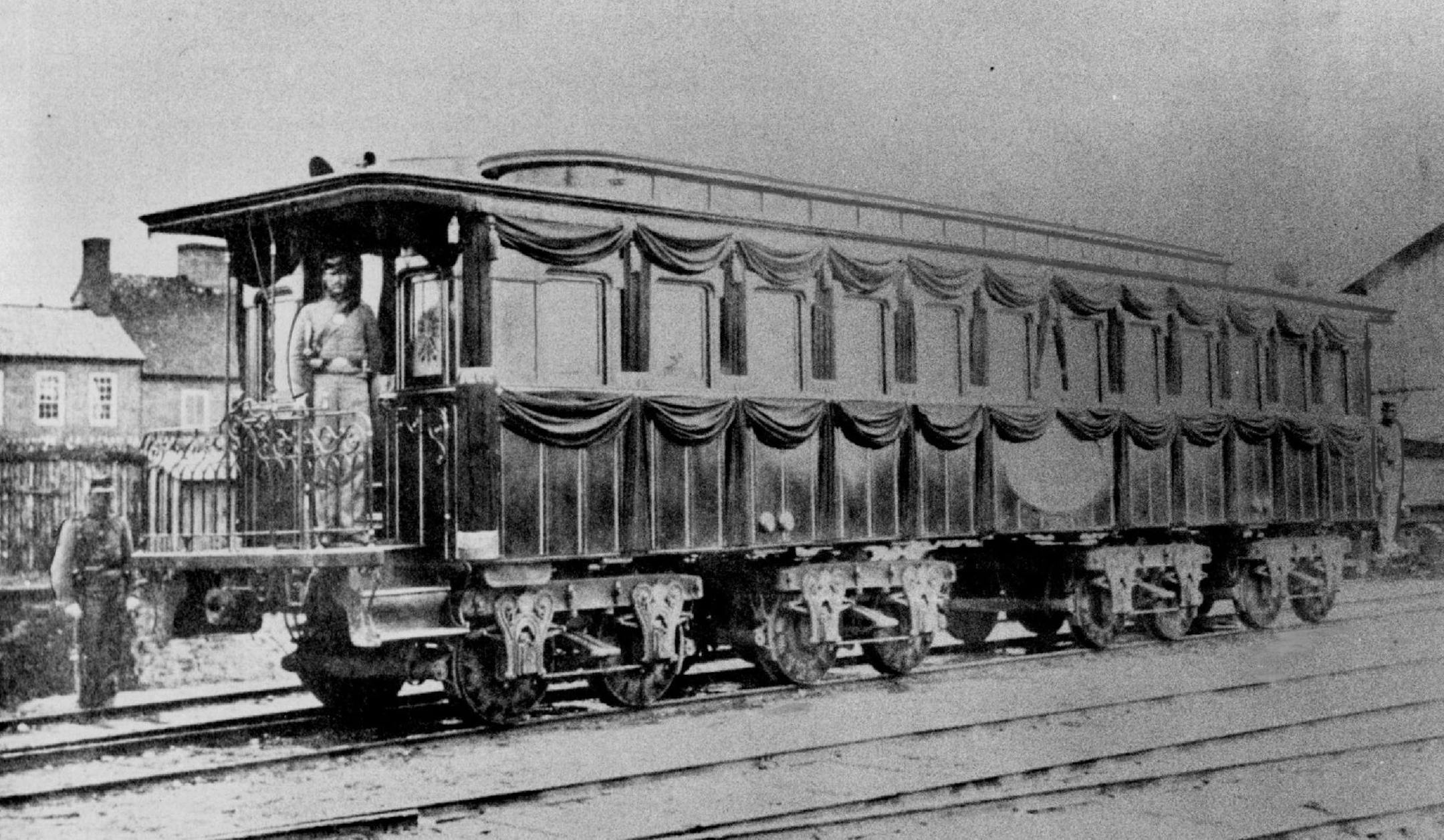
It was just three-quarters of a mile from the clanging bell atop of the Columbia Heights fire hall to the wind-whipped grass fire roaring to its south. But by the time the village's fledging fire department could respond to the alarm, that seven-block distance proved too great to save a sacred relic of U.S. history.
That grass fire on March 18, 1911, not only consumed 10 blocks of early Columbia Heights, it razed the funeral train car that had carried slain President Abraham Lincoln's body home from Washington, D.C., to Illinois. More than 7 million people in 180 cities and seven states had solemnly watched the train chug halfway across the country in 1865.
So what was the funeral car doing in Minnesota 46 years later?
First, some background on what historians describe as the Air Force One of its era. The special car, christened the "United States," was built in Alexandria, Va., in 1863 and 1864 at the U.S. Military Car Shops during the Civil War.
It was designed with 16 wheels to smooth out the ride for Lincoln and his advisers. Etched-glass windows, fancy upholstered interior walls and a painted bald eagle national crest adorned the car, which had meeting rooms and parlors for relaxing.
One problem. Lincoln never climbed aboard when he was alive. He might have found it too ostentatious, especially in wartime, according to Jack El-Hai, one of Minnesota's leading history writers who has researched the ill-fated train car.
Newspapers published the funeral train's scheduled stops in the days leading up to Lincoln's May 4, 1865, funeral in Springfield, Ill. Puffing black smoke, the train would stop in town after town along its 1,600-mile route. His coffin would be placed behind an elaborate horse-drawn hearse and brought to public buildings for viewing.
Lincoln didn't ride alone. The body of his son, Willie, was exhumed from a cemetery in Washington so he could be buried with his father in Springfield. Willie had died of typhoid fever at 11 during his father's first term.


