

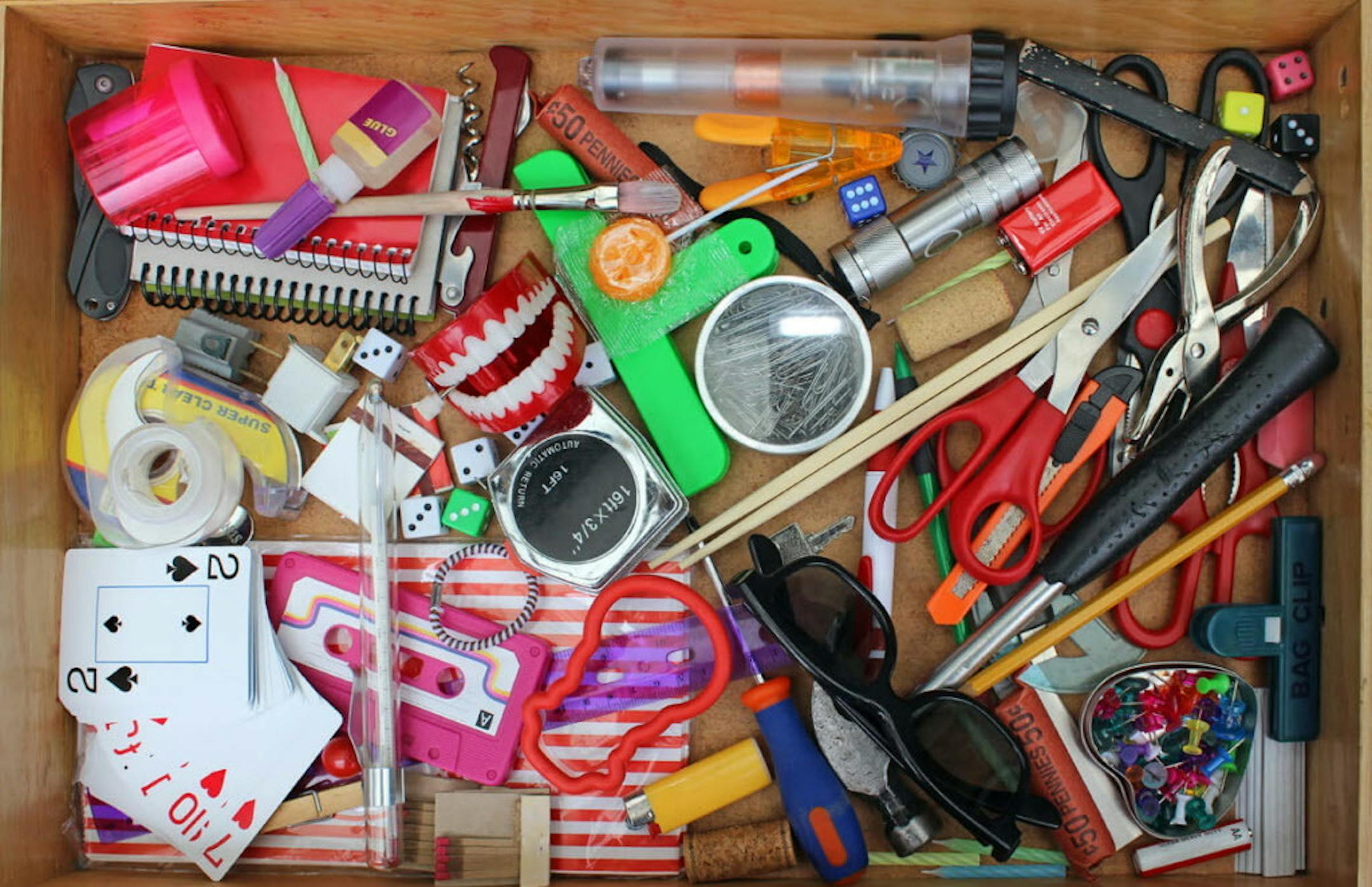
They call it Swedish death cleaning: You approach your possessions as if you were charged with emptying out your house after you’ve died. No one wants to dig out a hoarder’s mess. I imagine someone announcing to my survivors: “The bad news is, he’s dead. The very bad news is, he’s not Swedish dead.”
I had some time to clean, because my wife was away, and I thought it would be great if she came home to a place that said “dead Swede.” She’d walk in and say, “What have you done?” “Well, I cleaned.”
“Where’s the furniture?”
“If we were dead,” I’d explain, “we wouldn’t need any furniture. And you have to admit that it really opens up the room.”
Then she would explain that I had taken the assignment to the extreme. You’re not supposed to think in terms of the living room sofa; you’re supposed to focus on things like shirts and books.
Shirts first, then. Do I need this orange shirt? Yes, it’s a Halloween staple. This white one has an unfashionable collar, but it might be good if I was painting something. I’d forgotten about this one, haven’t worn it in years. Must wear it tomorrow.
One hour later, the reject pile consisted of one pair of socks whose elastic had lost its purpose. In Swedish corpse terms, I had eliminated a pinkie finger.
On to the books. This would be easy. Years ago, facing bulging book shelves, I realized something sad: I don’t know what most of them are about. Oh, I can remember the general gist, but sometimes my synopsis would be like an unprepared high school student’s term paper:


