

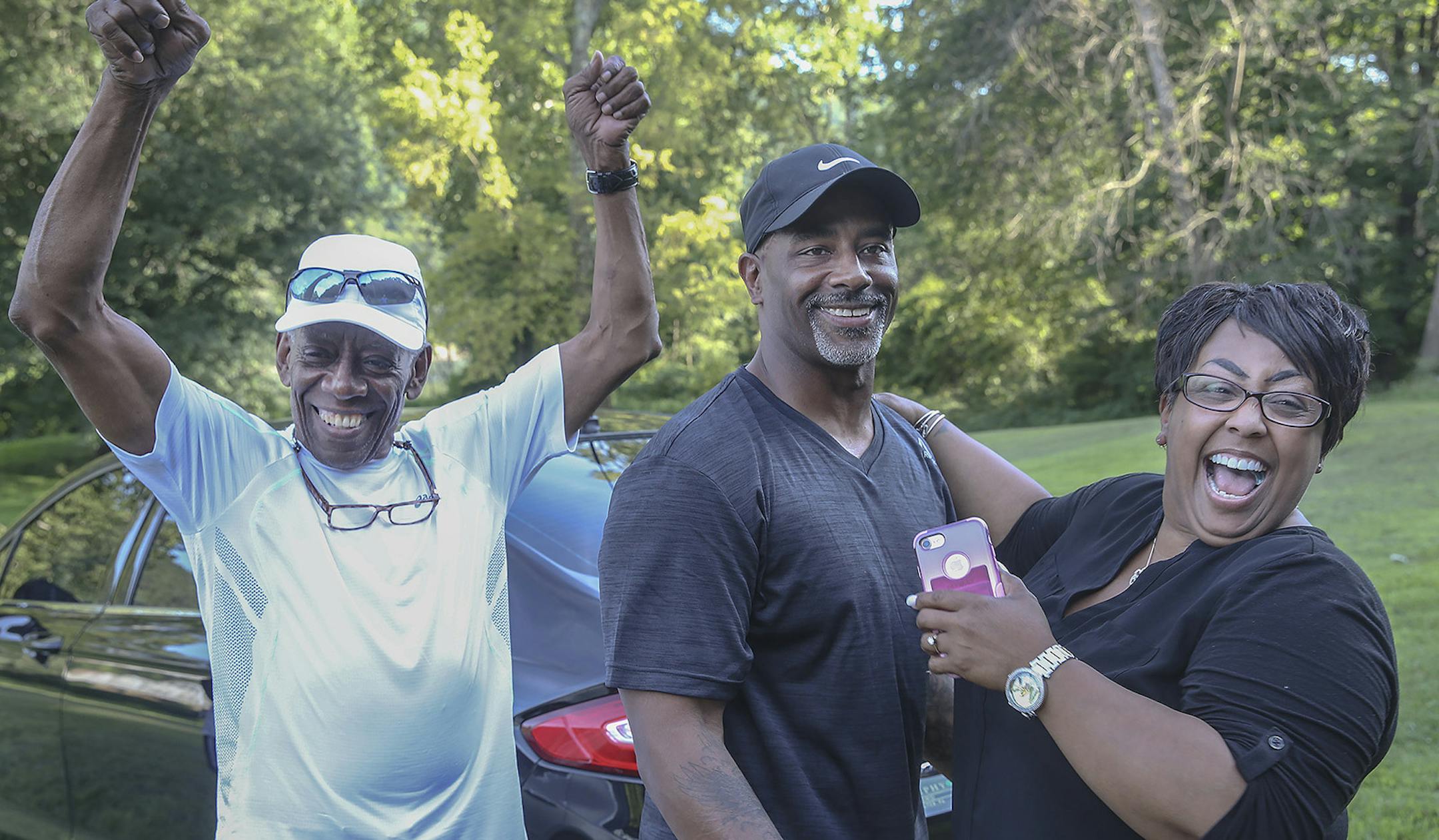
WILMINGTON, Del. – Chester Hollman III sat at a picnic table in a park down the street from the house where he grew up.
He took in the tennis and basketball courts and the overgrown field where, as a kid decades earlier, he'd spent days and nights playing ball. Now 49, he watched a shorts-clad mailman walk from door to door Tuesday afternoon and wondered whether any of the neighbors he once knew still live in those brick and stone houses.
It had been 28 years since Hollman could even sit in a park, since his arrest, conviction, and a life prison term for a Philadelphia murder he always swore he didn't commit. And barely one day since a judge finally took his side, accepted prosecutors' concession he was "likely innocent," and ordered him freed.
Through the decades behind bars, Hollman had thought about what it would be like if he were ever released: How would he feel? Where would he go?
Now given the chance, he struggled for answers.
"I feel like I'm crushed inside," he said. "I don't feel like I'm really me. It took every ounce of strength to make it to this point."
The Hollman case is the latest example of old murder prosecutions being examined by Philadelphia District Attorney Larry Krasner and his Conviction Integrity Unit - especially prosecutions from roughly the mid-1980s to the mid-1990s - at a time when the city was battling a high rate of homicides. In his case, the unit concluded that prosecutors and police had hidden evidence that pointed to more viable suspects.
These reviews come amid a national reckoning of sorts for the criminal justice system. It was unleashed by DNA testing advances that have helped prove guilt and innocence but also fueled by a growing recognition that eyewitness identification is fallible; that suspects sometimes give false confessions; and that some cases are plagued by outright ignorance, incompetence, and even corruption by police and prosecutors.


