SEOUL – An executive at Samsung, asked recently what he thought of LG, his company's domestic archrival, said with a wry smile that customers for electronic goods will always want to have a second, third or fourth choice, but that his competitor does not have the engineers, the technology, the budget or the leadership to be No. 1 in most types of gadgets.
There was a time when LG was the local champion. In 1959 Lucky Goldstar, as it was then called, produced South Korea's first radio and, soon after, its first electric fan and telephone. By 1970, it was selling the country's first refrigerators, televisions and air conditioners.
Yet now it beats Samsung in selling only one type of appliance, washing machines, and is struggling to recover the ground it has lost.
Samsung has emerged in recent years as one of the world's dominant makers of microchips and smartphones. Last year, its electronics businesses, including display screens, had nearly four times as much revenue, and nearly 15 times as much operating profit, as LG's equivalent divisions.
LG was once big in semiconductors, but was arm-twisted by the South Korean government into exiting the business as the country's industries were restructuring after the Asian financial crisis of 1997-98. It was once far ahead in selling mobile handsets, too.
Kim Dae-won, author of a study of the two firms' strategies, explains that Samsung sealed its lead when it decided in 2009 to introduce a range of premium-priced smartphones in direct competition with Apple's iPhone. LG's initial reaction was to update its earlier hit, the more basic Chocolate phone. As a result, LG Electronics sustained two years of heavy losses in its handsets business. In 2010, its boss resigned, to be replaced by a member of LG's founding Koo family.
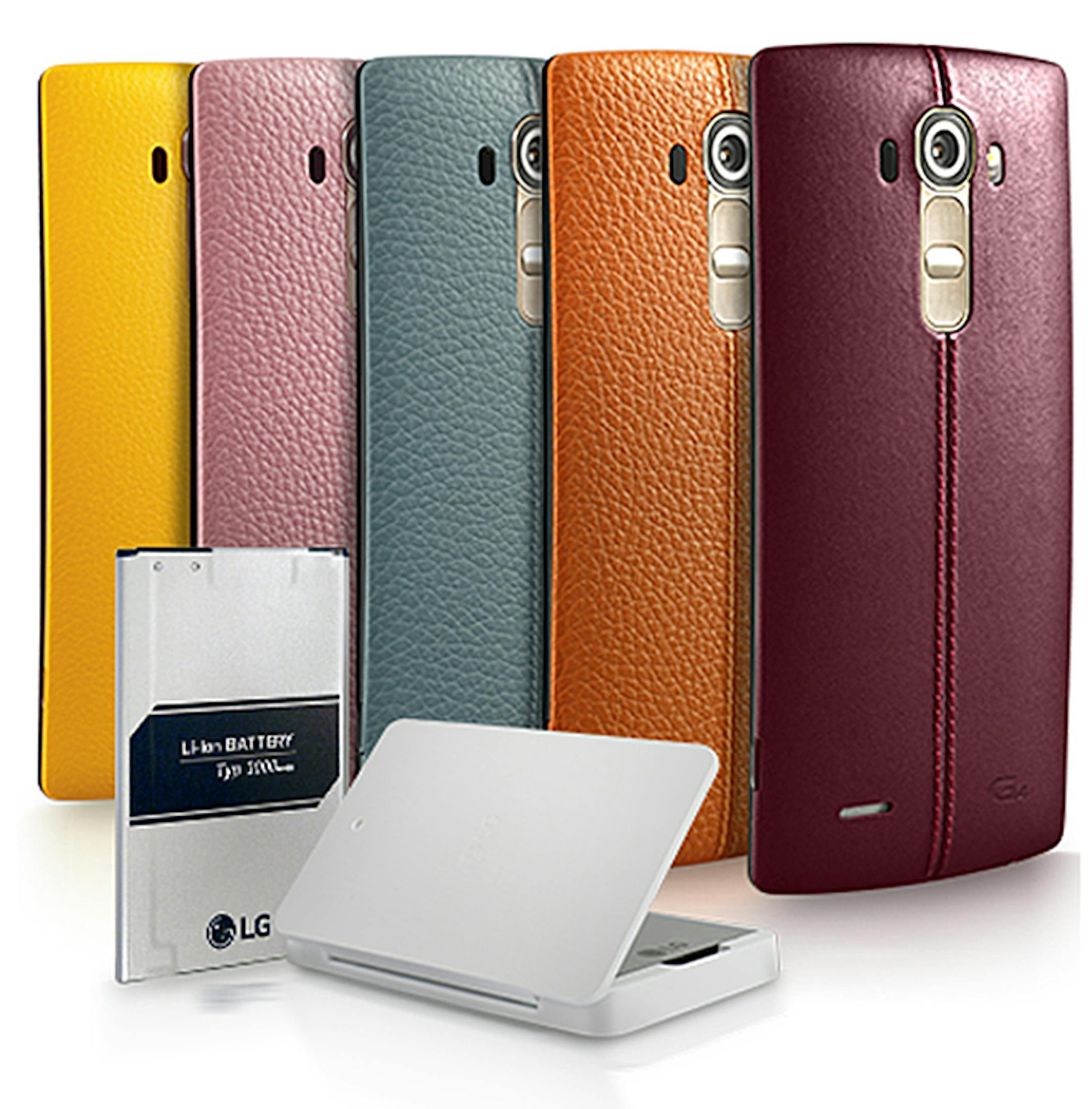
Following its belated entry into making smartphones, LG now has less than 5 percent of the world market, whereas Samsung has about a quarter. The field is getting more crowded, with the entry of such Chinese firms as Lenovo, Huawei and Xiaomi, and Micromax of India. But LG continues to invest heavily in developing such upmarket models as its G4, launched earlier this year, which has a high-specification camera and an optional stitched-leather back.
Shin Moo-young, a former manager at both firms, is skeptical that such gimmicky features will do the trick, and likens the future of LG's mobile business to the "sad decline into oblivion" of HTC, a once-prominent Taiwanese handset-maker. Though it is early, some analysts recently downgraded their expectations for the G4's sales, whereas Samsung's latest model, the Galaxy S6, seems to be doing fine.