

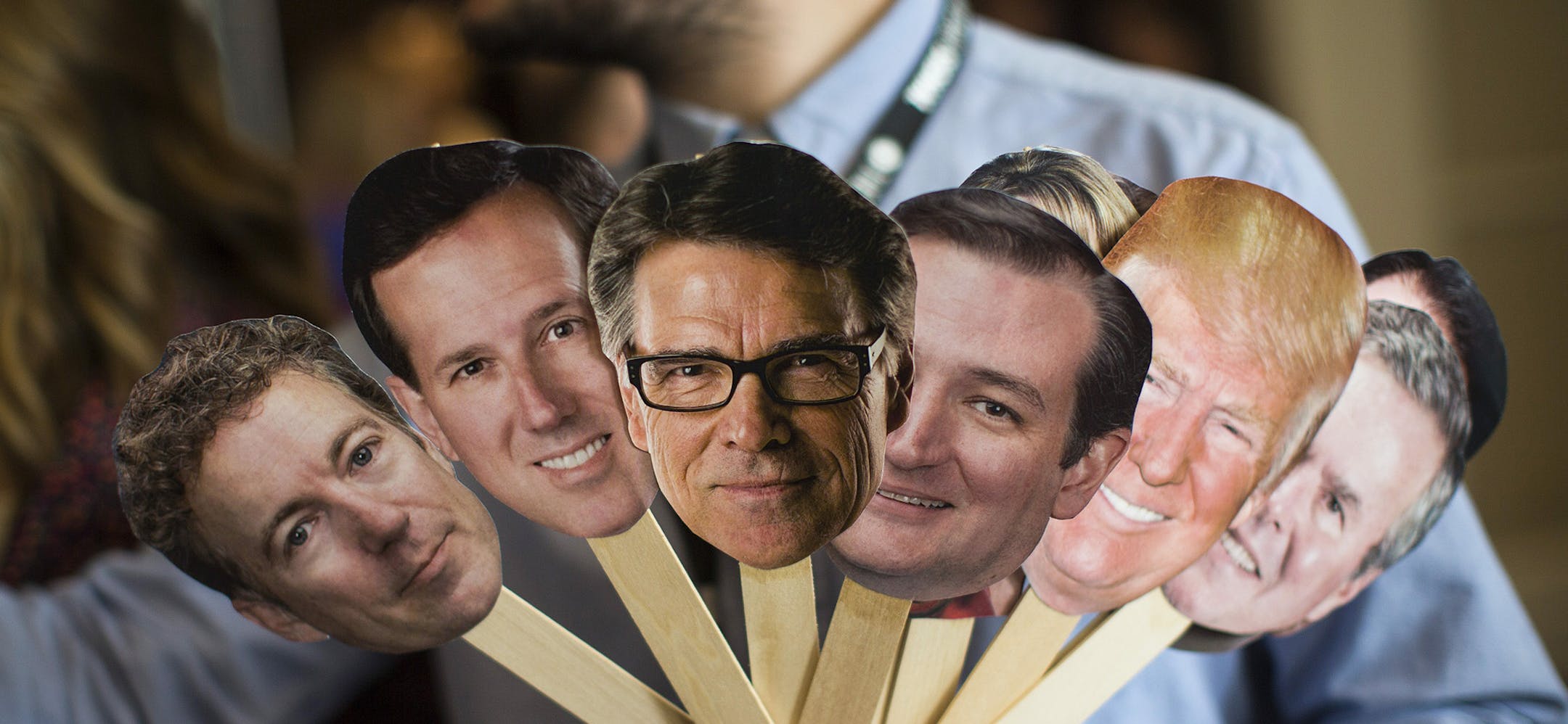
Every election year, our potential commanders in chief spend hours - days, really - preparing for the debates. They practice their comebacks and refine their zingers. Advisers quiz them on obscure foreign policy topics and inane pop-culture references. When they step onto the stage (as Republicans will do this week), the candidates strive to sound smart but not condescending, knowledgeable but folksy.
All of which will be very boring and will tell us very little about the kind of leaders these candidates would actually be.
Instead, let's let our aspirants try out for president by putting them in charge of a simulated crisis. Imagine that a bus is blown up in downtown Chicago, killing 40 people, and the Islamic State claims responsibility. Imagine that a cyberattack takes down the power grid in Atlanta in the middle of a summer heat wave. Imagine that a sudden financial market collapse leaves several mid-size commercial banks temporarily unable to fulfill depositor withdrawals and instead they must rely on FDIC insurance.
How would the candidates think through their options? How would they react? And wouldn't we gain more insight by examining their responses, rather than by discussing why one hopeful sighed inappropriately or checked his watch? After all, we learned more about John McCain when he failed to negotiate a solution to the 2008 financial crisis after suspending his campaign than we did when he called Barack Obama "that one" in a debate two weeks later.
Great presidents make the right calls in moments of crisis. They reason through unexpected problems. They ask good questions and sift new information quickly. They cut through ambiguity and thoughtfully weigh trade-offs. A crisis simulation would test these qualities in ways the debate format obviously does not. We want leaders who can resolve a Cuban missile crisis, not those who will stumble confusedly through a Hurricane Katrina disaster.
Such a simulation would have to be carefully planned, with former government officials or other expert actors playing key roles based on meticulously rehearsed stories. In the banking simulation, performers would portray the heads of regulatory agencies and large financial institutions. One could be instructed to offer bad advice - would any of the candidates fall for it? Candidates could also bring in their own advisers and would be free to call anybody they wanted during the simulation (just like the "Who Wants to Be a Millionaire" lifeline).
Presidential hopefuls could be fed the details of the crisis over a couple of hours, from "advisers" and faux live news coverage. Markets could "respond" in real time, with financial pundits offering different advice: The government should immediately buy up the failing banks! Don't intervene, it will only spur more panic! It's easy for candidates to criticize bailouts or government intervention in the abstract. But what would they do while staring into the abyss of a collapse, faced with only bad and worse options?
At the end of the simulation, each candidate would give a short speech, summarizing his or her response so far and outlining plans to confront the crisis ahead.


