

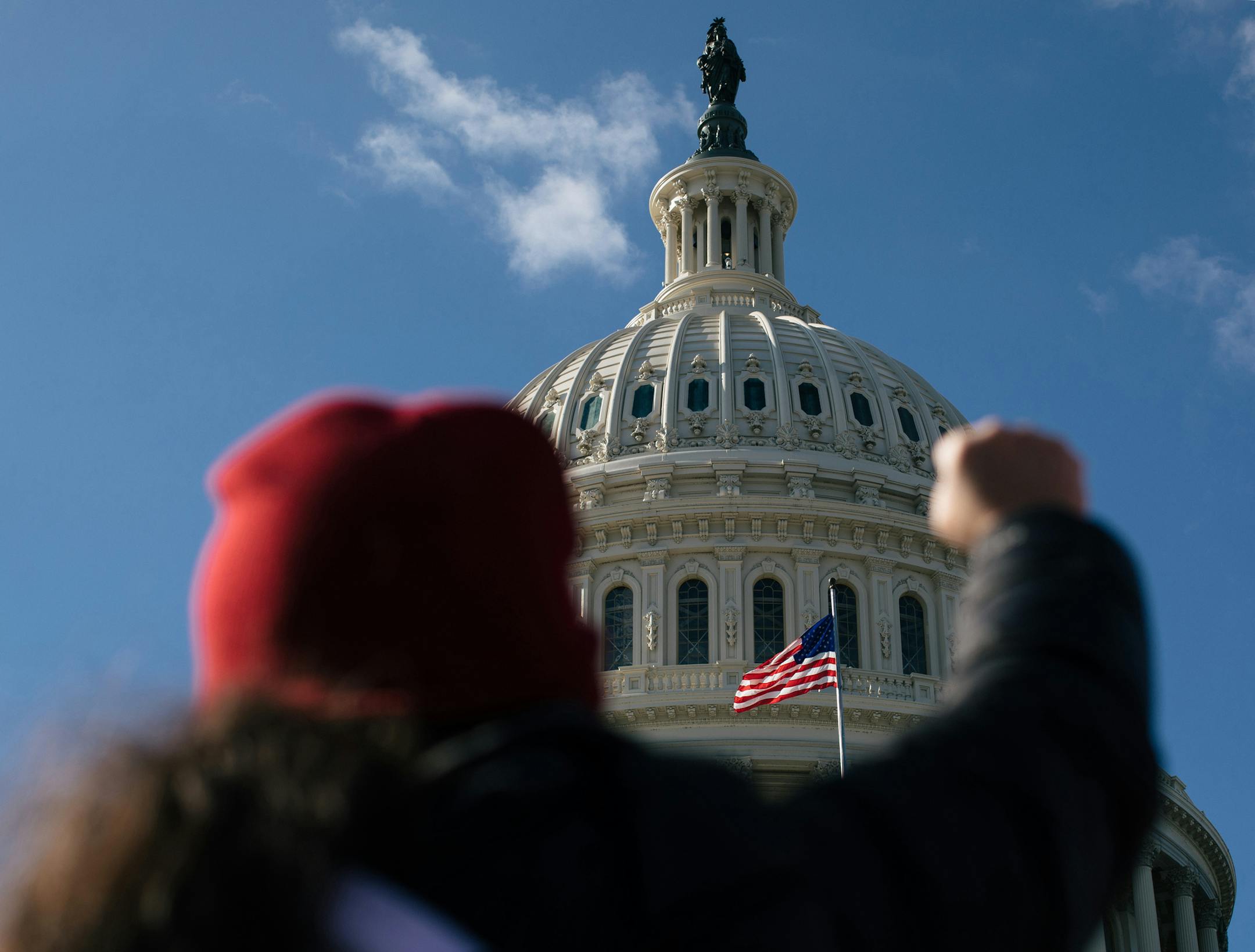
"At the direction of the President, the U.S. military has taken decisive defensive action … ."
Department of Defense statement, January 2020
There was a day when the words "Only the president can authorize the use of nuclear weapons" were meant to be reassuring. That reassurance should have decisively ended with President Donald Trump's decision — right or wrong — to kill the leader of Iran's Quds Force, Qassem Soleimani, on an airport road in Iraq.
When the impeachment trial concludes in the U.S. Senate, it will be time for Republicans and Democrats, in both the executive branch and Congress, to thoughtfully consider what can be done to prevent this president — or any future president — from ordering the use of a nuclear weapon following the same seemingly insular decisionmaking process as Trump just exercised in killing Soleimani.
From the dawn of the nuclear era, placing authority for the use of a nuclear weapon solely in the hands of one person — the president of the United States — has been a recipe for a decision that, to paraphrase former U.S. Secretary of Defense Robert McNamara, one day will lead to the destruction of nations. Yet, fearing a massive "bolt from the blue" nuclear attack from the Soviet Union from the early 1950s until the end of the Cold War in 1991, we built and sustained a decisionmaking process emphasizing speed and efficiency with respect to nuclear use, placing sole decisionmaking authority in the hands of one inherently fallible human being.
It has taken the severe shakes and shimmies of the Trump presidency to drive home what this could mean in practice. But the risks are real no matter who occupies the Oval Office. In the wake of the Soleimani killing and Trump's warning that any retaliation by Iran would be met with extreme force, it is not hard to imagine a crisis scenario where a president is presented with a range of options by the military, perceives (or claims) an imminent threat, and after consultation with a small group of executive branch advisers, chooses the most extreme option and informs Congress after the fact.
If you are thinking "there must be a law" that would constrain a president from using nuclear weapons — at least in some circumstances — look again at the Soleimani case. While there is a strong argument that if a president contemplates first use of nuclear weapons before an attack against us has begun or is imminent he must first seek authorization from Congress under the U.S. Constitution, his constitutional authority as "commander in chief" would almost certainly prevail if exercised in self-defense against an attack on the United States. The subjectivity of self-defense and imminent threats was not lost on some members of Congress briefed on the threat from Soleimani.


