

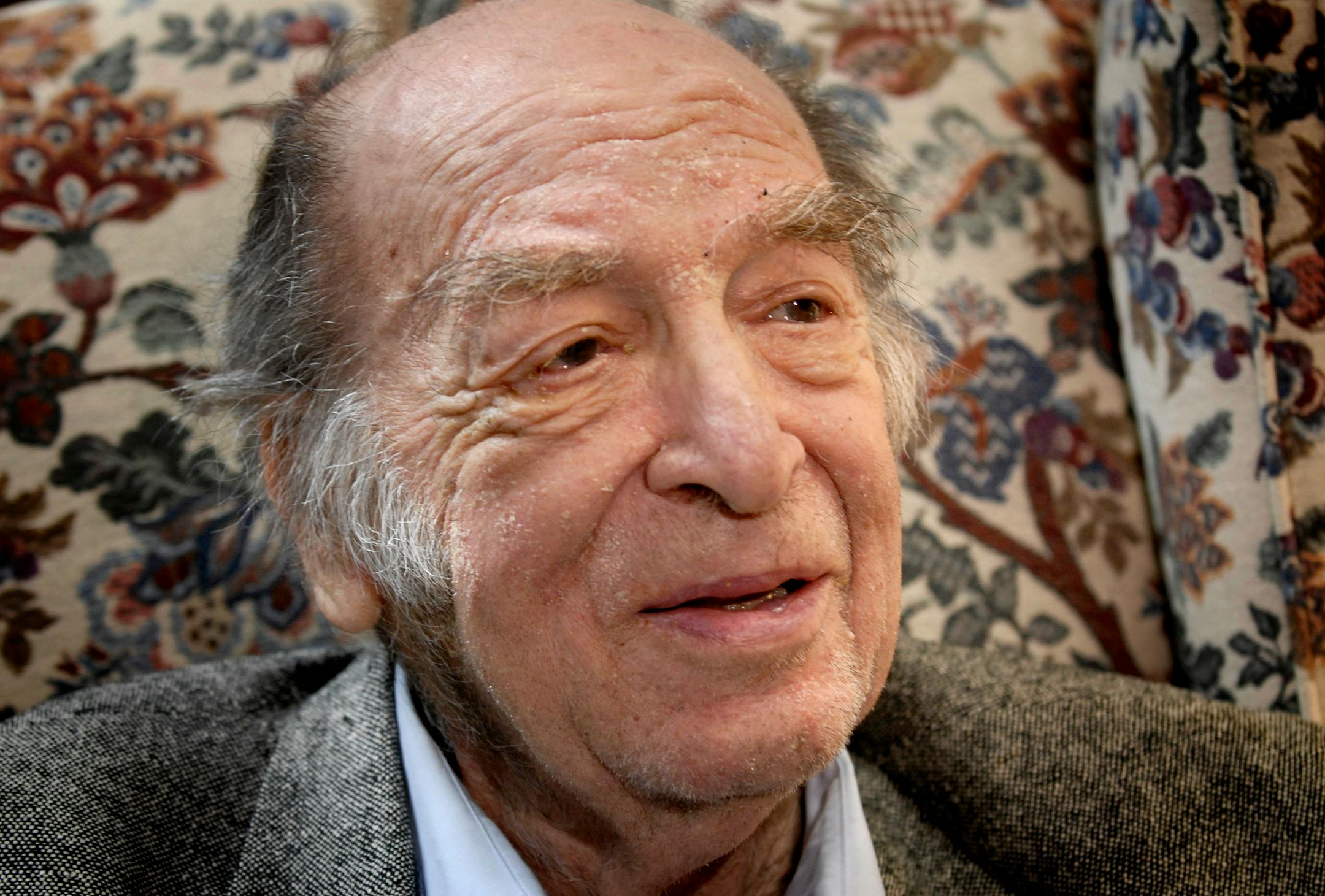
Leonid Hurwicz, a University of Minnesota professor who shared the 2007 Nobel Prize in economics for developing a theory that helps explain how buyers and sellers can maximize their gains, died Tuesday night.
The 90-year-old Minneapolis resident had been hospitalized for about a week.
Hurwicz was given his prize in Minneapolis in December because he couldn't travel to Stockholm. He was the oldest person to win a Nobel, according to the Royal Swedish Academy of Sciences.
"The first thing I thought was that it was a joke," Hurwicz told the Star Tribune when his prize was announced last October. "Considering that it was 6 in the morning, not a very good joke."
He shared his prize with Eric Maskin, a professor at the Institute for Advanced Study at Princeton, N.J.; and Roger Myerson, a professor at the University of Chicago.
"This was a prize that was long overdue," said Narayana Kocherlakota, chairman of the University of Minnesota economics department.
"He did seminal, foundational work that many people built on. It was great to see it finally acknowledged and recognized," Kocherlakota said in October.
The three Nobel winners studied how game theory can help determine the best, most efficient method for allocating resources.

