

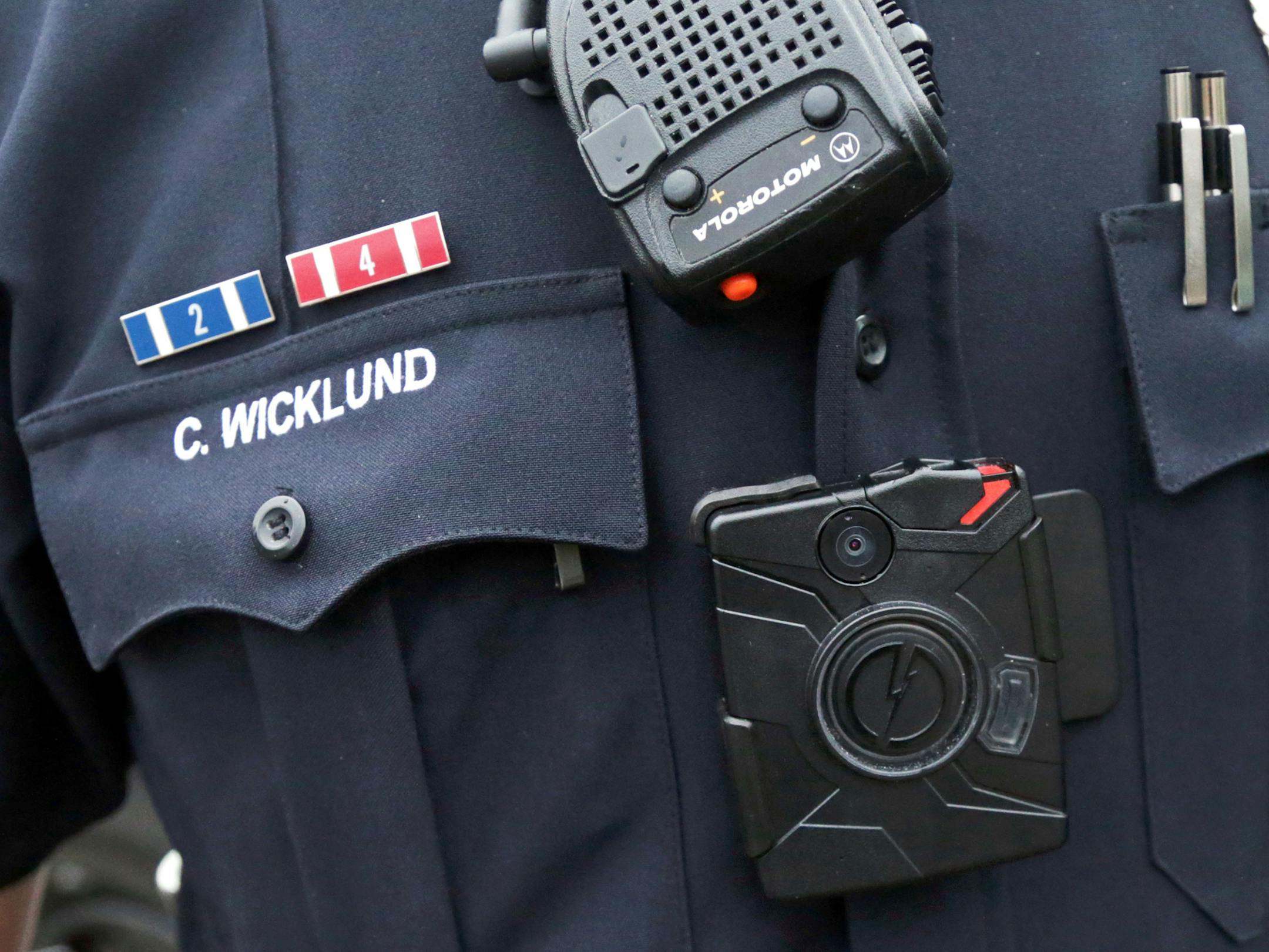
A proposal by a trio of cops-turned-legislators would shield almost all footage shot by police body cameras from public eyes, in what they say is an effort to protect citizens' privacy.
But advocates of open government say keeping the footage under lock and key undermines attempts to keep police accountable.
The measure filed Thursday is the first legislative effort to regulate the use of the video recording devices worn by police. Footage shot by body cameras would not be available to the public, although individuals captured in the videos would be allowed access. Agencies would be required to keep meticulous records and to destroy any video that is not part of an investigation.
Bill sponsors include Republican Reps. Tony Cornish of Vernon Center and Brian Johnson of Cambridge, both retired law enforcement officers, and DFL Rep. Dan Schoen, of St. Paul Park, who is a police officer in Cottage Grove.
Schoen said that the bill is intended to start discussion and that the key concern is maintaining citizen privacy. Body cameras are running when police enter homes, hospitals or other private places, when people are at their most vulnerable. Ensuring that just anyone can't access that footage is paramount, he said.
"We want to make sure we remove all the barriers possible that make people want to ask for help," Schoen said.
Privacy vs. transparency
Matt Ehling, who heads the legislative issues committee for the Minnesota Coalition on Government Information (MNCOGI), argues that the bill would make a major change in how data are handled under state law. The true value of police body cameras lies in the transparency they provide, he said. Much of the video collected, Ehling said, would already be considered classified under the state Data Practices Act, including ongoing investigations, sexual assault victims, juveniles and undercover officers.
"The general rule is that the video should be accessible, but I think the Legislature should say 'Here are certain situations where you should not record that stuff,' and that's where privacy interests will be protected," Ehling said.


