

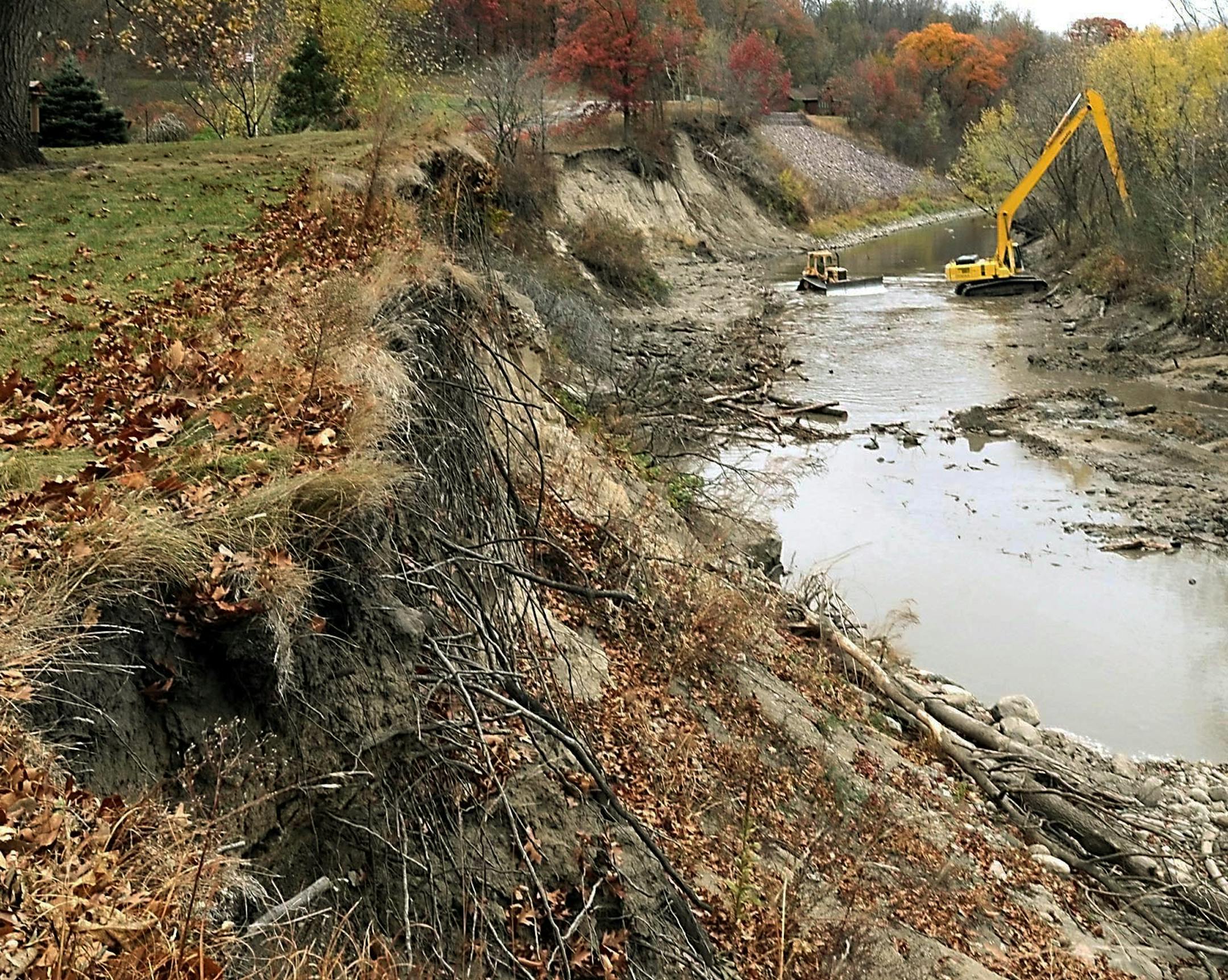
MANKATO – Researchers in southern Minnesota are hoping a photo a day will show where the bluffs are washing away in the Le Sueur River watershed.
And that may help guide policymakers on the best ways to slow the damaging sediment loads that are clouding the Mississippi River, filling in Lake Pepin and carrying pollutants to the Gulf of Mexico.
Gustavus Adolphus College, Minnesota State University, Utah State University and the National Science Foundation are behind the installation of cameras to photograph the bluffs regularly. The goal is to show what's causing the most erosion — whether dirt is washing down the banks after rains, whether bluffs are undercut by river water and let loose, or whether seepage into the banks collapses them.
"We can monitor pretty well the amount of erosion each day," said Patrick Belmont, assistant professor of watershed sciences at Utah State University.
Solving erosion and sediment problems has been hard. The amount of soil washing off farm fields has been greatly reduced, but researchers say the problem has shifted to bank and ravine erosion.
"Unfortunately, the sediment load is the same as it was," Belmont said.
Belmont and graduate researcher Sara Kelly spent June in the Mankato area installing cameras and meeting with local groups.
Trevor Brovold, who lives in the River Heights housing addition south of Mankato between the Maple and Le Sueur rivers, said residents there are eager to learn more about the erosion problems that have plagued the area in recent years. Two cameras were set up in the River Heights area.


