

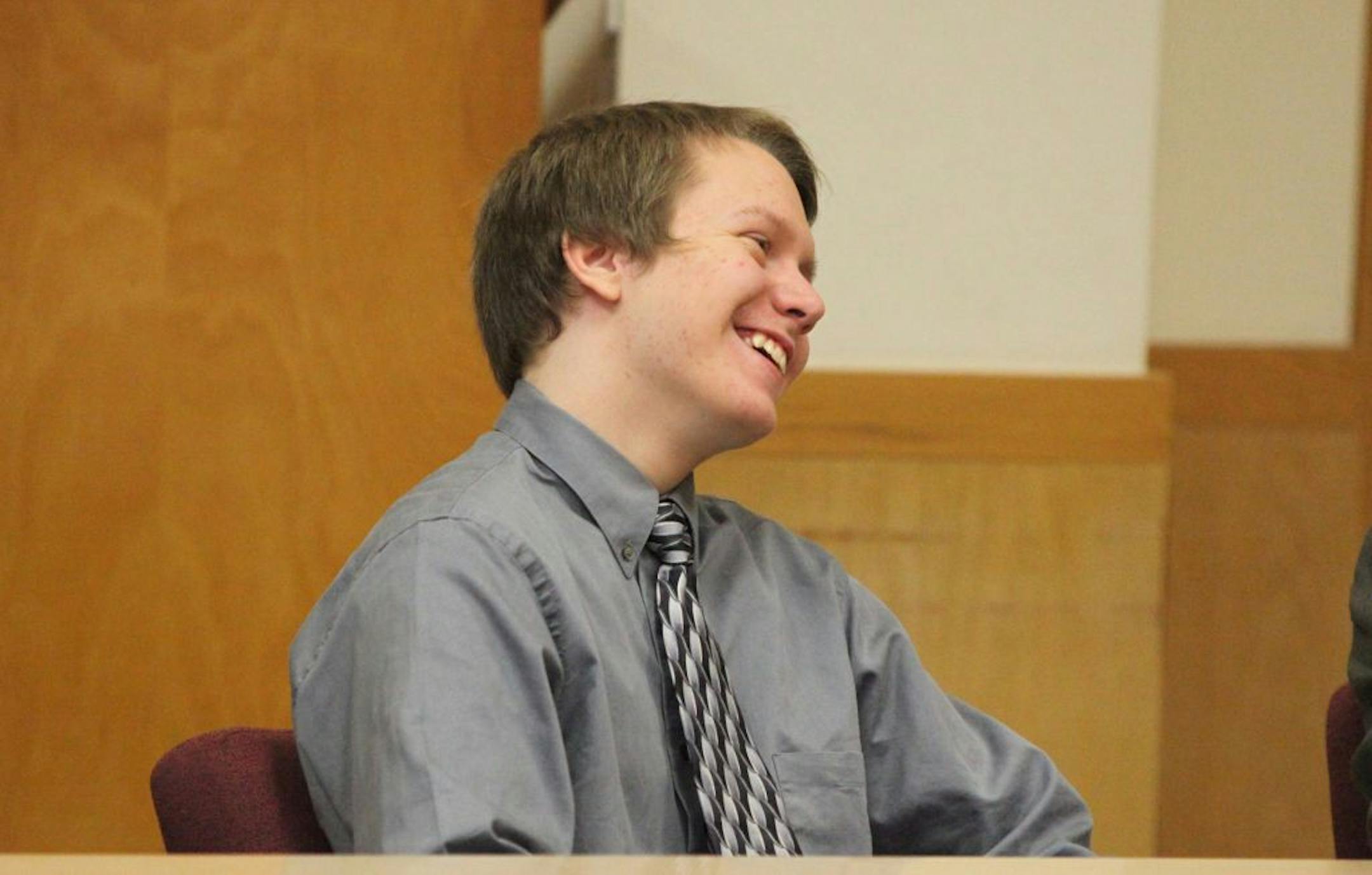
Michael Swanson reacted to his conviction for murder with a smile. He gave a double middle-finger salute in the courthouse. "I'm good," he said after learning he'd be in prison the rest of his life for killing an Iowa store clerk.
Those actions, and others, by the 18-year-old from St. Louis Park may seem far from sane. Yet it took an Iowa jury less than an hour Thursday to reject his attorney's insanity defense, a strategy that Twin Cities lawyers said is rarely used and almost never works.
"You'd have to shoot somebody but actually think you were eating a carrot and then convince a jury of that," said Minneapolis attorney Joe Friedberg, who says it's been 33 years since he last won a jury verdict using a mental-illness defense.
"Winning with a mental-illness defense is virtually impossible," Friedberg said. "You've got to show there's a diagnosed major mental illness for which there is treatment. Psychopaths and personality disorders don't qualify. There's no cure for them."
In April, an Eden Prairie man who had drowned his baby in a laundry tub was found not guilty by reason of mental illness. In that case, the reports of three psychiatrists, a well-documented history of the defendant taking a leave from his job because of mental-health problems and an agreement between prosecutors and the defense convinced Hennepin County Judge Mark Wernick that Randel Richardson, 37, "was laboring under such defective reasoning."
Juries are a tough sell
Convincing a jury that a defendant is mentally ill may be even more difficult than convincing a judge, Friedberg said. In 1978, he defended June Mikulanec, who had been accused of stabbing a woman more than 90 times. A jury found Mikulanec not guilty by reason of mental illness. It was the last time that Friedberg can recall winning a jury trial using a mental-illness defense.
"Jurors think of their personal safety. If the jury has a personal fear of the defendant, there's a better likelihood of selling a mental-illness defense," Friedberg said.

