

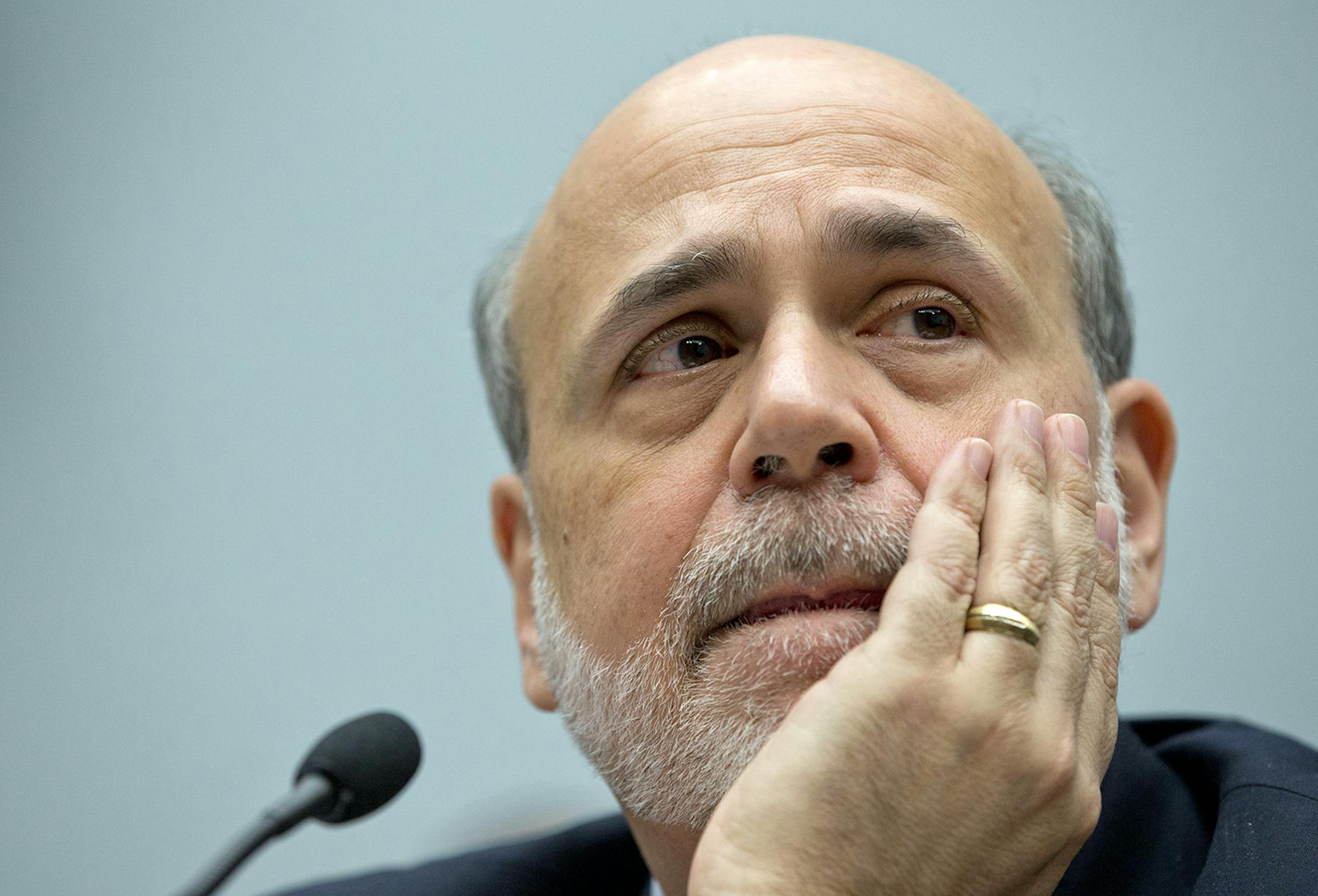
WASHINGTON — Ben Bernanke is expected to face tough questions Wednesday from U.S. lawmakers about when the Federal Reserve might start to scale back its low interest rate policies that have helped support economic growth.
The Fed chairman will also be pressed on the state of the economy and his future at the Fed after his second four-year term as chairman ends in January. And he may even criticize Congress for federal spending cuts and tax increases that have weighed on the economy this year.
But investors will focus on Bernanke's comments about the Fed's potential timetable for slowing its bond buying.
Bernanke's two days of testimony begin Wednesday before the House Financial Services Committee. On Thursday he goes before the Senate Banking Committee.
Since the financial crisis erupted in 2008, the Fed has kept its benchmark short-term interest rate near zero. And since late last year, it's been buying $85 billion a month in mortgage and long-term Treasury bonds to try to reduce long-term rates and induce people and businesses to borrow and spend.
Financial markets began to gyrate after then Fed's June 18-19 meeting. That's when Bernanke sketched a rough timetable for the Fed's bond purchases. He said the Fed could start scaling back its bond buying later this year and end it around mid-2014 if the economy strengthens enough to be in line with the Fed's more optimistic forecast.
Stocks plunged, even though Bernanke's comments were generally in line with what economists had been expecting. The Dow Jones industrial average sank 560 points in two days. Investors feared Bernanke's comments meant the Fed was ready to let rates rise sooner and faster than they'd expected.
Since then, the chairman and other Fed officials have sought to calm investors. They've stressed that the Fed won't pull back on its stimulus unless the evidence was clear that the economy and the job market were improving as much as the Fed had forecast. If not, the Fed would keep its support intact. It might even increase its stimulus it felt the economy needed more support.


