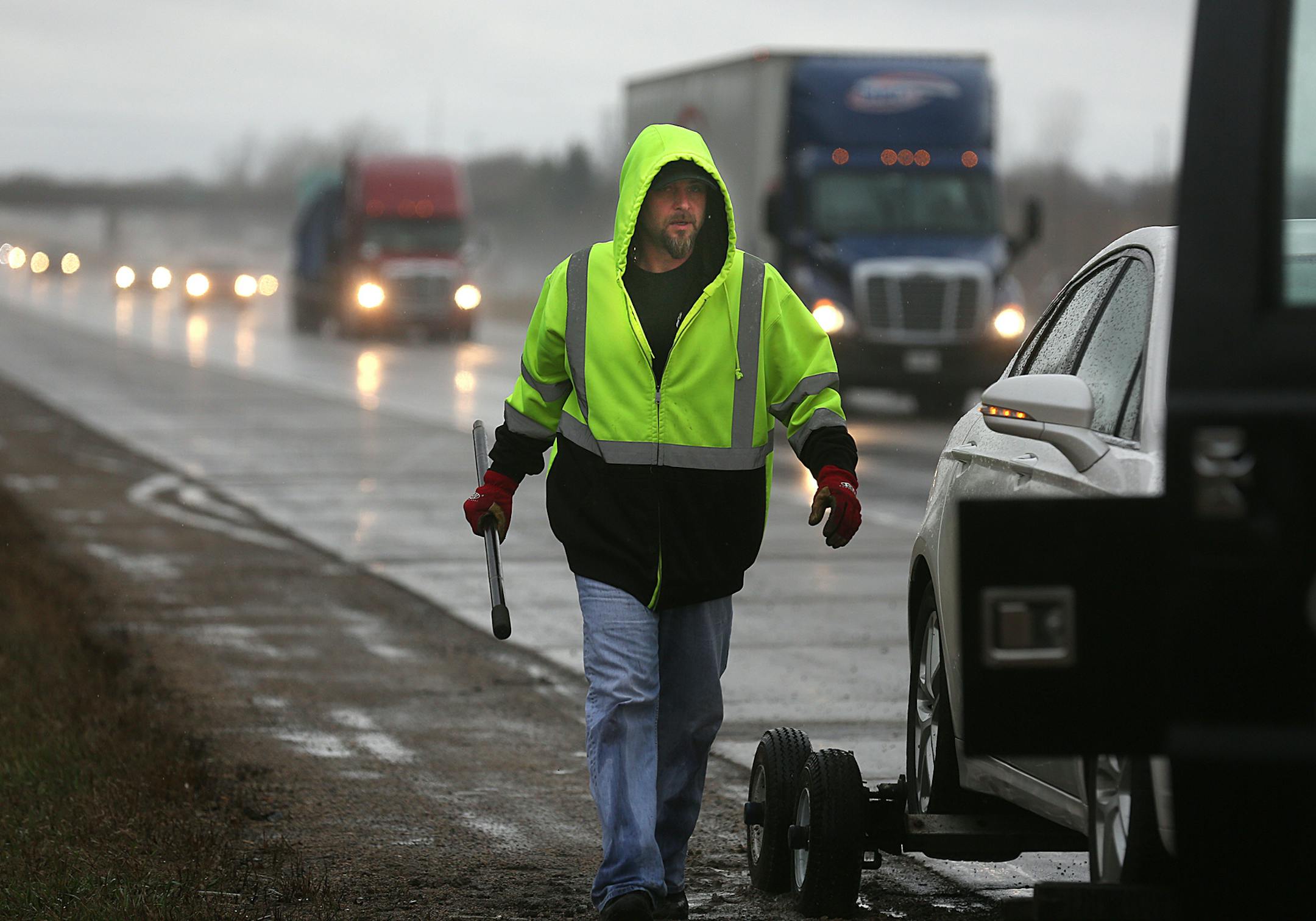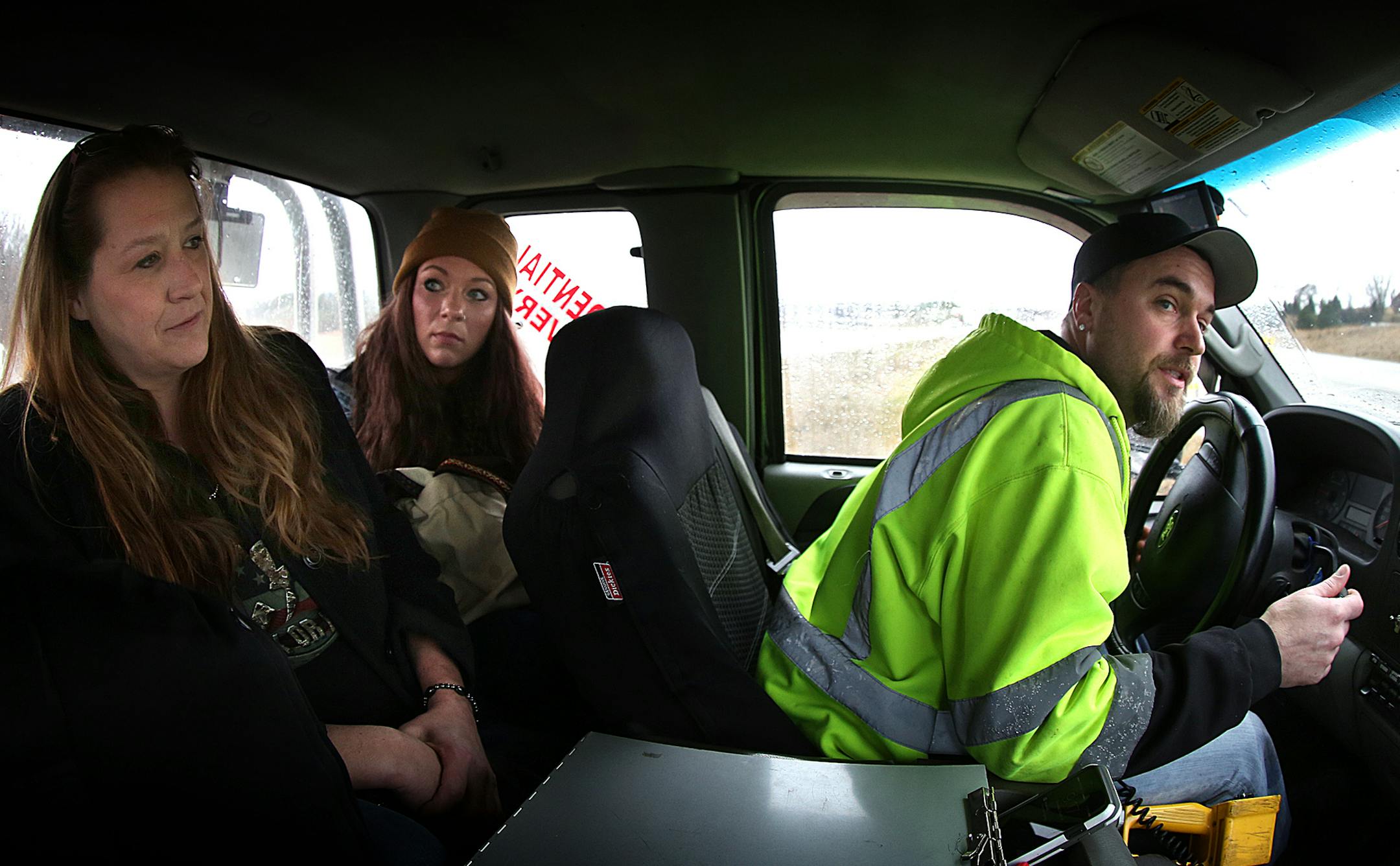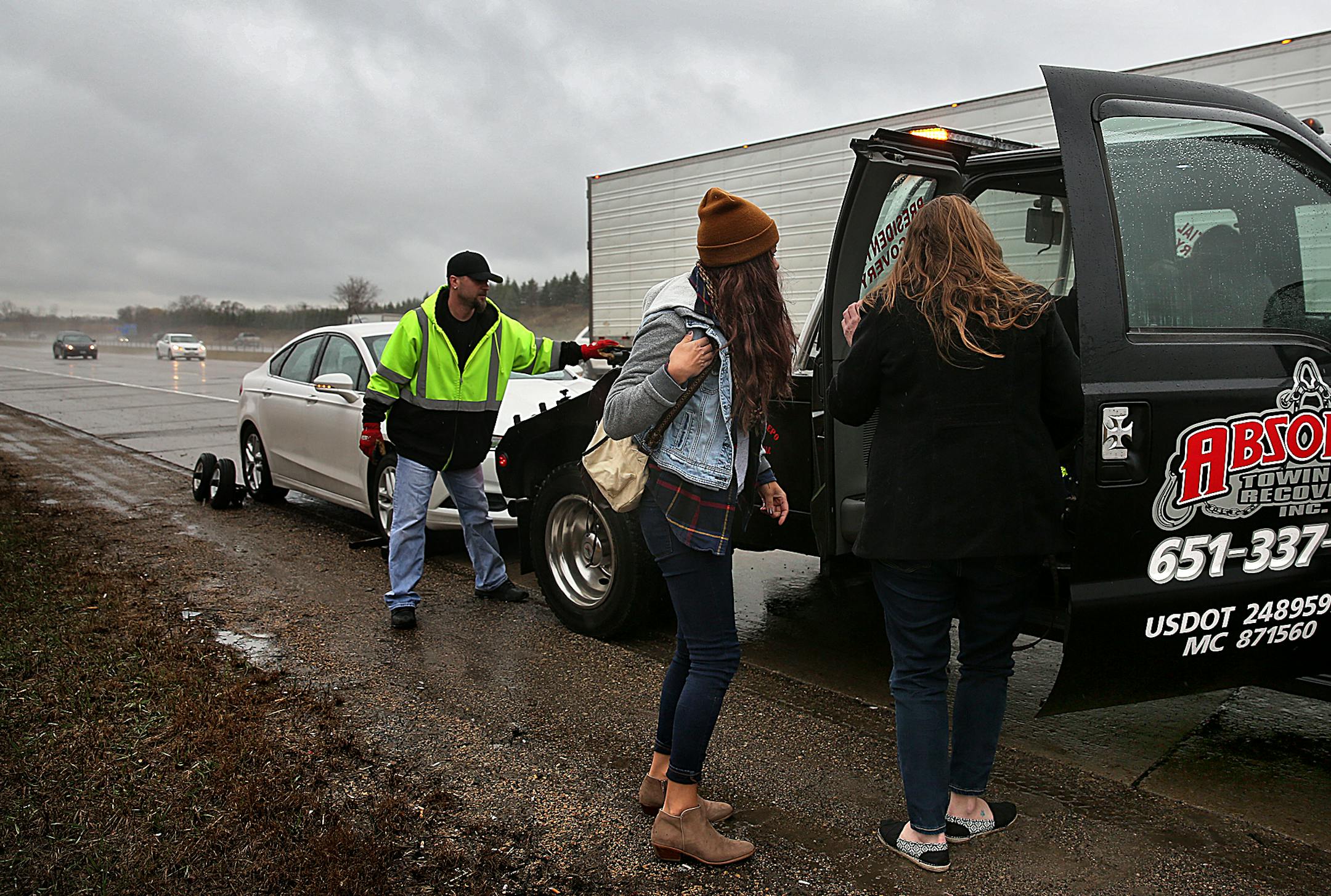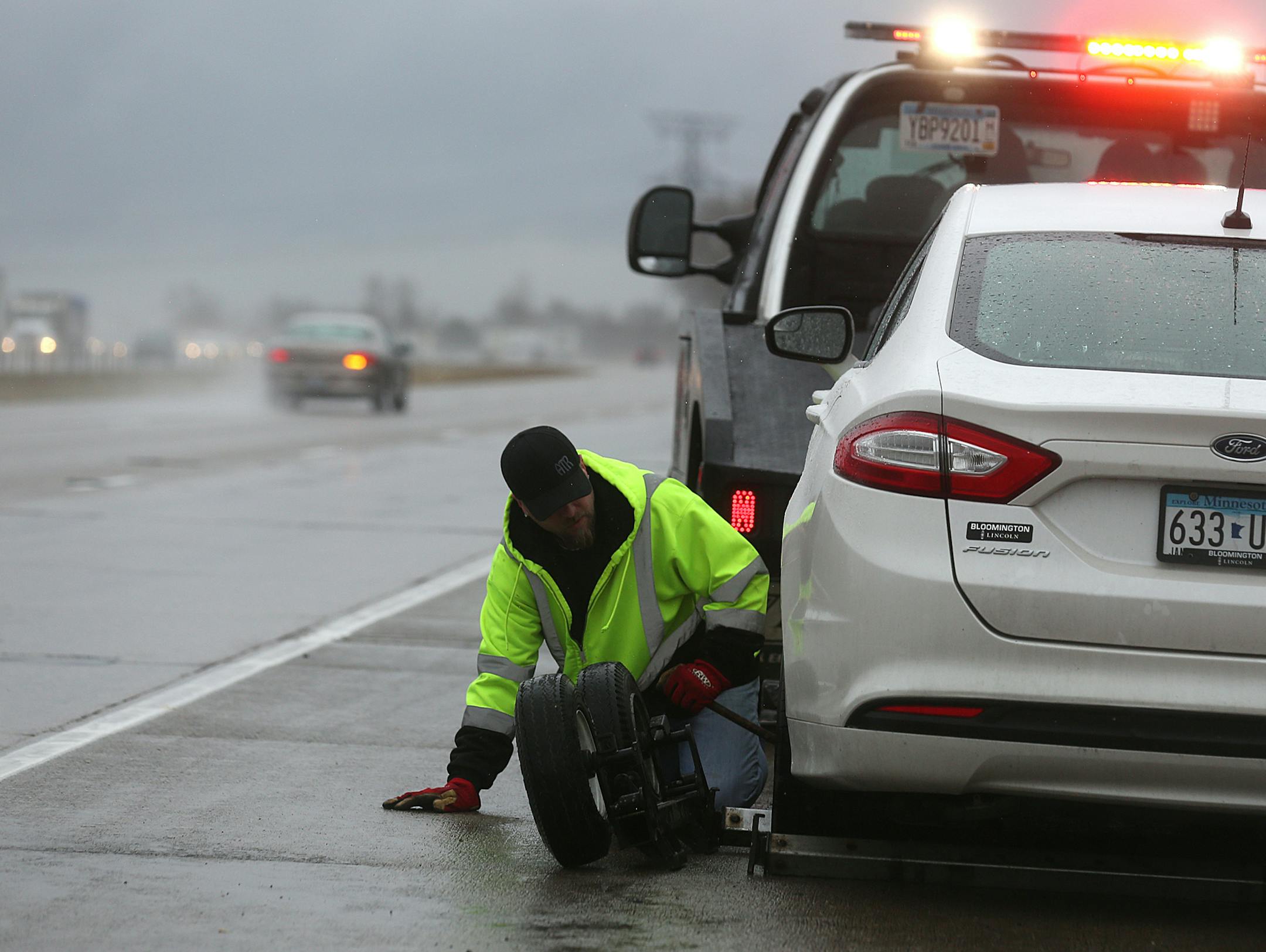
The call came in to Absolute Towing around 8:45 on a recent spring morning, notable only for its persistent drizzle. Flat tire. Two people. "I-94 and Manning-ish" — a reference to the exurban Washington County crossroad.
This service call was a relatively safe one for Tim Heldman, who owns the Oakdale towing firm. The occupants of the disabled Ford Fusion had carefully steered the sedan off the busy highway and onto an expansive shoulder, where it was hoisted onto his tow truck without incident.
But that's not always the case. "Basically, every time I go out, I'm risking my life for 40 bucks," said Heldman.
As Twin Cities roads grow more congested and as Minnesota's summer road construction begins this Thursday, the safe haven of the highway shoulder for motorist emergencies and traffic stops may not be terribly safe. Many stretches of road in the metro area have limited roadside space — or sometimes no shoulders at all.
Add to the mix distracted drivers — those texting, e-mailing and talking on the phone — and a lack of awareness of the state's "move over" laws requiring drivers to move over a lane to avoid stalled or stopped vehicles on roadway shoulders.
"It can be very dangerous," said John McClellan, freeway operations supervisor of the Freeway Incident Response Safety Team for the Minnesota Department of Transportation (MnDOT). If someone breaks down, "being on the shoulder is better, but the best thing is to not be out there in a disabled vehicle."
That's not always an option for police, emergency workers, firefighters and tow truck drivers called to the scene of an accident or breakdown — often a risky proposition to safely navigate.
Deaths hard to track
It's difficult to quantify the number of emergency and roadside responders who are killed or injured by careless motorists because there's no central clearinghouse for collecting that information.