MOORHEAD, Minn. – Jamal Tmr looked on as several of his children ate pancakes in their elementary school cafeteria, laughing and chattering as easily as if this city in northwestern Minnesota had always been their home.
Every morning, the Kurdish father of seven chauffeurs some kids to school and walks others to a bus stop down the street, determined to shepherd them through an ordinary American childhood — one far from the artillery fire in their Syrian homeland and the tents where they found shelter in a Turkish refugee camp. He tries not to talk about the ordeal they escaped, or the plight of the Syrian children their age in the news.
"I don't want their pain to be like my pain," said Tmr, 35.
Moorhead's community of about 1,500 Kurdish refugees and their children is following the chaos in Syria with a grim sense of familiarity, lamenting that their people — an ethnic minority living across a swath of Iraq, Syria, Iran and Turkey — have a long history of persecution. Many settled in Fargo in the 1990s after the Gulf War, following Iraqi dictator Saddam Hussein's genocide against Kurds with chemical weapons and military assaults.
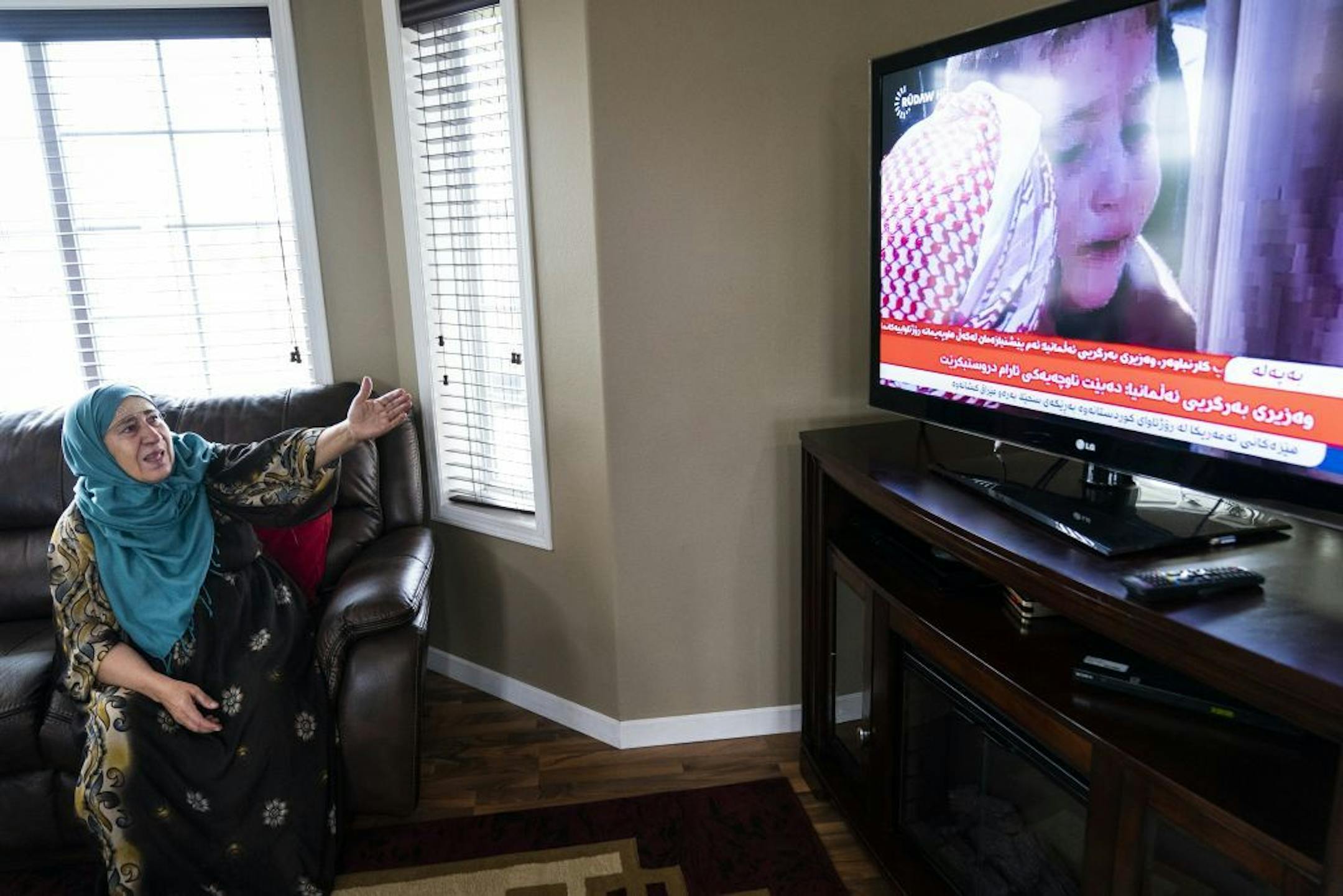
When Tmr joined his wife and Kurdish neighbors to watch television after taking the children to school, the latest news was distressing: reports that locals were throwing rocks at American convoys leaving Syria after President Donald Trump's decision to withdraw U.S. troops.
Tmr and other Kurds here view Trump's actions as a devastating betrayal, opening the door to a Turkish military assault against Kurds in northwest Syria who had fought ISIS alongside American soldiers. The close-knit group in Moorhead alternates between the Kurdish TV news channel Rudaw and CNN, gleaning firsthand accounts from family members on spotty internet services.
"Everybody is very outraged," said Jihan Brifki, 37, whose family fled Saddam's attacks and settled here in the early '90s when she was a child. She now has four children of her own. "… Since this happened, I haven't been able to sleep, I wake up in the middle of the night to look at my phone."
Community pulls together
Brifki spent years of her own childhood in a Turkish refugee camp, and her father was killed by Saddam's forces. A scarf featuring Kurdish flags — striped in red, white and green with a golden sun in the center — was draped over a counter in Brifki's kitchen in Moorhead, where she talked over a meal of biryani (a rice dish with chicken, potatoes and almonds), stuffed vegetables and deep-fried pastries made of rice and meat. Her necklace showed the flag in miniature.
![Sisters Kauther Tmr, from right, 7, and Fatima Tmr, 3, played a game with Demeen Gelway, 10, a Kurdish American friend in the evening after dinner. ] LEILA NAVIDI • leila.navidi@startribune.com BACKGROUND INFORMATION: Evening in the Moorhead home of Jamal Tmr, a Kurdish refugee from Syria who came to Minnesota in 2016 with his wife and seven children, on Monday, October 21, 2019.](https://arc.stimg.co/startribunemedia/JGSKYWBFQI3ZOQG77YQR26H52Y.jpg?&w=1080)