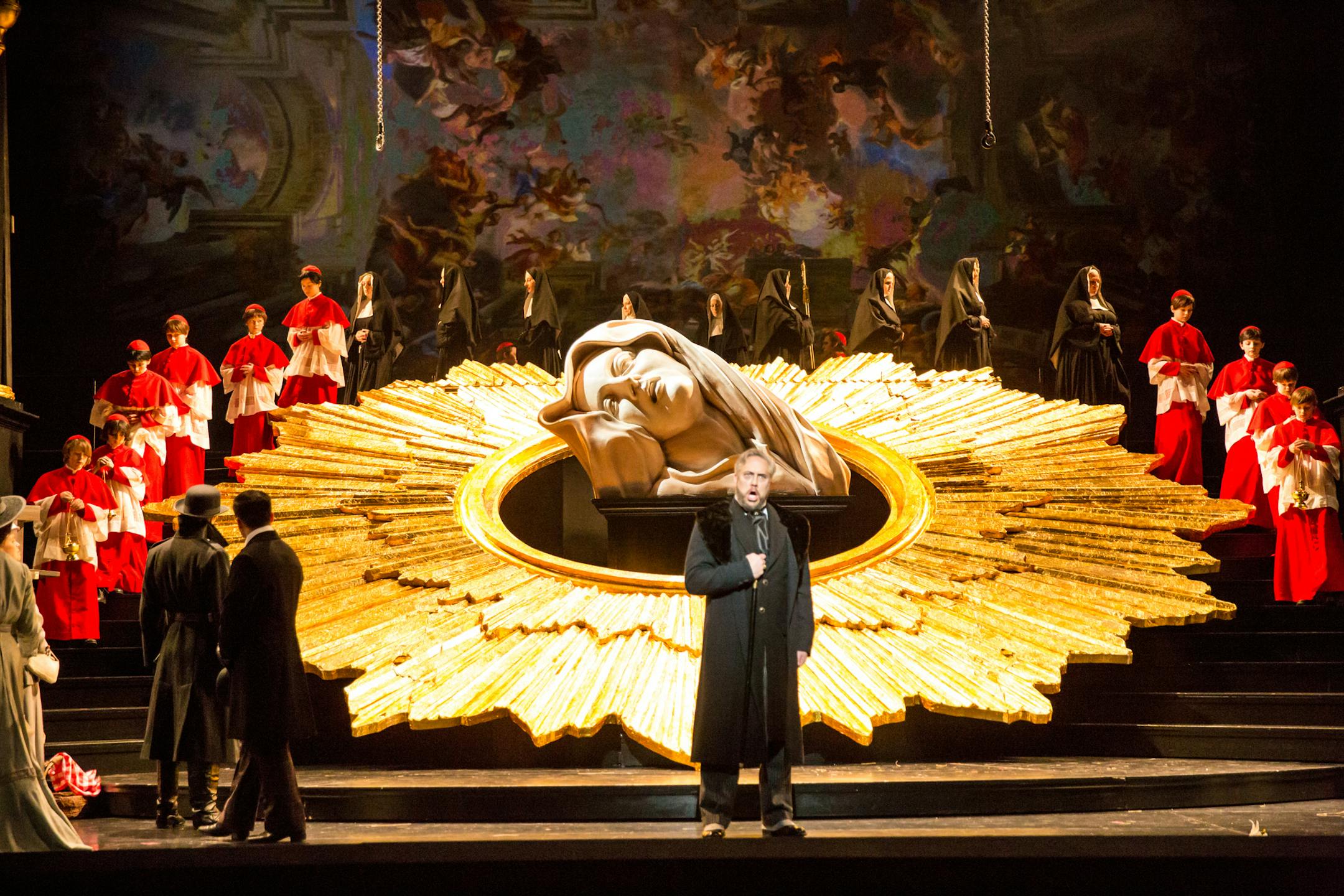
There was reason to approach Minnesota Opera's new production of Puccini's "Tosca" at the Ordway Center Saturday night with trepidation.
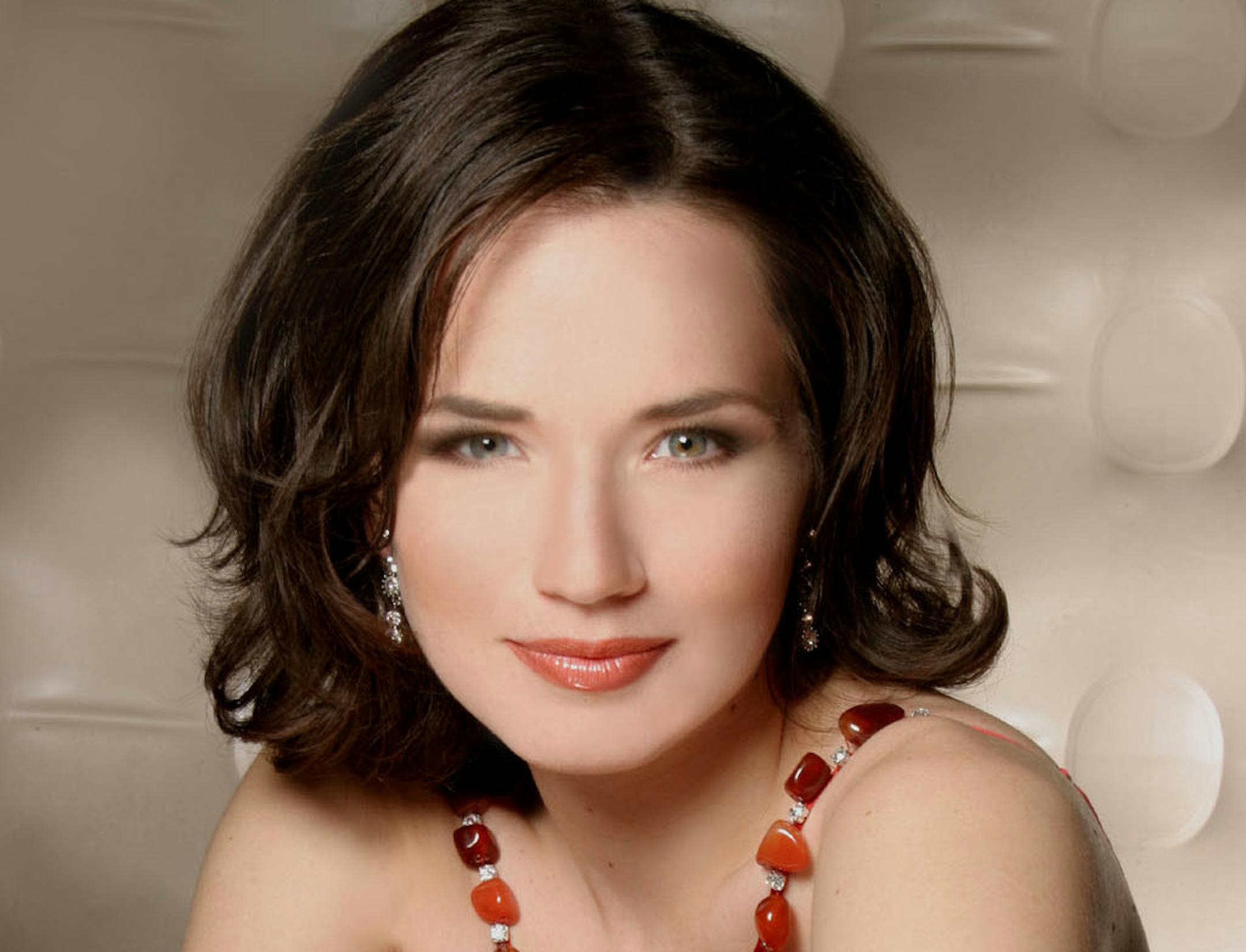
Early last week, just a few days before the scheduled opening, came the surprising news that Hungarian soprano Csilla Boross, who had been rehearsing the title role, was bowing out for "personal reasons." The replacement was to be Kelly Kaduce. (Alexandra LoBianco would continue as planned, singing alternate performances through March 26.)
Kaduce-to-the-rescue was good news, mostly. An actress of uncommon penetration and a singer of generous and subtle skills, Kaduce has been shining a bright light on operatic stages around the country, and most notably for what could be considered her home team. (Kaduce was born in Winnebago, Minn., and attended St. Olaf College.)
She has tackled some of the most important soprano roles here, with widely acclaimed success: Cio-Cio-San ("Madame Butterfly") in 2012, Manon Lescaut in 2013 and, two months ago, a reprise of her poignant portrayal of the water sprite Rusalka, a role that Kaduce pretty much owns at this point.
In May she will sing the important role of the mother, Wendy Torrance, in the company's premiere of "The Shining," based on the Stephen King novel.
This was all to the good. Even so, one attended opening night prepared to make allowances for what was, for all parties concerned, an awkward and stressful situation. Kaduce had sung Tosca just once, with the Houston Grand Opera, along with several school performances. It is encouraging to note that Houston had re-engaged her for the part, as Tosca is one of the most demanding soprano parts in the repertoire; it's a role that one grows into and is usually sung by darker voices than Kaduce's light, flexible, silvery (spinto-lyric) soprano.
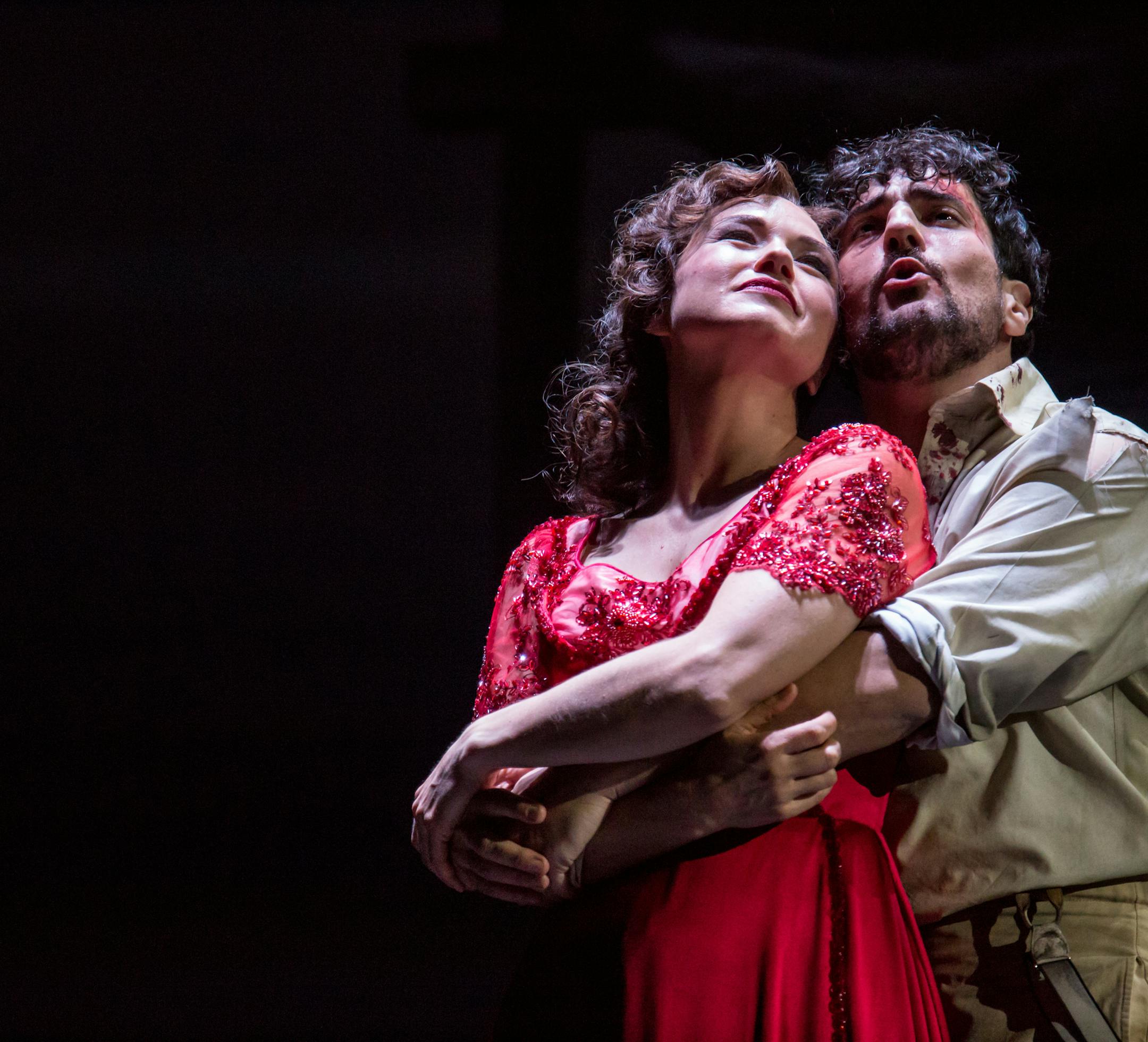
No excuses were necessary, as it turned out. Kaduce's Tosca was vivid, charismatic and, in most regards, totally up to speed. She made a glamorous entrance — the character, after all, is Rome's greatest actress. She was as we expect her to be, a vain, demanding and jealous diva. But there was more. As we seldom see so clearly delineated, this Tosca progressed in stages, from giddy lover, to distraught victim, to heroic defier of tyranny.
True, the voice needed a wider range of color. But the singer rode Puccini's mighty climaxes with ease and her "Vissi d'arte," wildly applauded Saturday night, was more than just a vocal showpiece. It was the interior monologue of a woman at the breaking point, as if dropping to her knees, she were quoting from the New Testament: "My God, why hast thou forsaken me?"