

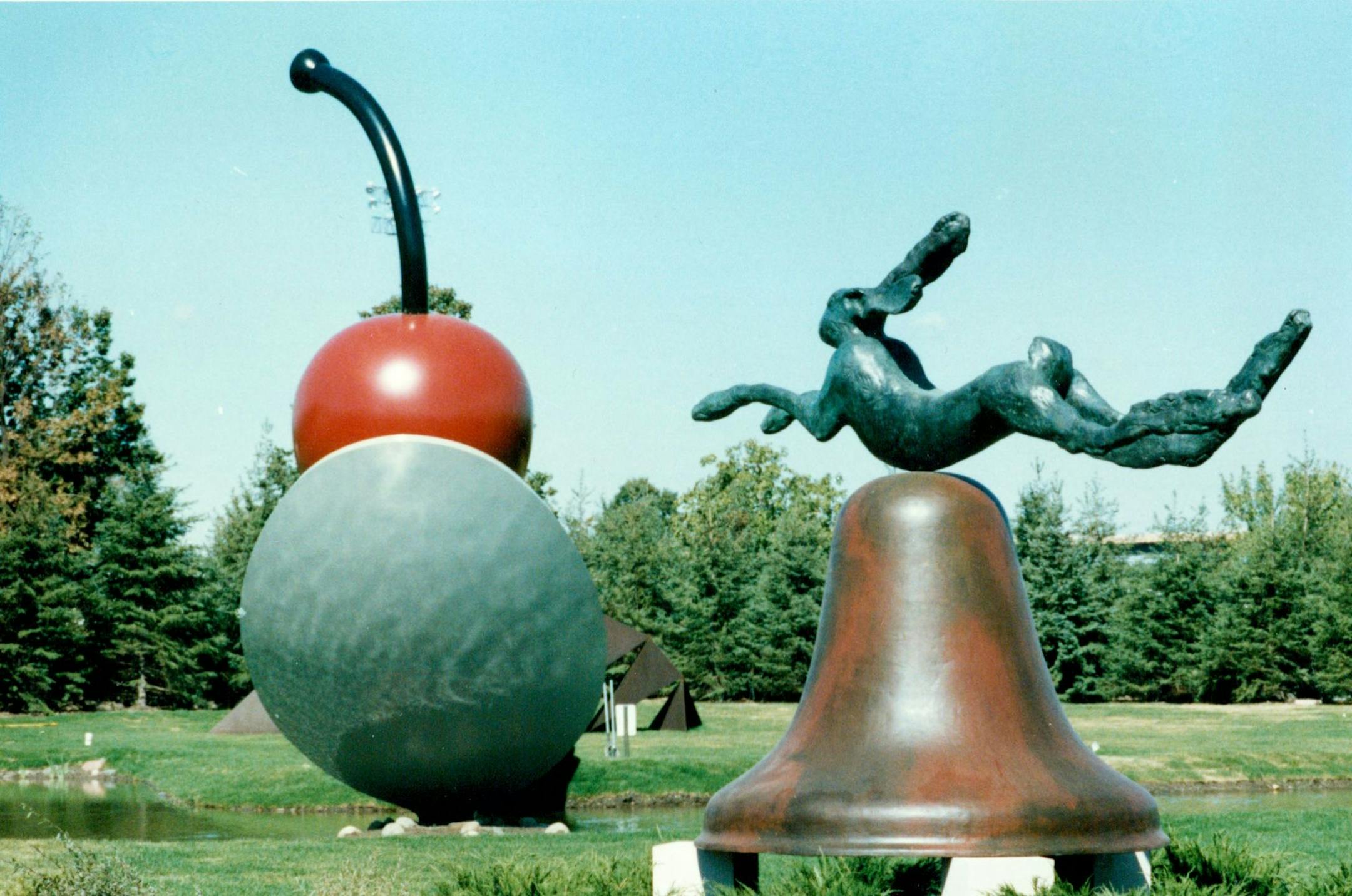
The good news is that the Minneapolis Sculpture Garden at the Walker Art Center is in exciting times, with a new $10 million design funded in part by city and state money.
But the terrible news is that most of the large thriving trees in the Sculpture Garden are going to be clear-cut and replaced with new, small, expensive trees.
The handsome existing trees and the land beneath them are owned by the Minneapolis Park and Recreation Board and thus by the citizens of Minneapolis. The garden is cooperatively run by the Walker Art Museum and the Park Board. The sculptures are the stars of the garden, but the spaces created by the trees help keep thousands of visitors returning year after year.
No one disputes that the sculptures are owned by the Walker. But there seems to be confusion as to who owns these "landscape sculptures," which is what the large, healthy semi-mature trees of the Sculpture Garden on Park Board land certainly are! The proposed new designs show almost all of the large existing trees being clear cut, apparently because the new designers of the Sculpture Garden made no effort to reincorporate them.
We understand "design intent," but it is wrong and thoughtless to cut down these fine trees. The proposed costly new trees will need decades and much expensive maintenance to come close to replacing our lost trees, which were planted, watered and pruned by the park system's forestry staff for over 24 years at taxpayer expense. Since the Park Board owns these trees on its property, it and no one else should decide their fate.
The big trees have shaded many visitors, managed stormwater, created much oxygen at this busy, polluted intersection, and, perhaps most important, have sequestered many tons of carbon from the exhaust of passing vehicles. If the trees are destroyed, all of that will be lost.
Currently, there is no plan to replace these trees with the same amount of tree canopy and the visual and ecological services they provide. The landscape architects on the project have been shortsighted in overlooking this asset, not only from the standpoint of the Sculpture Garden but also from the larger standpoint of the city of Minneapolis. Removing these trees takes another chunk out of the city's tree canopy at a time when it continues to shrink dramatically. These Sculpture Garden trees should be inventoried and evaluated immediately to determine which could reasonably be saved in place or transplanted within the city's gardens, parks and boulevards.
A tree inventory should have been conducted for this project long ago. Luckily, there is still time to do that to save in place or replant these trees.


