

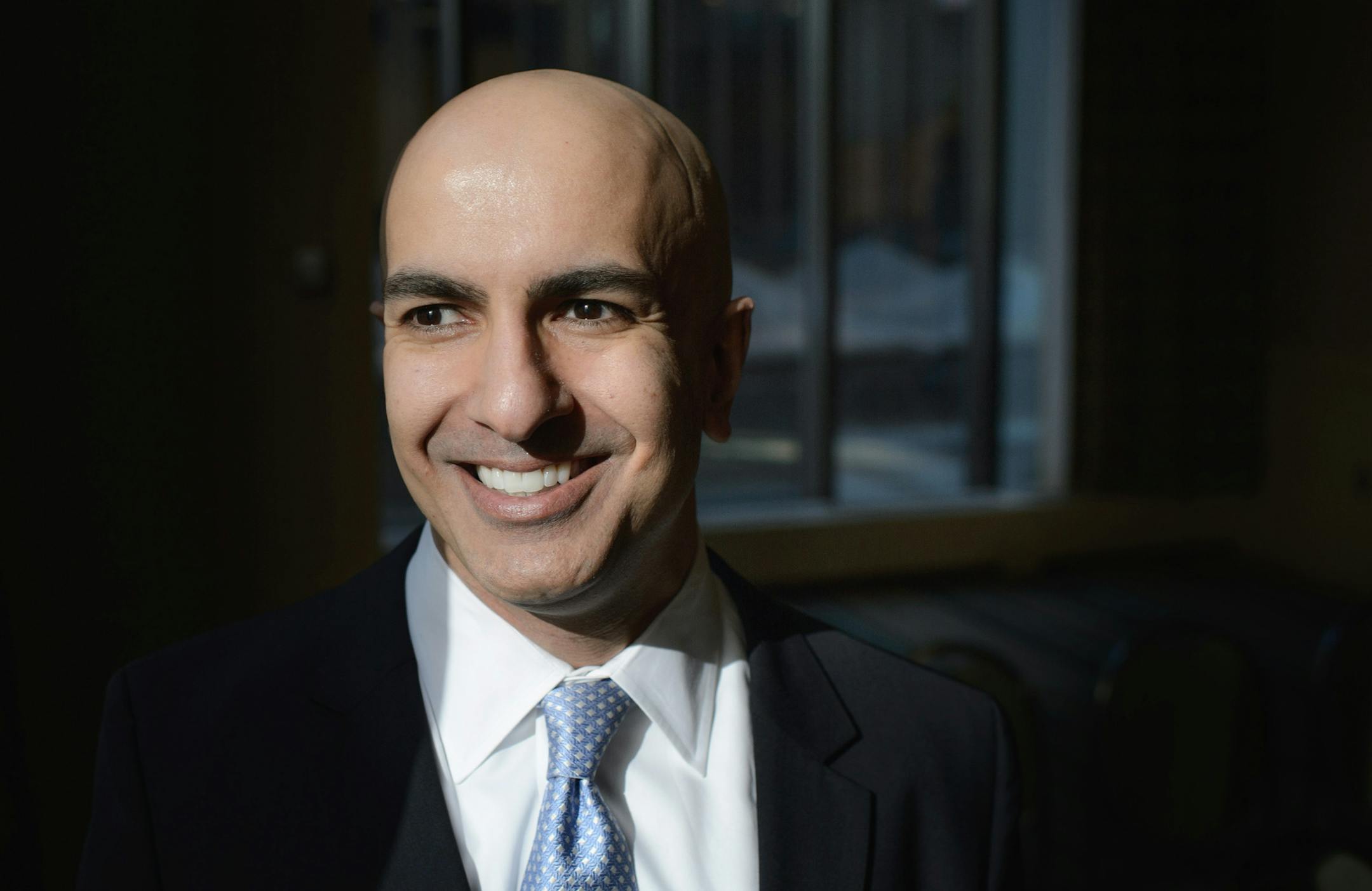
Decisions on interest rates can't be made using a simple formula, Minneapolis Fed President Neel Kashkari said Monday, wading into a debate on the Federal Reserve's power just as he's about to have a say on rates.
In an Op-Ed article published by the Wall Street Journal, Kashkari wrote that calls for the Fed to follow simple rules for rate decisions "would unduly limit the Fed's policy tools and ultimately harm the economy and in turn employment."
Kashkari, who became president of the Minneapolis Fed at the start of this year, will have a vote on the Open Market Committee, which sets interest rates, for one year in 2017.
Arguments over the Fed's policymaking scope have raged since the central bank was formed a century ago. But in recent years, battles that were confined to wonky economist journals and meetings have spilled into the realm of politics and even talk radio.
Republicans and voices in right-wing media, angered that the Fed's policy of ultralow interest rates to lift the country out of an economic crisis in 2008 and 2009 appeared in more recent years to be supportive of President Obama, have argued that interest rates should be set chiefly for one reason: to keep inflation in check. Since inflation in recent years has been low, the Fed should have lifted interest rates at a faster rate than it did, they say.
A similar debate brewed, with less political overtones, in the early 2000s over the pace that the Fed raised interest rates following the 2000 recession.
The Fed's policymaking Open Market Committee last week raised interest rates a quarter-point, the first hike since last December and only the second since 2006.
President-elect Donald Trump has said he is a "low interest rate guy," befitting his experience as a real estate developer who borrows extensively.
![Neel Kashkari has been appointed 13th president and chief executive officer of the Federal Reserve Bank of Minneapolis, effective January 1, 2016 ] GLEN STUBBE * gstubbe@startribune.com Monday, November 9, 2015 ***EMBARGOED UNTIL 10:30 A.M. CST NOVEMBER 10, 2015**** Neel Kashkari has been appointed 13th president and chief executive officer effective January 1, 2016 Neel Kashkari is cq](https://arc.stimg.co/startribunemedia/OTSDXY5UAVZS6W2ZEKR6SZBJXA.jpg?&w=1080)


