

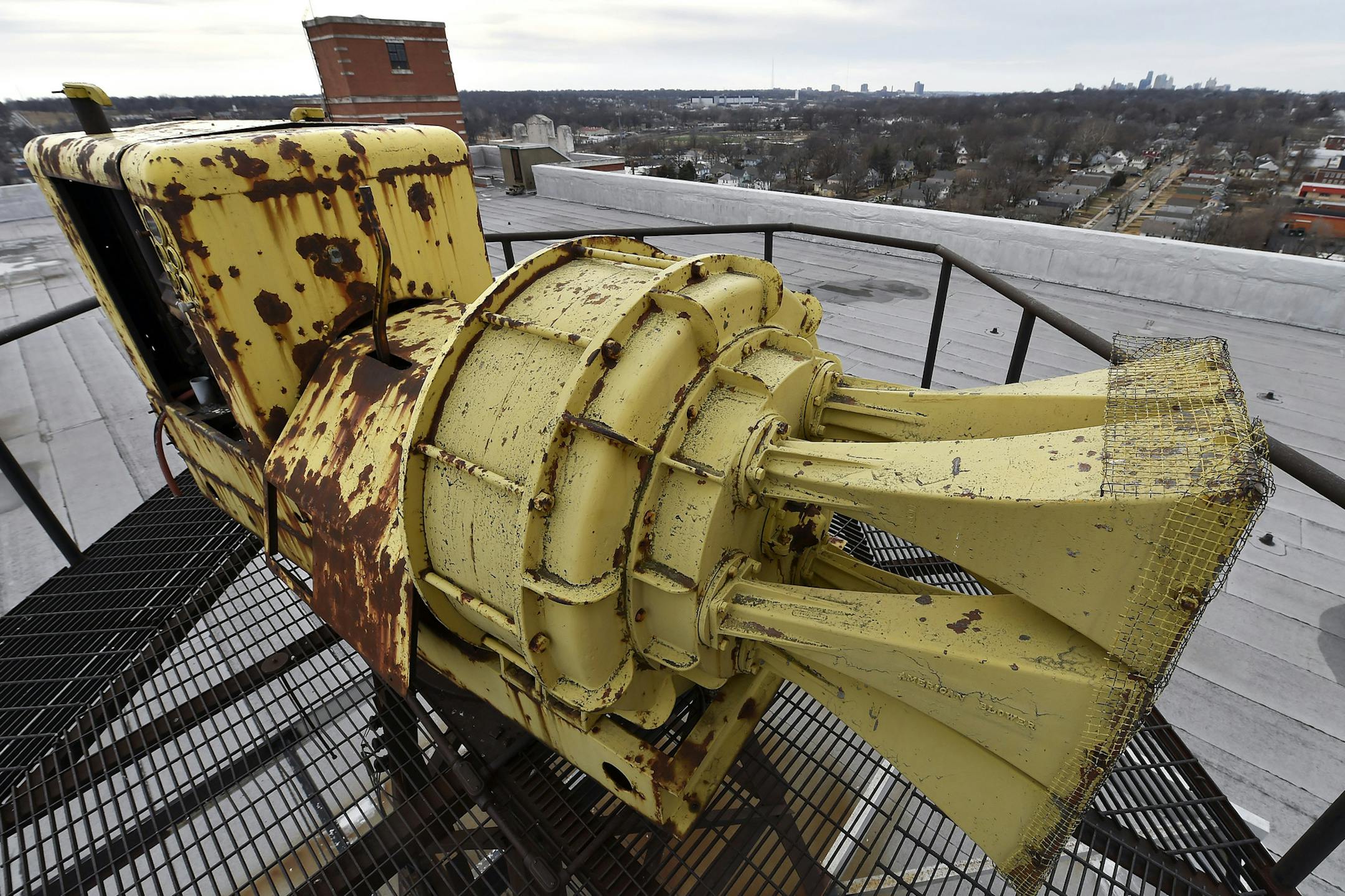
KANSAS CITY, Mo. – On a rooftop 18 stories above a busy street, it's 16 degrees, the wind's blowing and a bunch of bundled-up guys want to see what some might call a monument to madness.
There it sits atop the old building on Independence Avenue: a Chrysler Victory Air-Raid Siren. Twelve feet long and 3 tons. If Soviet missiles had ever headed this way, somebody would have fired up its V8 hemi engine and blasted 138 decibels over 25 miles.
"They must have found a deaf guy to operate it," Stephen Bean, a coordinator with Kansas City's emergency management office, yelled to the others as they looked at the siren that had a hand-operated lever.
If Kansas City ever has a snafu like Hawaii did regarding an alert about an inbound missile, the culprit won't be this old siren atop Hardesty Self Storage, which used to serve as the Kansas City U.S. Army Quartermaster Depot.
But city officials do have a plan for a nuclear detonation. And it's not the same as during the Cold War.
The biggest threat now is not from a nation state, but from terrorist act. That makes planning a response more difficult. The Soviets likely targeted military installations and defense plants as part of an overall military strategy.
"The target now may just be crowds and that can be anywhere," Bean said.
Among the reasons for concern: terrorism, unstable regimes, unstable leaders, rogue groups and the possibility of stray nukes.


