

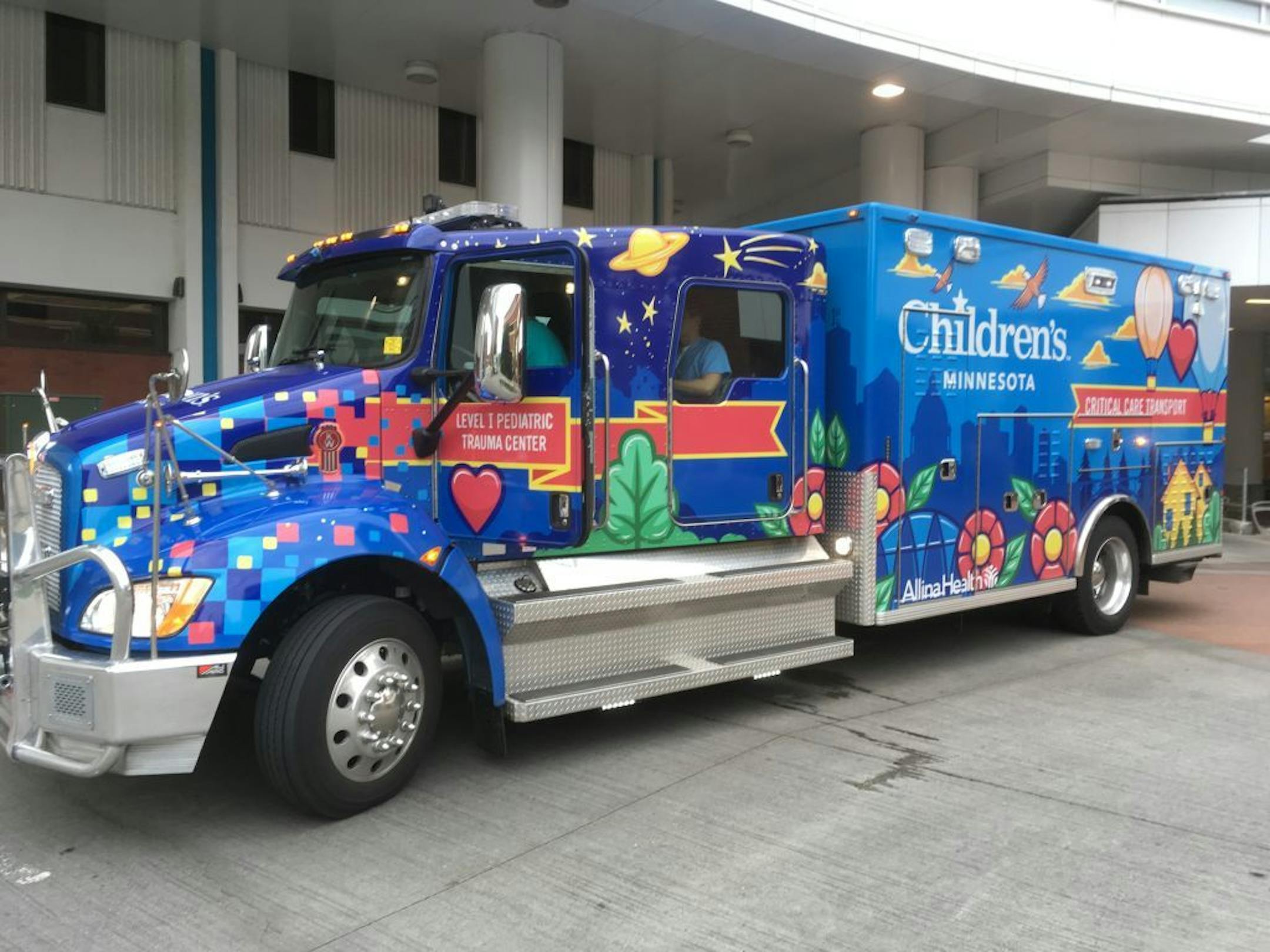
An administrative law judge has recommended that regulators grant a statewide license to Children's Minnesota to operate a new quad-cab ambulance for transporting patients between hospitals across Minnesota.
The state's Emergency Medical Services Regulatory Board (EMSRB) is expected to make a final decision next week on the controversial proposal from Children's, which has been opposed by other EMS providers including the ambulance service at the Mayo Clinic.
Critics argue the new service will deprive EMS providers of inter-facility runs that generate critical revenue while weakening "primary service area" rules that govern the state's network of ambulance services. But in a recommendation issued last month, Judge Jessica Palmer-Denig wrote that many concerns from critics are speculative whereas Children's has established that a demand exists for the new service.
"Some objectors contend that granting Children's a statewide license will open the door to statewide licensure of other entities, including non-Minnesota and for-profit entities, leading to destruction of Minnesota's current [primary service area] system," Palmer-Denig wrote. "If Children's is granted a license, and subsequently another entity determines that it wishes to seek a statewide license, the board will be required to address the merits of that license application and determine its impact on the public health, at the time that issue arises."
Children's applauded the decision, saying it came after Palmer-Denig oversaw a five-day public hearing this fall. The specialized transport service would provide needed care to critically ill babies and children anywhere in the state, Children's said, and would not respond to 911 calls.
The judge "found that Children's had established by a preponderance of the evidence that a license should be granted," Children's said this week in a statement. "The judge's decision provides the EMSRB with a very complete road map upon which to base its decision."
Mayo Clinic, however, issued a statement this week that continued to highlight concerns, saying patients already have access to safe and quality medical transportation. The access is protected, Mayo said, by existing laws including those on primary service areas, which are regions where ambulance services are assigned to answer 911 calls and have primary responsibility for transfers between facilities.
"To grant an additional license outside of these protections could very likely cause an adverse downstream effect for these vulnerable pediatric and neonatal patients and ultimately patients of all ages," Mayo said in a statement.


