

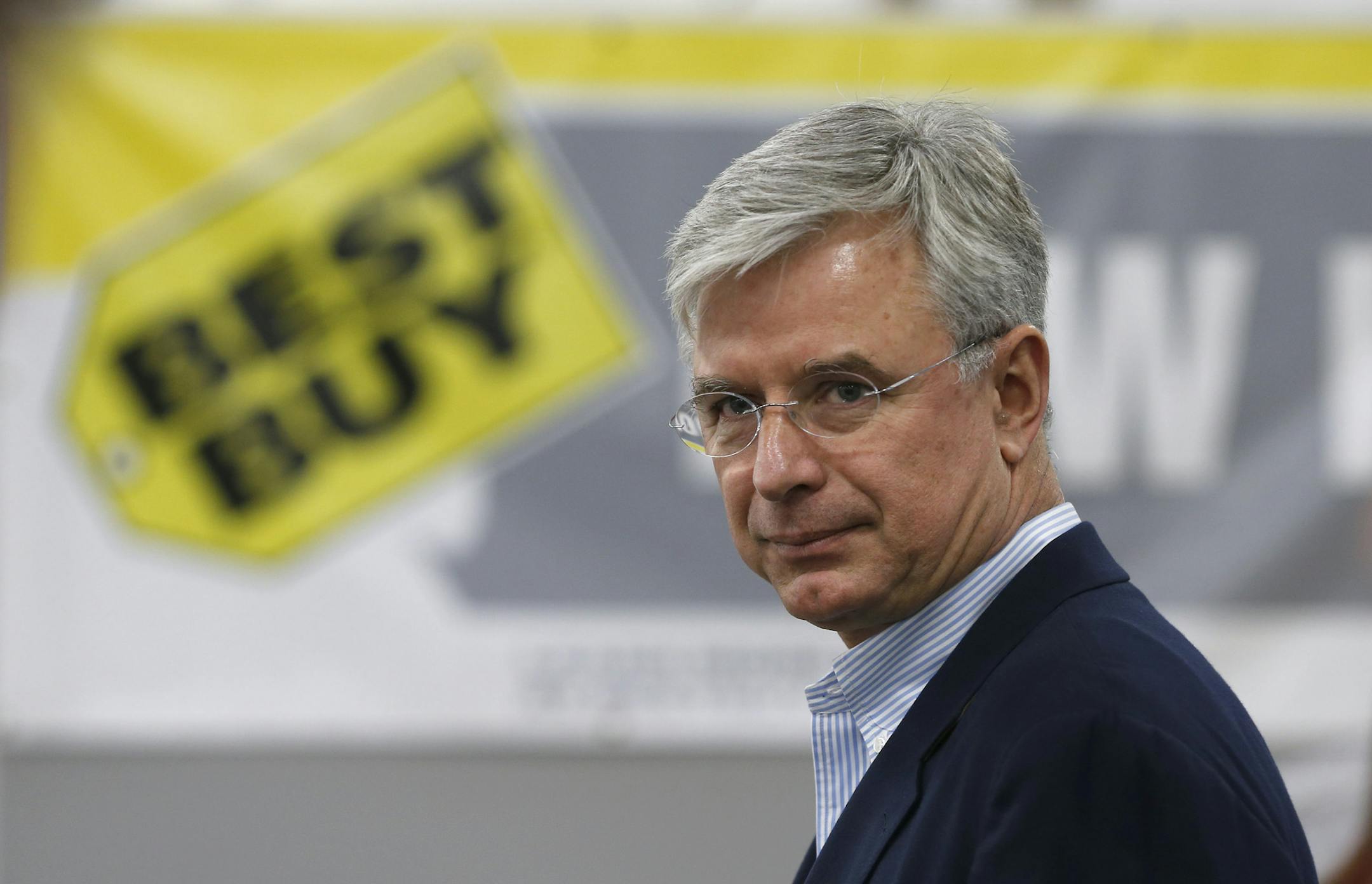
Best Buy Co. CEO Hubert Joly began his response to a question earlier this week about Amazon.com by saying "we're obsessed" with the Best Buy customer.
In a group setting like Best Buy's investor day, it was impossible to ask the obvious follow-up — how much Joly has learned from watching Amazon's Jeff Bezos, another self-described, obsessed-with-the-customer CEO.
Bezos just this year reminded investors that Amazon's obsession with the customer is one way he keeps it "day one" at Amazon, meaning to keep the same sense of urgency about creating new ways of serving customers as Amazon had at the beginning.
It seems hard to use obsessiveness as a business measure, but it's clear this trait at Best Buy is not just talk. A better experience for the customers who buy from Best Buy seems to explain not only why Best Buy is alive in 2017 but why the company seems poised to keep growing.
The company looked to be just more Amazon roadkill five years ago when Joly got there. As he joked again this week, Best Buy then only had two problems, but both were life-threatening, as same-store sales were declining and the operating margin was contracting.
The management team soon announced a turnaround plan called Renew Blue. Top of the list was improving the customer experience.
Keeping the customers coming back seems pretty fundamental, but in traditional retailing it's easy to get distracted by the store — how it looks, what's on display and so on. Merchandising at its best is customer-focused, and Best Buy Co. founder Richard M. Schulze proved to be a masterful merchant. He changed the presentation of goods in the store as consumer preferences changed and more or less invented the big-box electronics store.
More than a dozen years ago, though, Richfield-based Best Buy started rolling out a new strategy it called customer centricity. Best Buy was on top of its game, yet Best Buy's management team realized a big box filled with stuff wasn't all that appealing to a lot of people.


