

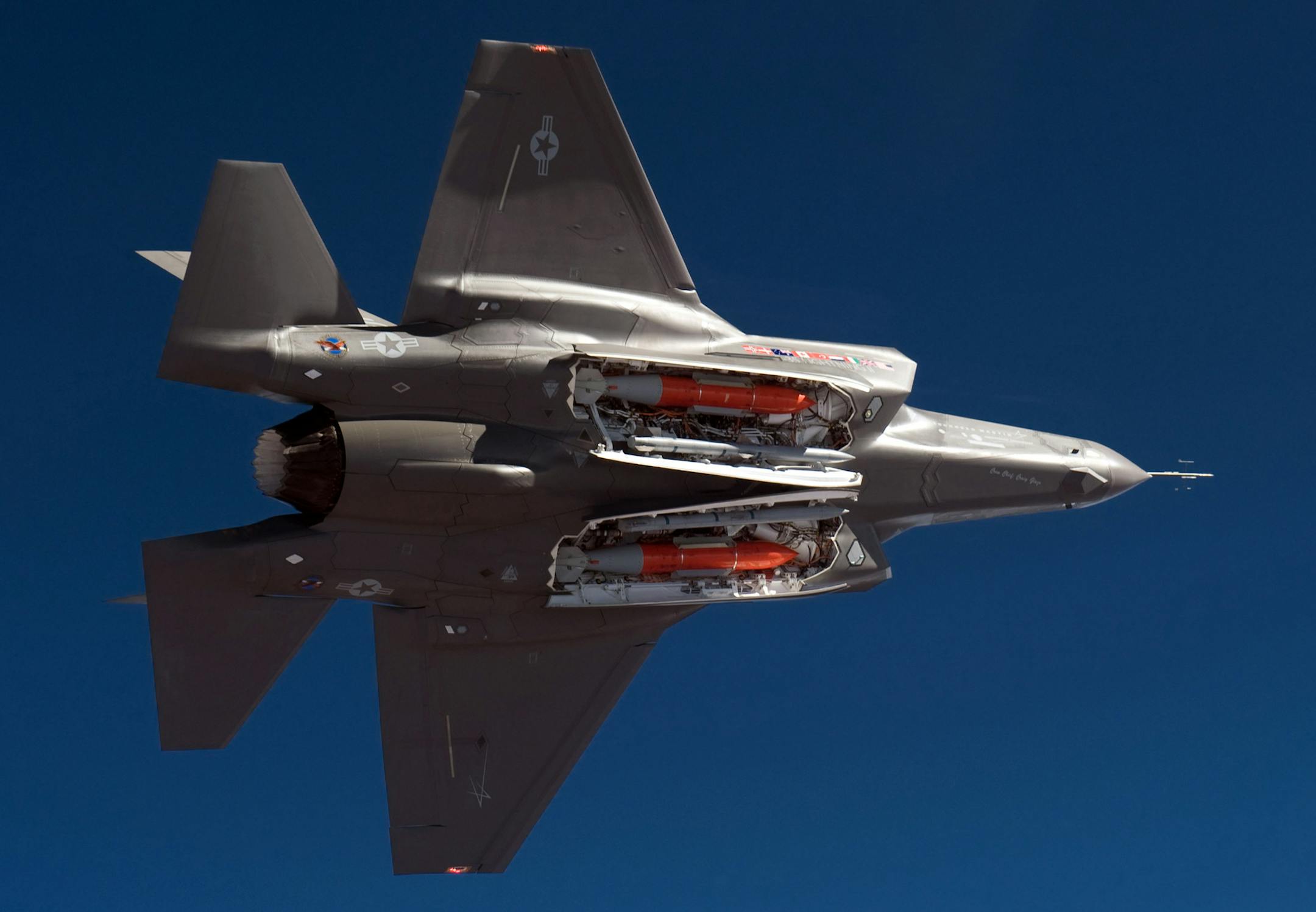
The F-35 Joint Strike Fighter is embarking on a 14-stop tour this year, coming out like a debutante at the ball as Pentagon officials seek to bolster the beleaguered image of the most expensive weapons system in history.
Although the $400 billion program has suffered years of delay and billions of dollars in cost overruns, one of the main problems the stealthy fighter jet now faces is its poor standing in the realm of public perception, defense officials say. But with the program showing signs of stabilizing and production ramping up, the Pentagon sees what marketing executives call a "branding refresh" opportunity and plans to showcase the sleek jet at a series of air shows and events across the country.
"The public perception and the reality are so different," Air Force Lt. Gen. Christopher Bogdan told a congressional subcommittee Wednesday. "Getting out there and telling the story is part of what we need to continue to do."
Changing the public's perception, he said, won't be easy. Past problems have "not been conducive to people believing what we say," he said.
The first step in the good-news tour was the announcement that the costs of the plane are starting to come down. The cost of the Air Force's variant of the plane is expected to drop from $108 million this year to $85 million in 2019. The total procurement cost dropped $7.5 billion, Bogdan told reporters Thursday, and the services have expressed such confidence in the plane that they decided to extend the operational life six years, to 2070.
Meanwhile, production is expected to increase. This year, Lockheed Martin, the aircraft's manufacturer, delivered 45 planes. That could grow to 145 by 2020, Bogdan said.
"For a program that has had a tragic past, that is not a bad report card," he said.
But Bogdan, the blunt and at times gruff program executive officer who promised to deliver the "good, bad and the ugly," also noted continuing problems. Most notably, he said, there continued to be "stability" issues with the software. The F-35 is often called a flying computer because it uses 8 million lines of code.


