

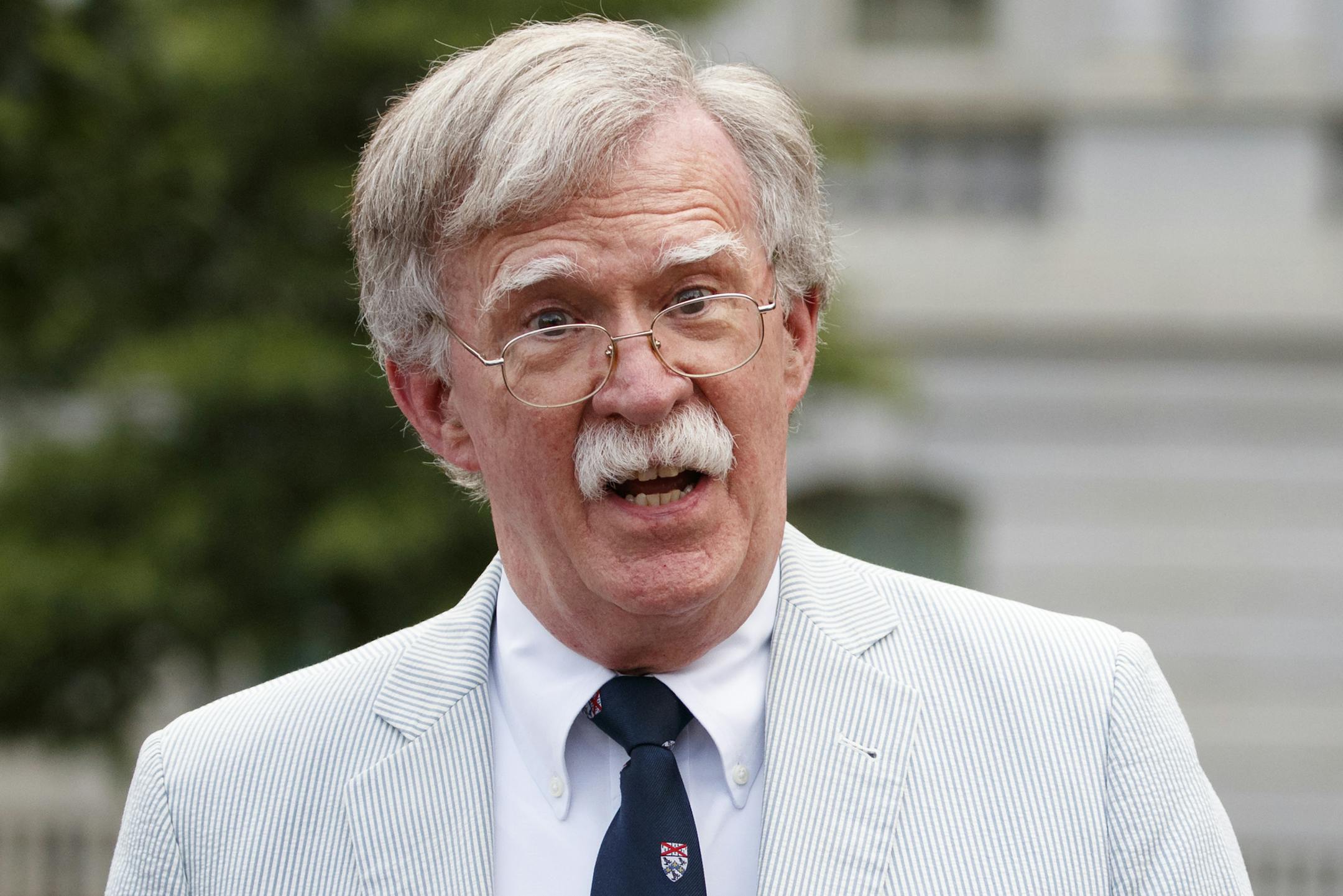
Has John Bolton had some sort of constitutional revelation? Back in November, President Donald Trump's former national security adviser made it clear that he would not testify voluntarily before the House of Representatives' impeachment inquiry, and that if subpoenaed he would go to court to ask for judicial direction. This week, Bolton issued a statement indicating that if subpoenaed by the Senate during Trump's trial, he would testify.
What changed? Although Bolton gave a constitutional explanation for his flip-flop, it's difficult to see a coherent argument in it. The most likely explanation is politics: Bolton seems to be calculating that Senate leader Mitch McConnell will do everything he can to avoid allowing Bolton to be called. That would mean Bolton can now present himself as willing to testify without actually having to appear.
Bolton's formal account of his change of position deserves attention — because his initial refusal to testify without a judicial order had a certain logic to it. The basic theory of Bolton's old stance was that if subpoenaed to testify by the House, he would have faced a constitutional conflict between "a House committee subpoena on the one hand, and a Presidential directive not to testify on the other."
This position rested on the idea that Trump's orders to executive branch officials not to testify before Congress were lawful. I don't buy that argument. The president has no authority to stonewall Congress or prohibit his employees from cooperating with an impeachment inquiry. The president's blanket refusal was so outrageous that it forms the basis of the second article of impeachment approved by the House.
Nonetheless, going to court to get guidance wasn't a ridiculous idea; while Bolton couldn't defensibly rely on the legality of Trump's order, it was plausible that he still should have been exempt from testifying. As national security adviser, his communications with the president could conceivably have been protected by executive privilege. The idea of executive privilege is found in the Supreme Court's famous decision in the Nixon Watergate tapes case. It's probably at its peak when it protects national security conversations between the president and his highest advisers — like Bolton. Bolton could have agreed to appear before the House and then asserted executive privilege for questions he didn't want to answer. (Notice that Bolton still hasn't said whether he would invoke executive privilege in response to some questions that might be posed to him in a Senate trial.)
But Bolton now says that "it does not appear possible that a final judicial resolution of the still-unanswered Constitutional questions can be obtained before the Senate acts." He concludes:
Accordingly, since my testimony is once again at issue, I have had to resolve the serious competing issues as best I could, based on careful consideration and study. I have concluded that, if the Senate issues a subpoena for my testimony, I am prepared to testify.
If Bolton can now "resolve the serious competing issues" on his own, why couldn't he do it two months ago?


