

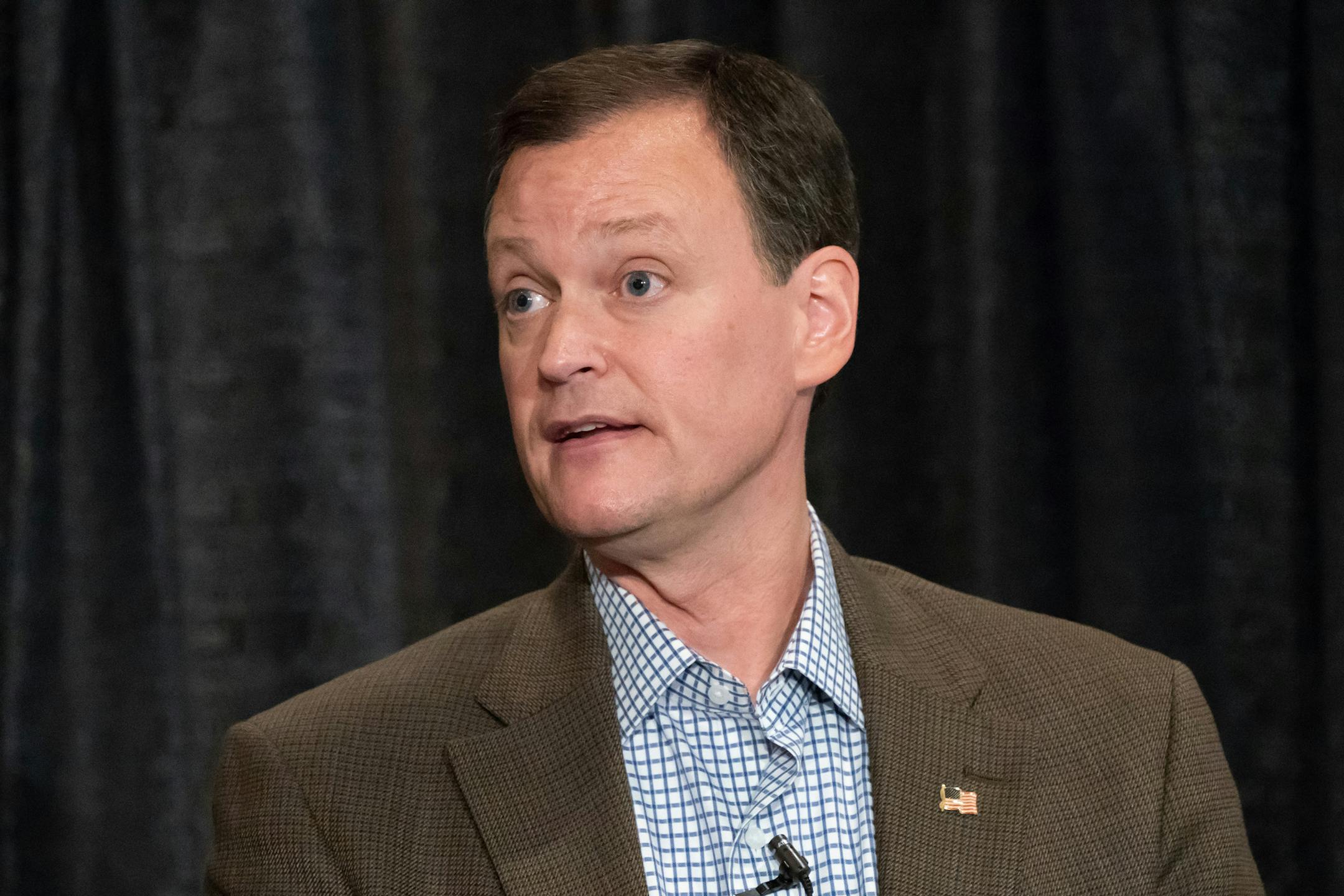
Jeff Johnson is offering Minnesotans an ambitious plan to cut taxes and restrain spending, aiming to put the state on a starkly different path after eight years of a Democratic governor.
"Our taxes are too high in Minnesota. We're in the top 10 of many of the major tax categories, and I don't think that's where we need to be as a state," said Johnson, the Republican candidate for governor. "So I would have a goal of reducing taxes."
Johnson wants to enact income tax cuts, shield Social Security benefits from state tax collectors, eliminate a major statewide business tax and allow a tax on health care providers to expire.
In doing so, Johnson would push Minnesota in the direction of neighboring states like Wisconsin and the Dakotas. In recent years, Republican governors and legislatures in those states have reduced taxes, slowed spending and weakened labor unions as they try to recruit and retain businesses — amid the strains placed on Midwestern economies by globalization and technological change.
Johnson's Democratic opponent, U.S. Rep. Tim Walz, says that Minnesota's robust investments in schools and universities, health care, transportation and the environment have created the conditions for the state's broadly shared prosperity — including the highest per capita income in the Midwest, outside of oil-rich North Dakota.
"We get what we pay for," Walz said, while emphasizing he wants to use taxpayer dollars wisely. "We have the highest quality schools. Our citizens live longer and have better life outcomes. We could shoot to become Mississippi, but I don't think that's where Minnesotans want to go."
As Minnesotans decide who will replace Gov. Mark Dayton, they will choose between these drastically divergent paths.
The Johnson path views government as a bloated impediment to prosperity that should be pared back, freeing up money for people and businesses to invest or use as they wish.


