

As cultural mash-ups go, Japanese hip-hop fans in blackface are decidedly strange.
When she first encountered them, New York painter Iona Rozeal Brown, who is African-American, felt a surge of pride at hip-hop's international appeal but thought it was "a little offensive" that Japanese teens sporting dreadlocks and cornrows were hanging out in tanning parlors to darken their skin. Called ganguro, which literally means "black face," the phenomenon is so popular that Brown turned out a series of pictures of blackfaced Japanese hipsters in traditional contexts -- gangsta rappers as Kabuki villains; divas in kimonos with hoodies.
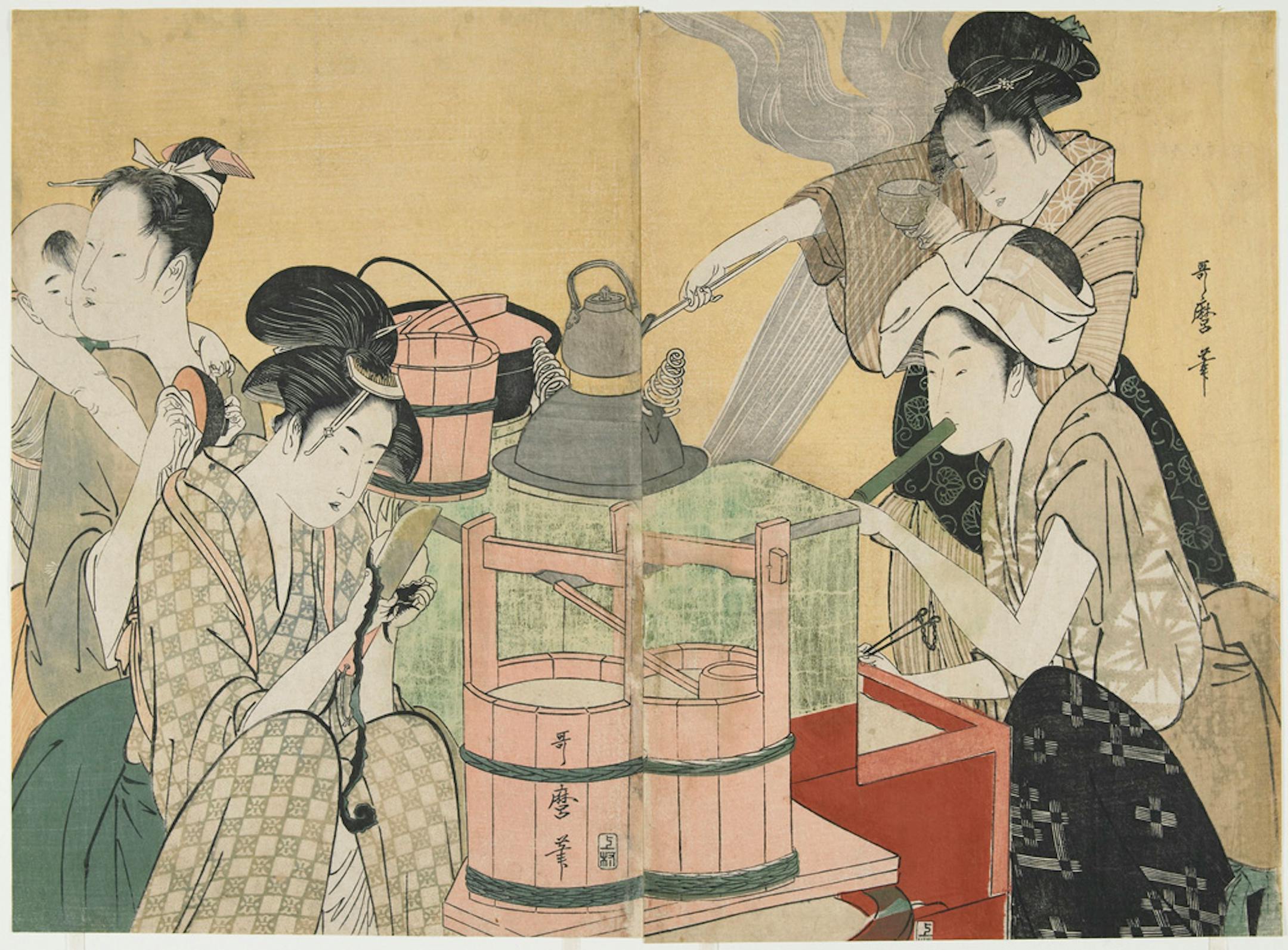
Several of Brown's fascinating ganguro paintings are showcased, along with other contemporary works and more than 150 classic Japanese prints, in "Edo Pop," an exhibit opening Sunday at the Minneapolis Institute of Arts. Highlighting the museum's stellar collection of ukiyo-e ("pictures of the floating world") prints, the show is a beguiling hybrid of past and present, hand-made esoterica and modern exotica. It will be on view through Jan. 8.
The dramatic impact of Japanese prints on the work of French Impressionist painters is well known, as is the influence of Japanese cartoons on U.S. television. "Edo Pop" explores a different vein of Japan's long-running cultural exchanges with the West.
It begins with 200-year-old, delicately tinted wood-block prints of kimono-clad beauties writing love letters in tea houses and ends with a 41-foot-long video projection of big-eyed girls beset by vampires in a colorful underwater garden. Along the way visitors encounter glamorous courtesans, mischievous children, Kabuki villains, mythological heroes, iconic waves and famous vistas of Mount Fuji.
Popular pleasures
Japan's Edo period (1615-1868) spawned one of the world's most legendary pleasure quarters, the "floating world" of Edo, the city that evolved into modern Tokyo. It was a time and a place that celebrated many of the same ephemeral diversions we love today -- beautiful women, luxurious fashion, high-octane parties, the theater, sex scandals, travel, dining out, telling ghost stories, admiring maple leaves in autumnal moonlight.
Like the Pop art of the mid-20th century, ukiyo-e prints depicted the popular culture of their time -- and became collectibles among the country's new merchant class.


