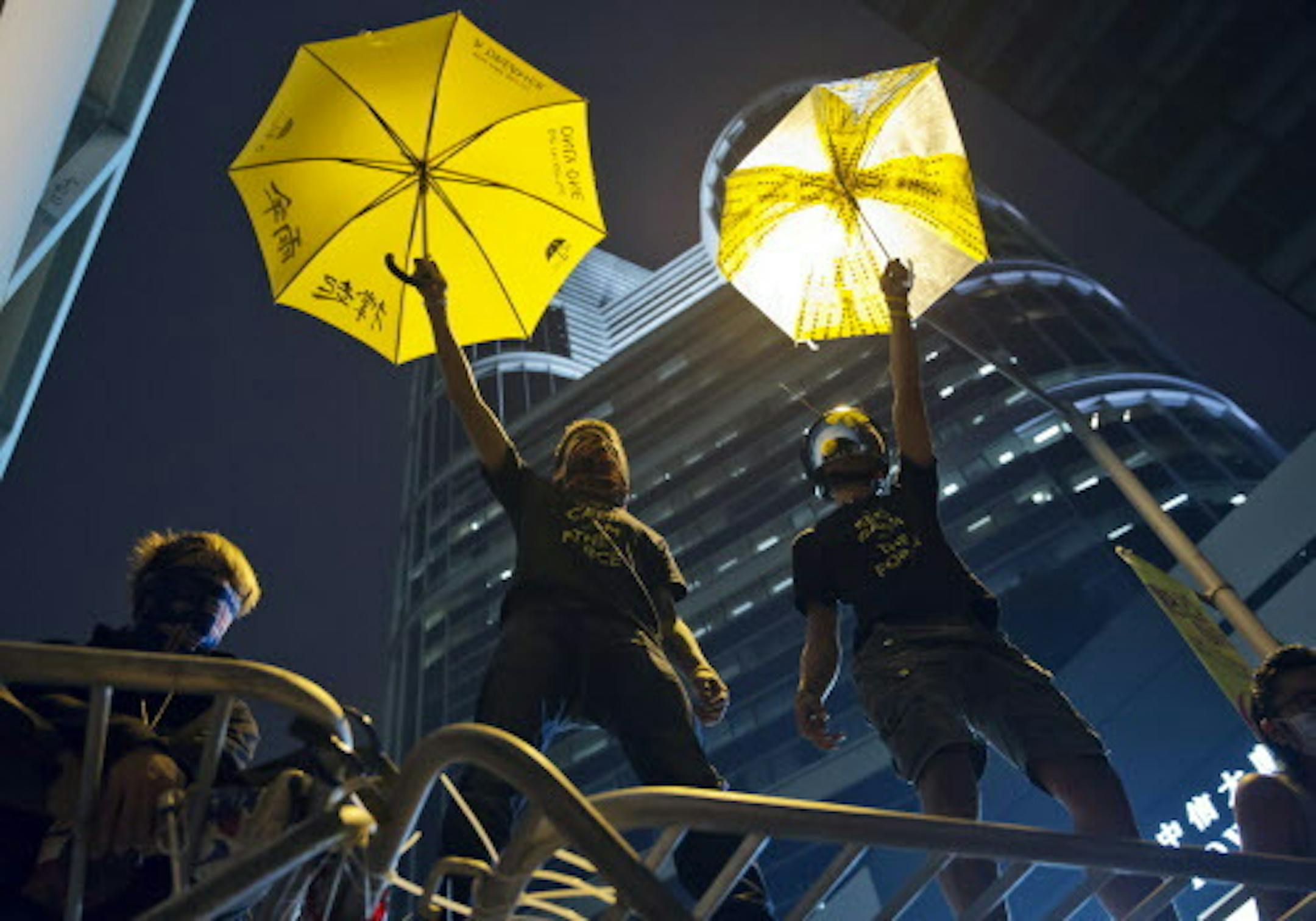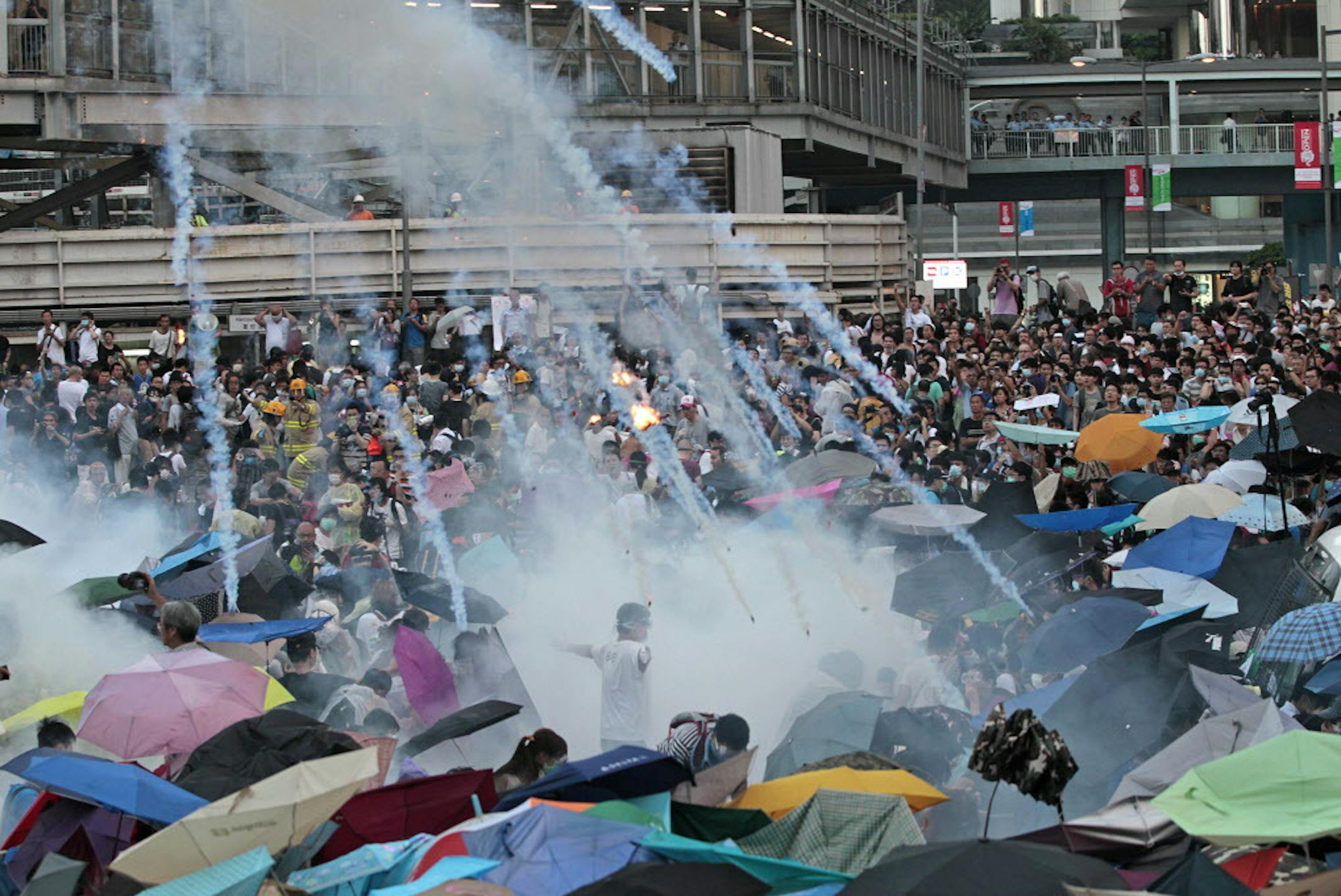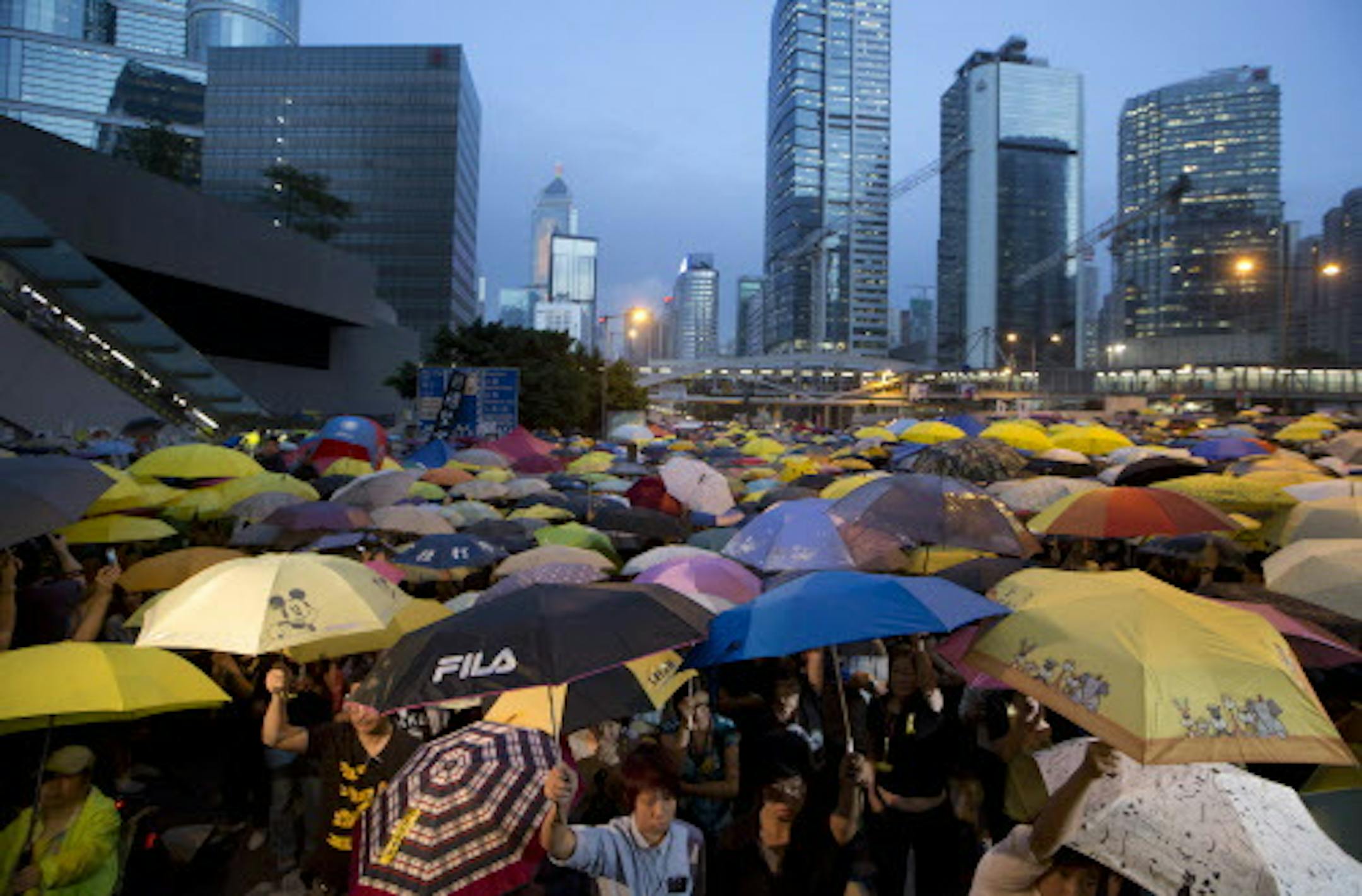
Hong Kong's government and its masters in Beijing are not exactly declaring victory, but they must be feeling satisfied. On Dec. 15 police quietly tidied away the last of the barricades that had been set up in late September, when student-led protests calling for greater democracy snowballed into the longest and largest civil-disobedience movement in the territory's history. Look further ahead, however, and the students have something to cheer about, too.
There is no doubt that the government won this round. The "Occupy Central" movement utterly failed in its declared objective of persuading the Hong Kong government and the leadership in Beijing to rescind a decision that candidates for election to the post of the territory's chief executive must first be subjected to screening by a committee that is stacked with supporters of the Communist Party.
The government also won without resorting to the extreme brute force that many had feared would be necessary to clear away the encampments that the demonstrators had set up in busy commercial areas. Some had even speculated that the Chinese People's Liberation Army would be called in. In this case, the authorities capped a successful operation by avoiding serious violence.
Yet there is a sting in the tail. It was clear from the outset, even to the students themselves, that the Occupy Central movement was unlikely to achieve its stated aims. President Xi Jinping was never going to grant the territory full democracy, nor was he going to back down publicly on an issue so crucial to the party. Against such minimal expectations, the Occupy Central protest laid down a marker.
Start with the level of public support. Even though that has recently faded as the territory's people have tired of the standoff, up to 100,000 protesters joined in to begin with — a display of people power that might make the authorities think twice should they ever try to restrict Hong Kong's freedoms even more tightly.
Next, the students have prepared the ground for future protests. The territory's government has shown itself to be out of touch with a young generation of well-educated Hong Kongers who fear a bleak future. The students have now returned to their campuses; resentful, unbowed and fired up by a camaraderie forged on the streets. If anything, they are angrier than they were when the protests began.
Far from over
The target of much of this frustration is Hong Kong's deeply unpopular leader, "C.Y." Leung Chun-ying. He may have won credibility with leaders in Beijing for his handling of the unrest, but he will be dogged by protests for the remaining two-and-a-half years of his term. There is a growing risk that as frustrations mount, the oft-praised pragmatism of the Hong Kong public will give way to outbursts of violence. Leung's troubles, it is safe to say, are far from over.
Leung has the power to do something about this. Demand for greater democracy in Hong Kong is fueled by profound dislike of an economic and social system that is a relic of colonial days and remains under the sway of a business elite whose members dominate Hong Kong's main organs of power. Despite the territory's well-deserved reputation as a low-tax, low-regulation place, the government restricts the supply of land and splits the gains from high land prices between itself and the elite.