

Is President Donald Trump legally entitled to withhold his tax returns from the House Committee on Ways and Means?
Probably not — but it's not simple.
The governing legal text, known as section 6103, is buried in a lengthy set of provisions governing confidentiality and disclosure of tax returns. It says this:
Upon written request from the chairman of the Committee on Ways and Means of the House of Representatives, the chairman of the Committee on Finance of the Senate, or the chairman of the Joint Committee on Taxation, the Secretary (of Treasury) shall furnish such committee with any return or return information specified in such request, except that any return or return information which can be associated with, or otherwise identify, directly or indirectly, a particular taxpayer shall be furnished to such committee only when sitting in closed executive session unless such taxpayer otherwise consents in writing to such disclosure.
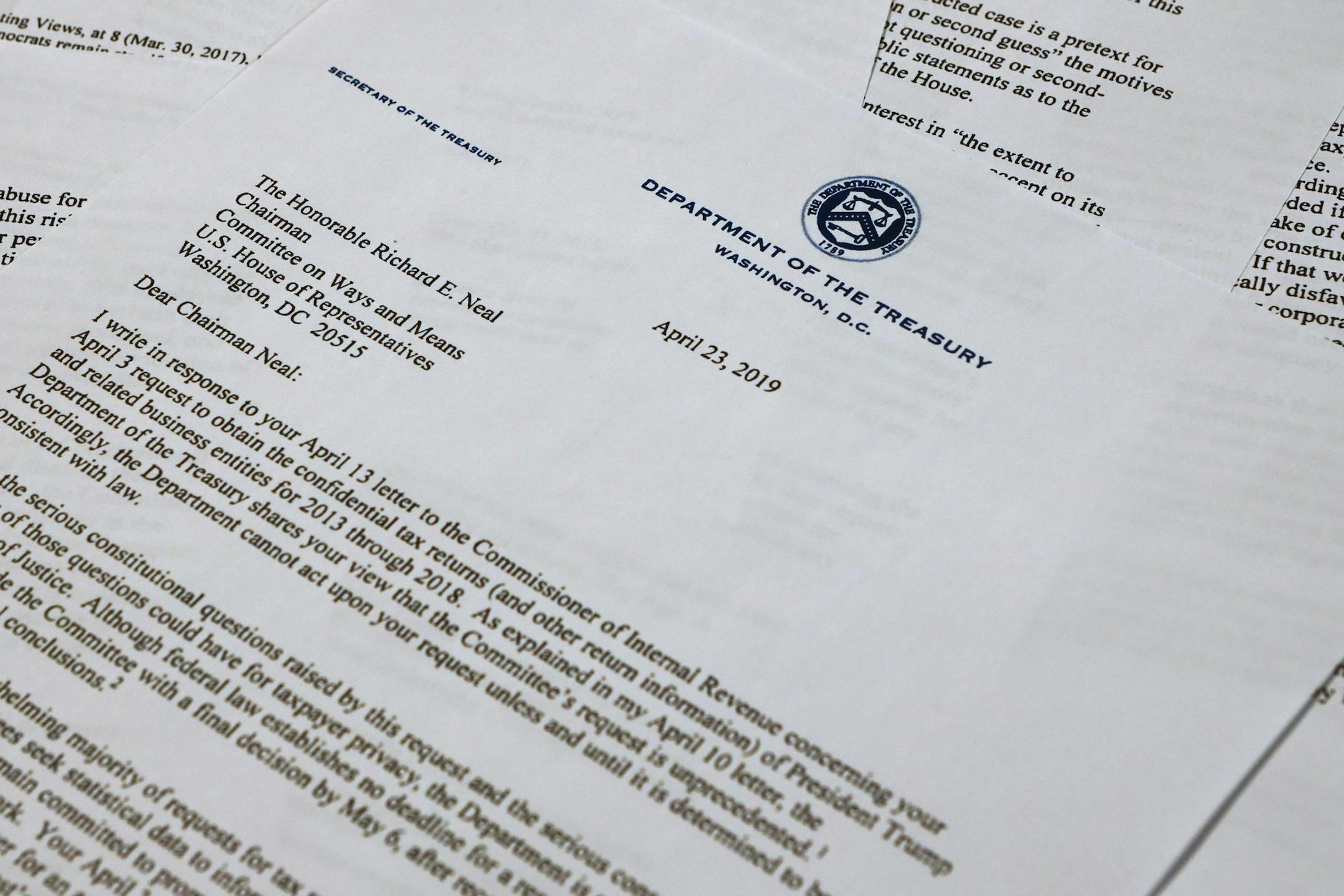
Rep. Richard Neal, chairman of the Ways and Means Committee, invoked section 6103 on April 3, when he asked for Trump's federal income tax returns for 2013 through 2018 — along with the returns for eight organizations owned by or associated with Trump.
At first glance, section 6103 authorizes Neal to get those returns. It does not contain any exceptions. It does not give taxpayers, including the president, a right of refusal.
Why is there any issue here?
In declining Neal's request on May 6, Treasury Secretary Steven Mnuchin offered a brief answer. He said that the provision quoted above "is bounded by Congress's authority under the Constitution, and the Supreme Court has held that the Constitution requires that Congressional information demands must reasonably serve a legitimate legislative purpose." The president's personal lawyer, William Consovoy, elaborated on this point in detail.


