

PYEONGCHANG, South Korea - For almost a week, Vice President Mike Pence has been walking a fine line. He has been trying to beat back North Korea's charm offensive while working to repair the break between the U.S. government and South Korea, whose leader is openly pushing for more engagement with Pyongyang. That challenge is set to intensify when the Olympics end.
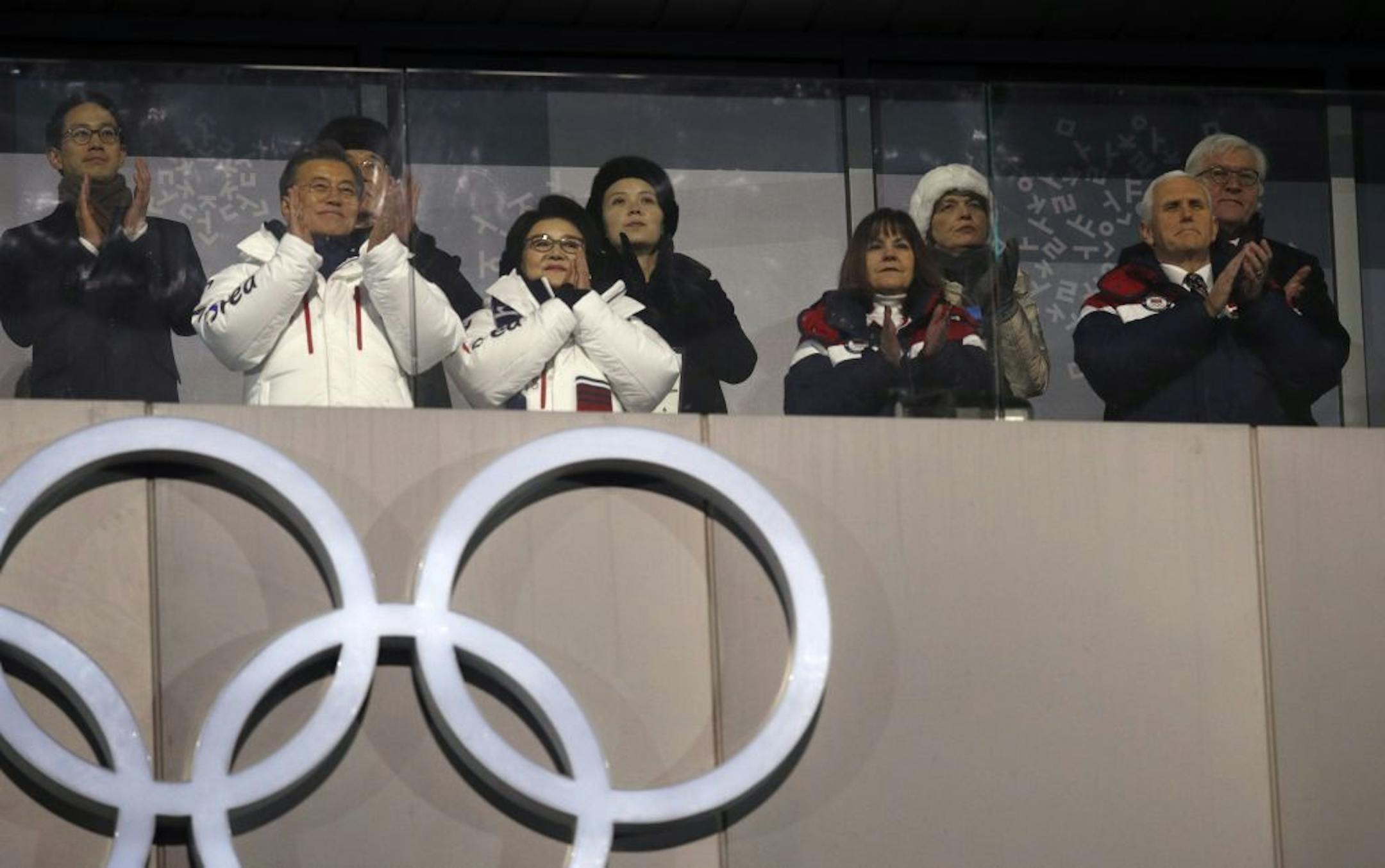
The events surrounding Friday night's Opening Ceremonies in Pyeongchang were a stark illustration of the larger diplomatic dance going on between Washington, Seoul and Pyongyang. South Korean President Moon Jae-in tried hard to get the United States and North Korea together. Both Pence and the North Koreans resisted Moon's initiative and avoided interacting with one another. The world watched intently for any sign of progress, but none emerged.
The focus on the U.S.-North Korea meetings (or lack thereof) ignores what was going on beneath the surface. Even if he had met the North Korean officials, Pence would simply have reiterated his mantra that North Korea cannot reap the benefits of being part of the community of nations while it threatens the world with its nuclear and missile aggression. Pence was not about to allow an actual breakthrough.
But Pence was acutely aware that by rebuffing a potential opening with Pyongyang, he was also rebuffing Moon, thereby risking widening the rift in the U.S.-South Korea relationship. Behind the scenes, Pence was working hard to preserve at least the basic framework of unity in the alliance.
Earlier Friday, Pence visited the wreckage of the Cheonan, the South Korean ship sunk by North Korea in 2010, and visited with North Korean defectors to highlight the brutal nature of Kim Jong Un regime. Standing in front of the Cheonan, I asked Pence whether he had been able to find common ground with Moon during their Thursday evening bilateral meeting and dinner. He said they had.
Pence claimed there was no daylight between the U.S. and South Korea on the goal of North Korean denuclearization, without acknowledging that they disagree on the path toward that goal. But interestingly, Pence also suggested that during their bilateral discussions he and Moon had agreed on terms for moving forward. They both agreed not to enter into negotiations with Pyongyang similar to those that have failed in the past, he said.
"President Moon and I reflected last night on the need to do something fundamentally different. And that is, demand at the outset of any new dialogue or negotiations that the Kim regime put denuclearization on the table and take concrete steps with the world community to dismantle, permanently and irreversibly, their nuclear and ballistic missile programs," Pence said. "Then and only then will the world community consider negotiating and making changes in the sanctions regime that's placed on them today."
Officials told me this nuance was important. Pence is not saying no to negotiations ever. At the same time, he is not agreeing to negotiations now. The idea is, there will be no progress on negotiations without first seeing progress on denuclearization. What exactly would qualify as progress is left intentionally ambiguous. Meanwhile, sanctions will continue to be strengthened.


