

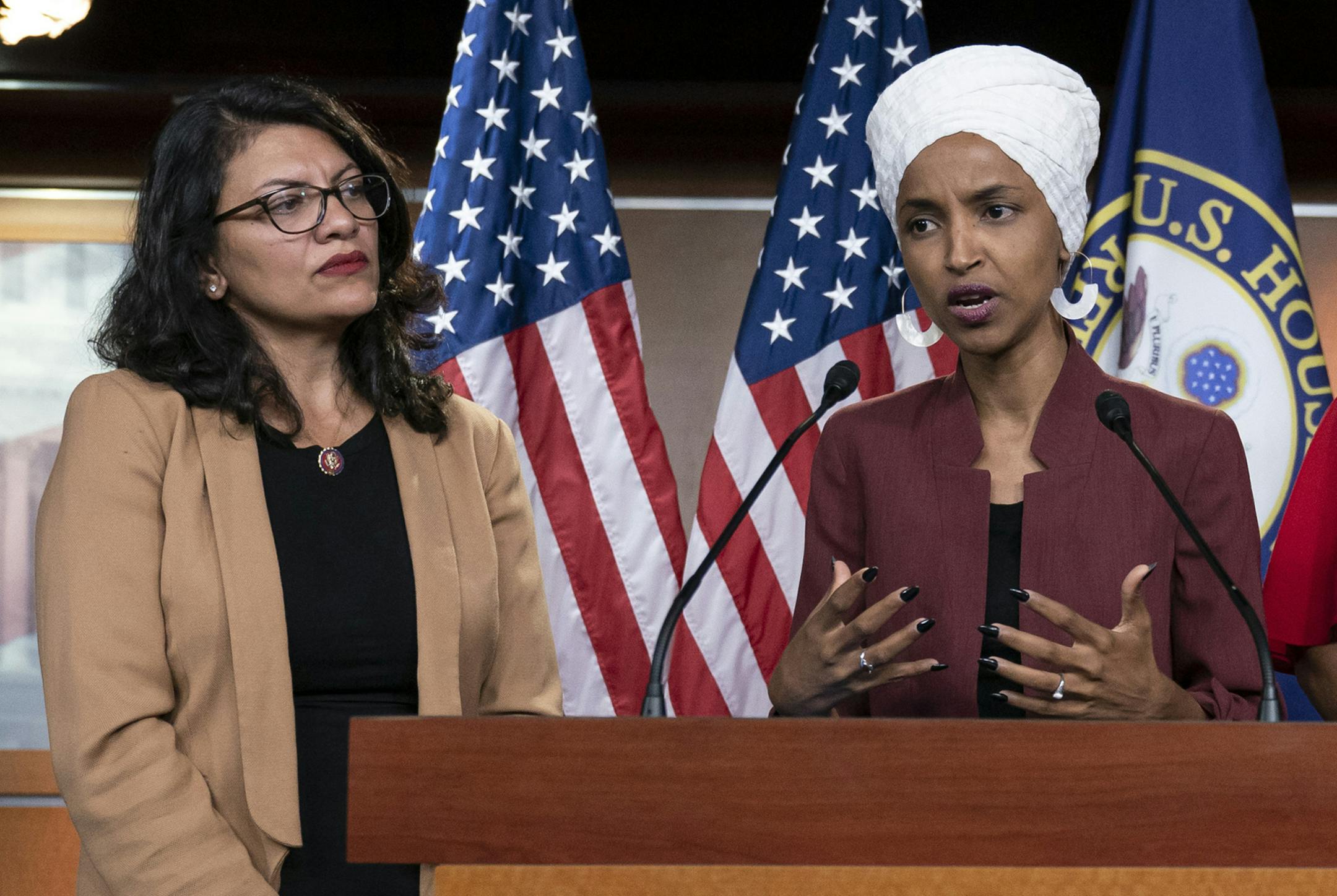
Benjamin Netanyahu says he had no choice but to forbid two first-year members of Congress from visiting Israel. Israeli law bans those who boycott it, and after reviewing the itinerary of Reps. Ilhan Omar and Rashida Tlaib, the Israeli prime minister determined their visit's "sole purpose was to support boycotts and deny Israel's legitimacy," according to his statement to the press. What else could he do?
Israeli officials have since partially reversed course on Tlaib, saying they would allow her a West Bank visit on "humanitarian grounds." And in the narrowest possible sense, Netanyahu has a point. Omar, Tlaib and other Jacobins in the Democratic Party single out Israel for special opprobrium. Unlike another recent Democratic Party delegation, they had not planned to meet either government officials or members of the opposition.
In a more meaningful sense, however, Netanyahu's statement is hogwash. First, it cannot have been a surprise that Omar and Tlaib were not traveling to Israel to get on-the-ground policy briefings. For these lawmakers, Israel is merely a prop they can use to rouse their supporters.
More important, as Axios reported this week, Israeli agencies discussing the visit had already agreed to allow the visit. Israel's ambassador in Washington, Ron Dermer, also had said that Israel would allow the Omar-Tlaib delegation out of respect for Congress. Everyone knew this was a stunt.
So what happened between that meeting and Netanyahu's announcement? The answer is the same four words that have upended so many other well-laid plans: President Donald Trump tweeted.
On Wednesday morning he said on Twitter that it would "show great weakness" for Israel to allow entry to Omar and Tlaib. And within a few hours Netanyahu gave his statement about their itinerary and Israeli law. Trump had already expressed privately his disappointment with Israel's decision to let the squad members into Israel, according to Axios. By tweeting, he was just saying the quiet part out loud.
Yet Trump's message — that it showed strength for Israel to ban Omar and Tlaib — is contradicted by the events it set in motion. By reversing its decision following the protests of a powerful friend, Israel looks weak.
Forget for a moment the specifics of Omar and Tlaib's visit, or their rhetoric and positions on issues important to Israel. Deciding who can and cannot visit one's country is elemental to national sovereignty. Israel has surrendered that sovereignty in this instance because Trump wants to elevate Omar and Tlaib as a foil for his own domestic political reasons.


