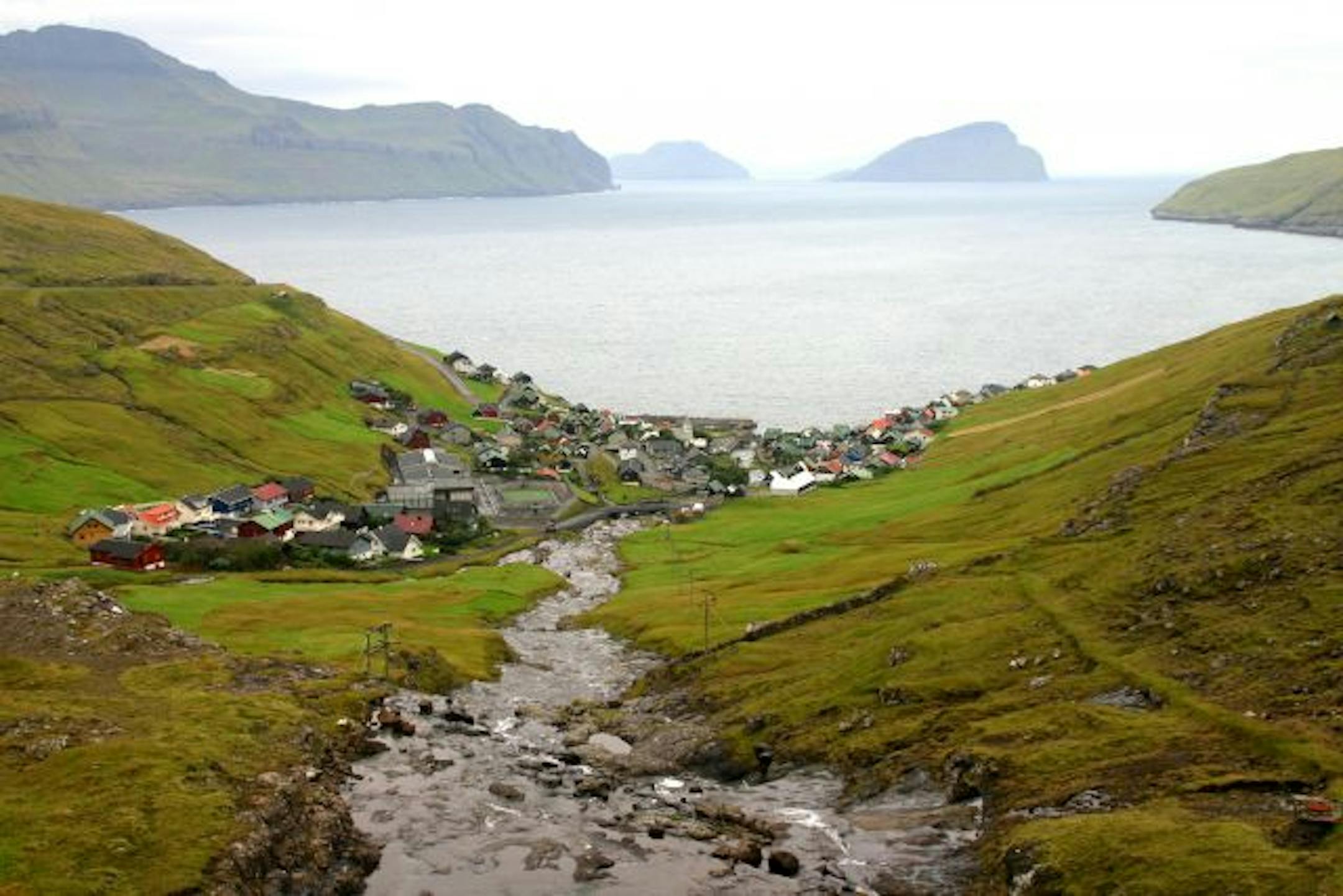
From the mountaintop road above Kvivik, green slopes fell steeply away to the sea, and the sea swept my eyes outward, over the village, to the soft shapes of other islands drifting in the pale blue distance. More than a thousand years of Faroe Islands history lay in that view. It was like looking at a map of time itself.
Kvivik is a Viking village -- the real thing, not a restoration -- still perched exactly where its ancient founders wanted it: Deep in a narrow fjord, where the sea was calm. On a beach where boats could be drawn up and driftwood gathered. At the mouth of a stream, for fresh water. Among grassy hillsides, where sheep and a cow or two might graze.
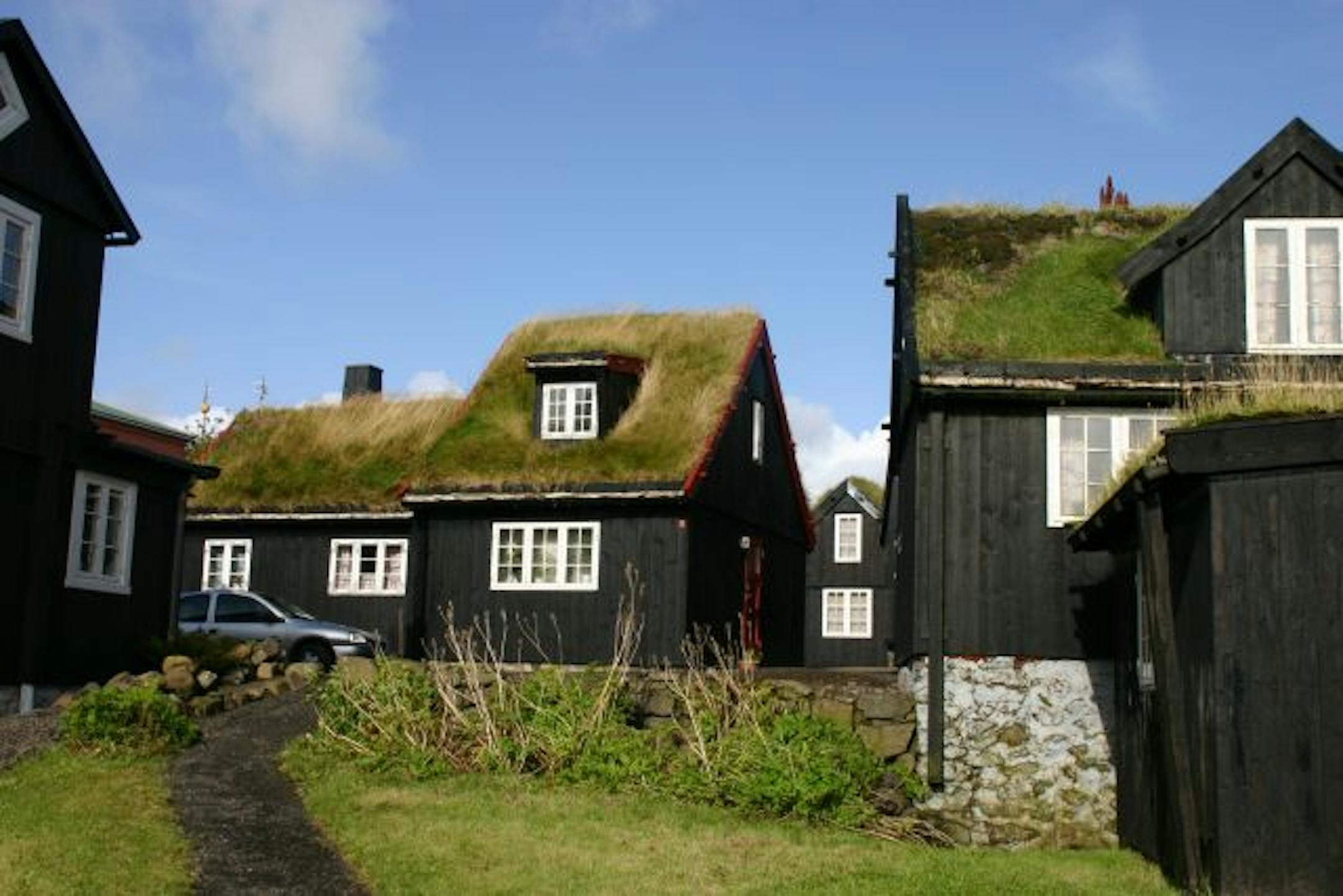
The town is bigger now, of course, but not much, and it boasts electricity and television and a few e-mail addresses. All the same, if its original settlers pulled their longboats up on that beach tonight, they'd feel right at home. They could even stay with relatives.
Two friends and I were doing almost the same thing in the Faroes last September, though we couldn't claim longboats or Faroese blood. We were renting a farmhouse in a seaside village, just over the mountain from Kvivik on the island of Streymoy. Our landlord was a fisherman who raises sheep when he isn't at sea, just like his ancestors.
I'd have gone to the Faroes for the light alone -- the clear light and those sweeping views. But I had trouble explaining it to folks back home. Why the Faroes? Because they were so far away. Because we knew almost nothing about them. Because, thanks to an old travel book I'd run across, they sounded interesting.
Local writer loved the Faroes
The author was an adventurer named Elizabeth Taylor, a Minnesota writer who hated cold weather but loved the far north and spent years in the Faroes, including all of World War I. She's virtually unknown in the States but famous on the islands for, among other things, documenting village life and giving art lessons to the area's first painters.
Art would have been inevitable, even without Taylor. The Faroes are a painter's landscape, ready-made for abstraction. Wind and weather keep details at bay, reducing geography to its essence: Land. Sea. Sky. Nothing more.