

The island fantasy is an enduring one for those of us who can't see water from our windows. When our cars and our souls are salt-encrusted and rusty, our midafternoon reveries turn to warm water and palm trees.
But wait.
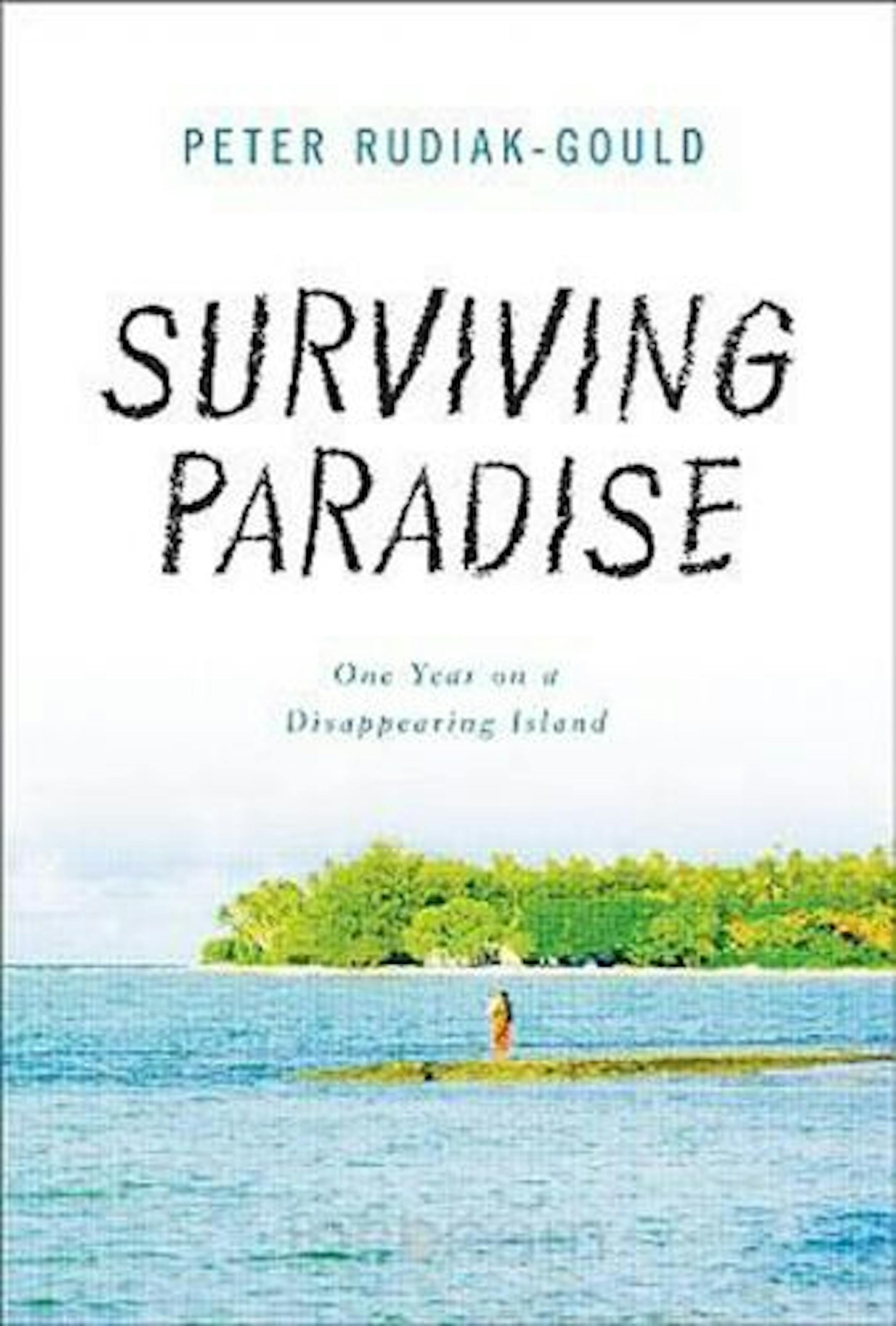
"Surviving Paradise: One Year on a Disappearing Island" might satisfy -- and erase -- those island aches.
It is a vivid, captivating, enriching account of one man's year on a Pacific island that he, too, imagined naively.
Peter Rudiak-Gould is barely 21 when his feet settle onto Ujae Island, one of 1,225 of the minuscule Marshall Islands. He can walk his island's shore in 45 minutes. He moves in with a family whose language he cannot speak, eats the typical island diet of rice and rice ("reverse Atkins") and lives in a 10-by-10-foot room with a mattress on the floor and a white plastic lawn chair.
As a volunteer for WorldTeach, he flails at instructing children who can't find their own nation on a world map, who scoff at him and insult him and whose parents don't care. He is, like so many Peace Corps volunteers, a "cultural orphan" in a spot on the globe 70 miles from "the nearest store, hotel, bank, restaurant, road, car, faucet, shower, refrigerator or fellow American."
He's still a young man -- just 27 this year -- but he observes his speck on the globe and its handful of people with the acuity of an anthropologist, the wisdom of a sage and the wonder of a child.
On his first efforts to spear fish: "Day number four earned me fish number one. It was not impressive: a thick-lipped white and blue fellow, about the size of a dumpling, but much less appetizing. I later came to know this species ... as the playground outcast, the embarrassing uncle, the village idiot of the fish kingdom -- a clumsy, sluggish, oblivious food that natural selection had spared out of pity." For a long time, his host family surreptitiously tosses out his catches rather than eating them.


