

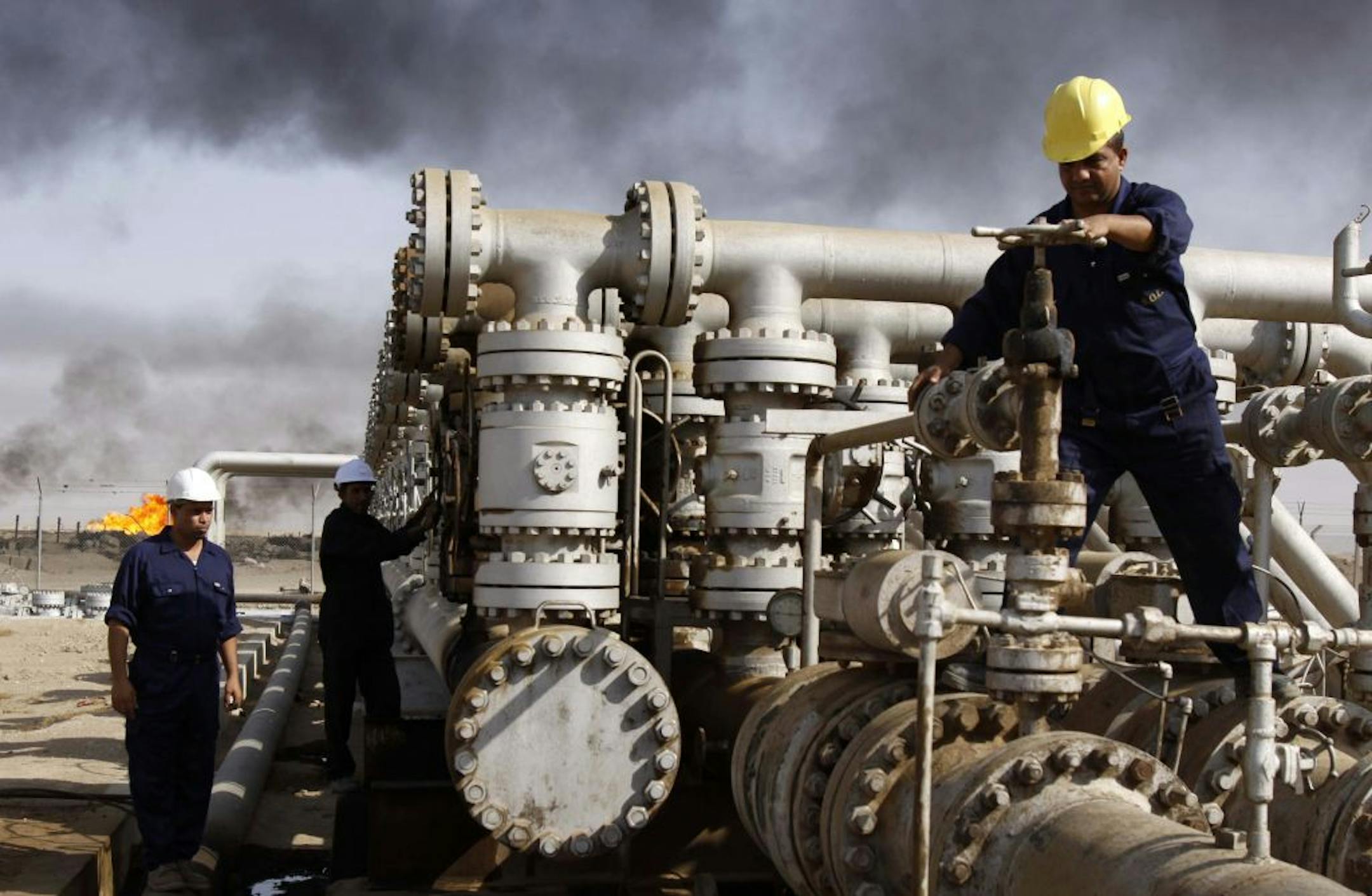
New pipelines stretching into the Persian Gulf near the city of Basra promise to shower Iraq with wealth and turn the nation into one of the world's biggest oil exporters.
Leighton Offshore, an Australian firm, is installing additional oil-loading buoys to fill tankers with Iraq's abundant crude.
The country claims to have reserves of 143 billion barrels, the third-largest in the world. In April Iraq exported more than 2.5 million barrels a day, more than at any time since the 1980s, earning its treasury almost $9 billion. Total production is now almost 3 million barrels per day, according to OPEC, the oil producers' cartel.
More loading buoys are in the works and, as oil firms invest billions of dollars in Iraq, the industry is booming. By the end of the year, reckons Peter Hitchens, an analyst at the bank HSBC, Iraq's output will reach 3.5 million barrels a day, a torrent of new oil to quench global markets.
Iraq's production targets are even bolder. Hussein al-Shahristani, deputy prime minister for energy, says that contracts with foreign oil firms should lift output to an outlandish 12 million barrels per day by 2017, a level that would put Iraq on a par with Saudi Arabia, both as an exporter of oil and, if crude prices maintain their recent heights in coming years, as a global spending power.
It is unlikely to get anywhere close to that level. Saudi Arabia spent 80 years building its oil industry amid relative peace and stability. Iraq enjoys neither.
Sectarian violence persists. A series of bombings on June 13 killed more than 80 people. The government of Prime Minister Nuri al-Maliki depends on a feeble coalition. Despite years of negotiations, Iraq still has no petroleum law, leaving thorny disputes between the federal government and the regions over the control of oil revenue.
"All of this recent progress has happened against a backdrop of dysfunction," said Keith Myers, a Revenue Watch Institute consultant working with the Iraqi parliament on the oil law.


