

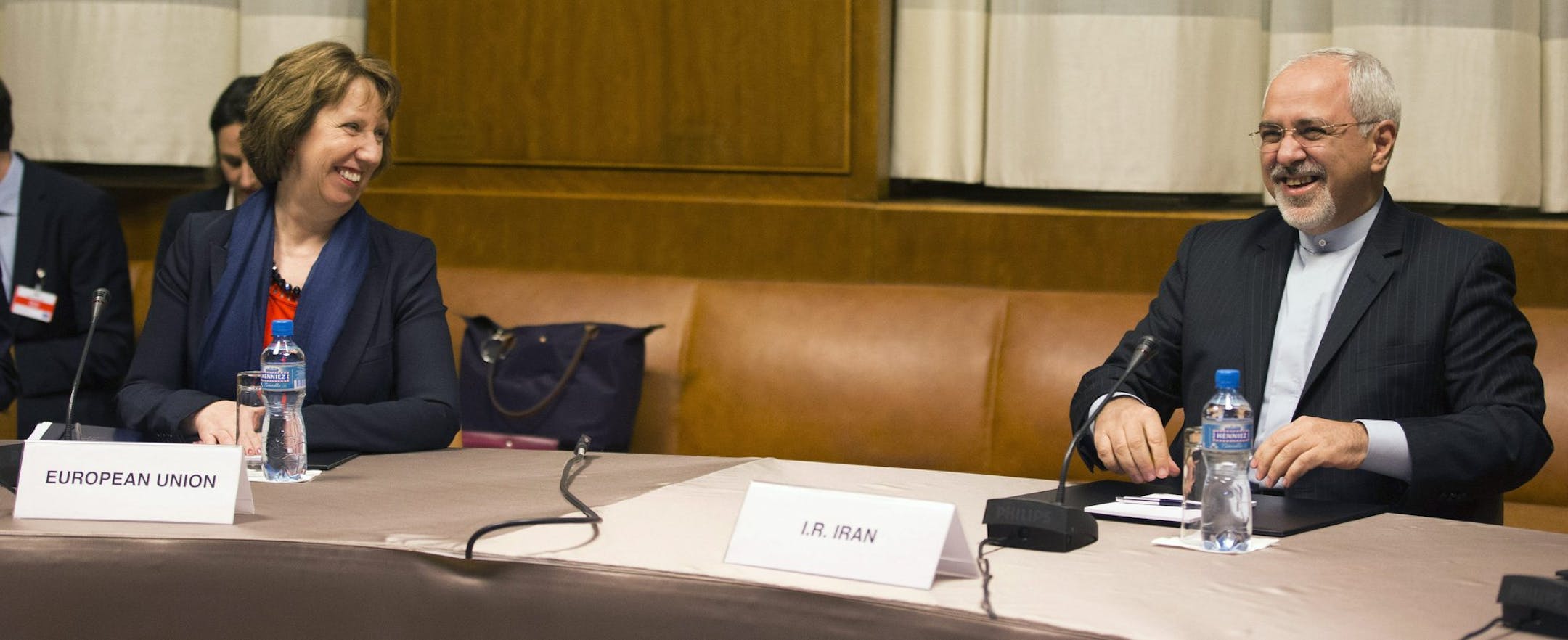
GENEVA – A new round of Iran nuclear talks began in fits and starts Wednesday, with the two sides ending a first session just minutes after it began amid warnings from Iran's supreme leader of "red lines" beyond which his country will not compromise.
A senior U.S. official said that the brief general meeting was only a formality and that bilateral meetings would continue through the evening to work on a deal that would start a rollback of Tehran's nuclear program in exchange for limited sanctions relief.
Both sides have said a first-step agreement is possible over the next few days of meetings in Geneva. But there was also tough talk, reflecting tensions from nearly a decade of negotiations that have started to make headway only recently.
There are other pressures, too. President Obama faces opposition to a deal from Israel, Saudi Arabia and critics in the U.S. Congress, who say a first-step deal as envisioned would give Iran too much sanctions relief for too few concessions. They argue that Iran can't be trusted. Obama and his national security team counter that the risk is worth taking because the alternative is war no one wants.
While voicing support for the talks, Iran's supreme leader, Ayatollah Ali Khamenei, insisted there are limits to the concessions Tehran will make. He blasted Israel as being "the rabid dog" of the region — comments rejected by French President Francois Hollande as "unacceptable." French spokeswoman Najat Vallaud-Belkacem said such statements complicate the talks ahead, but France still hopes for a deal and its position has not changed at the talks.
Israeli Prime Minister Benjamin Netanyahu, in remarks after a meeting in Moscow with Russian President Vladimir Putin, said "we believe it is possible to reach a better agreement, but it requires us to be consistent and persistent."
At the previous round earlier this month, France said it wanted tough conditions in any preliminary deal with Iran. Negotiations then ended with both sides speaking of progress but continued differences.
Khamenei gave no further details in a speech to a paramilitary group aimed at both placating hard-liners and showing his backing for Iranian officials meeting with international negotiators. But his mention of Iran's "nuclear rights" was widely interpreted as a reference to uranium enrichment.


