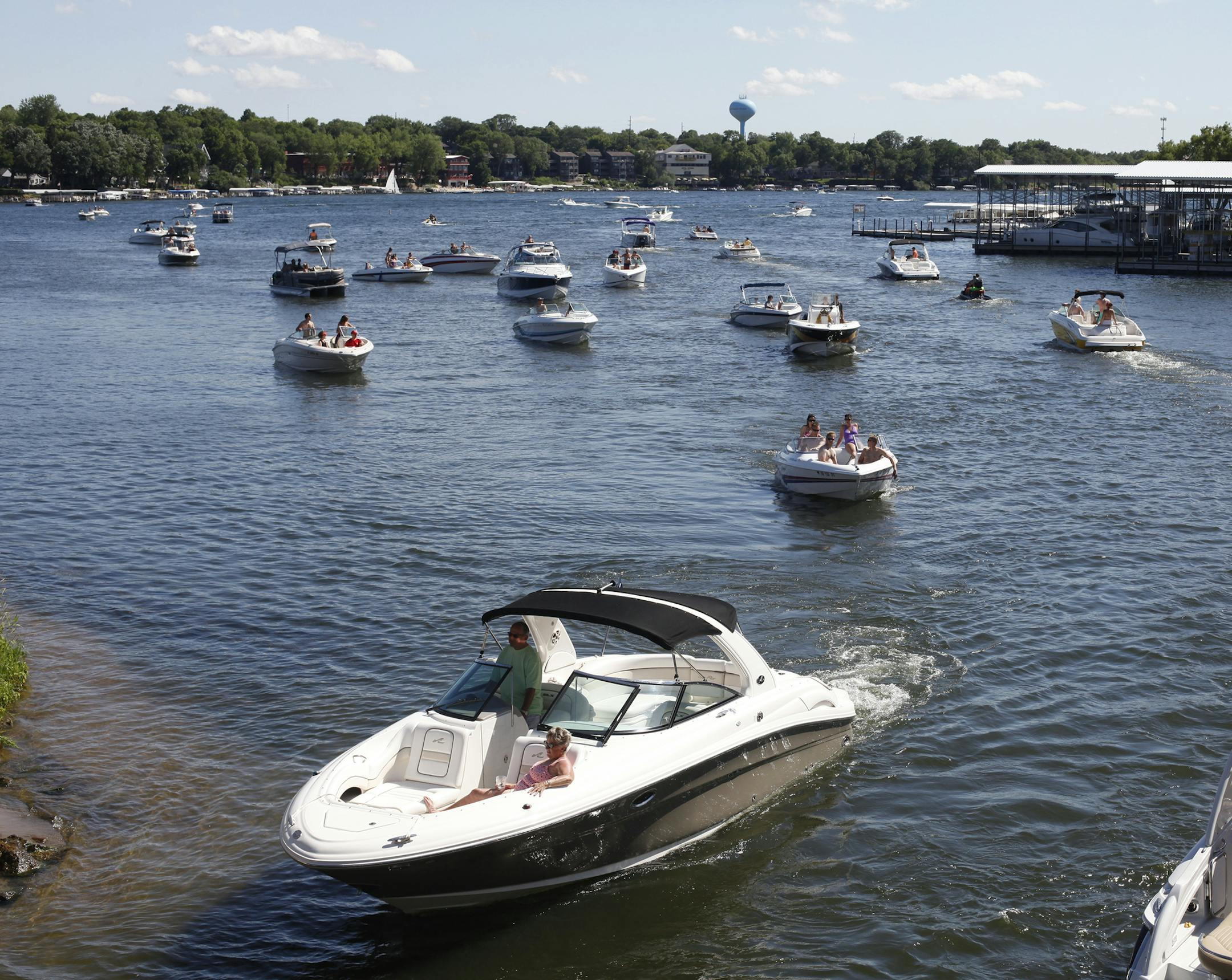
I have seen the heart of America. It is a timeless place where little ever changes. It is a place of big lakes, where people boat and fish and swim and children run off docks at full speed.
It is a place where Cheez-Its and Coors Light make up the pre-dinner snack of choice (my hotel neighbors, who had just driven up from Sioux City) and powdered doughnuts and orange juice precede a breakfast of maple sausage and scrambled eggs topped with ham and shredded cheese (the same neighbors, on the grill outside their room, the next morning).
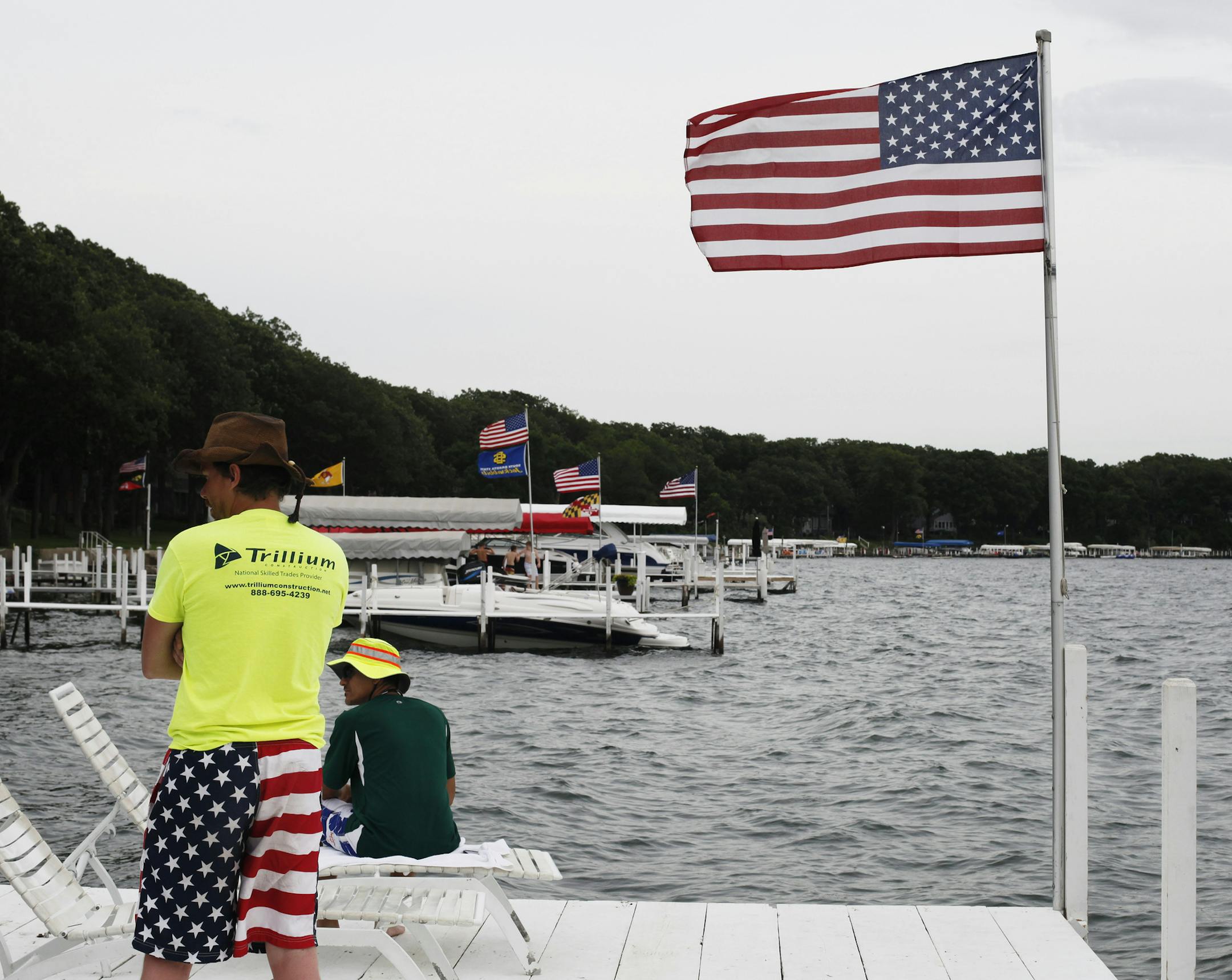
And it is, of course, a place of many U.S. flags — so many that when I strolled down to my hotel's white wood dock, one guy there wore a bathing suit in an American flag pattern while his friend wore a shirt that simply read, "USA." And affixed to that dock? Two American flags, flapping in the stiff, clean lake breeze.
"How's it going?" I asked the guy in the flag bathing suit.
"Just another day in paradise," he said, and cast his line into West Okoboji Lake.
At the very least, the Iowa Great Lakes are a Midwestern paradise. No one, it seems, has just started visiting. They've been going since they were kids. And now they bring their kids. Who will bring their kids. Its greatest attribute — and arguably biggest drawback — is that so little has changed.
"My family's been coming here for 30 or 40 years," said Jason Pratt, 43, the man from Sioux City. "We'd go the same week every year — the first week of August — and see the same people. You'd only see them one week a year, but it would be like a family reunion."
Tucked in the northwest corner of the state, just below the Minnesota border, Iowa's Great Lakes comprise a region of two small towns (Okoboji and Arnolds Park) built around a handful of deep, gorgeous, glacial lakes. To the north is Spirit Lake, which tends to be quieter, and more of a place for the locals to boat and fish. It is, however, the state's largest natural lake and known for some of the area's best fishing.