
Investigators move on alleged cockfighting ring in two western Wisconsin counties

Sheriffs of St. Croix and Polk counties praise assistance of ASPCA in making investigation possible.

June 3, 2015 at 2:31PM
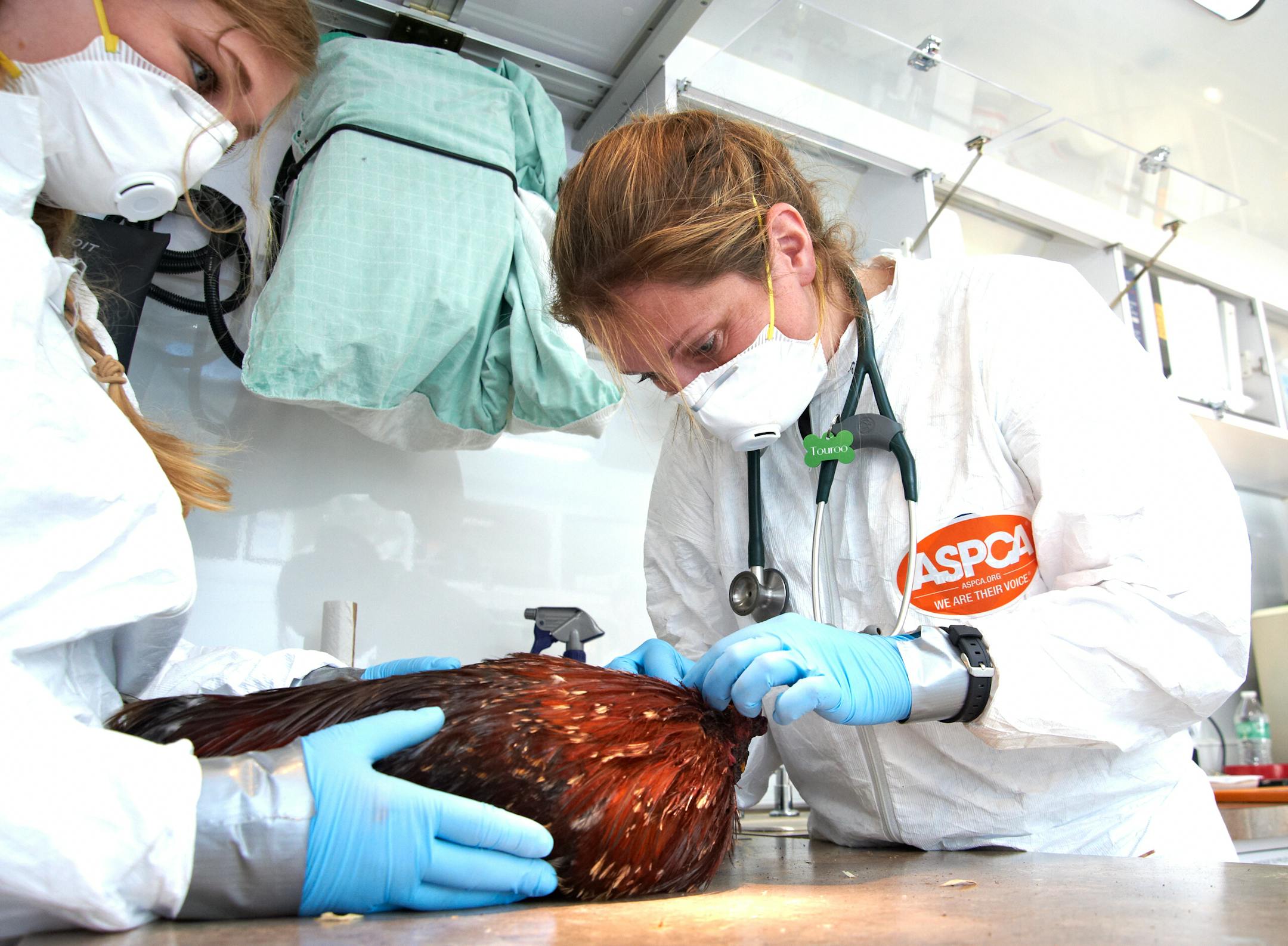
Veterinarians with the American Society for the Prevention of Cruelty to Animals (ASPCA) worked to aid injured birds after authorities seized nearly 1,200 birds from properties in Polk County and St. Croix County where a massive cockfighting operation was discovered.
Veterinarians with the American Society for the Prevention of Cruelty to Animals (ASPCA) worked to aid injured birds after authorities seized nearly 1,200 birds from properties in Polk County and St. Croix County where a massive cockfighting operation was discovered. (Jenni Pinkley/The Minnesota Star Tribune)

Law enforcement officers, working in concert with dozens of investigators and veterinarians, searched four western Wisconsin farms Tuesday to crack down on what authorities have described as a massive cockfighting and breeding operation.

At the request of the Polk County Sheriff's Department and St. Croix County Sheriff's Office, the American Society for the Prevention of Cruelty to Animals (ASPCA) assisted in seizing nearly 1,200 birds from the properties — three in Polk County and one in St. Croix County. Cockfighting paraphernalia were discovered, including a fighting pit and "gaffs" used to maximize injuries to roosters during fights.

Several suspects have been detained and questioned in the case, and as of Tuesday afternoon, at least two people had been arrested in Polk County. More arrests could come in the next few days, authorities from both counties said.

Investigators are expected to be at the farms for several more days to round up, examine and catalog birds.

"I don't know where the investigations are going to take us, it's still a fluid investigation," said Polk County Sheriff's Captain Steve Smith. "There are 80 to 90 [ASPCA] people at the sites. They are a critical component of this investigation."

Tim Rickey, vice president of ASPCA Field Investigations and Response, said it is too soon to say what will happen to the animals. Workers are still gathering up all the hens and chicks that had been roaming free on the farms. Most of the roosters were contained, he said.

"We're really kind of at the mercy of the courts as to what the next steps are," Rickey said. "Hearings are coming up in the next day or so. We are focused today on assisting law enforcement on processing the scenes and providing treatment for all the birds that are here."

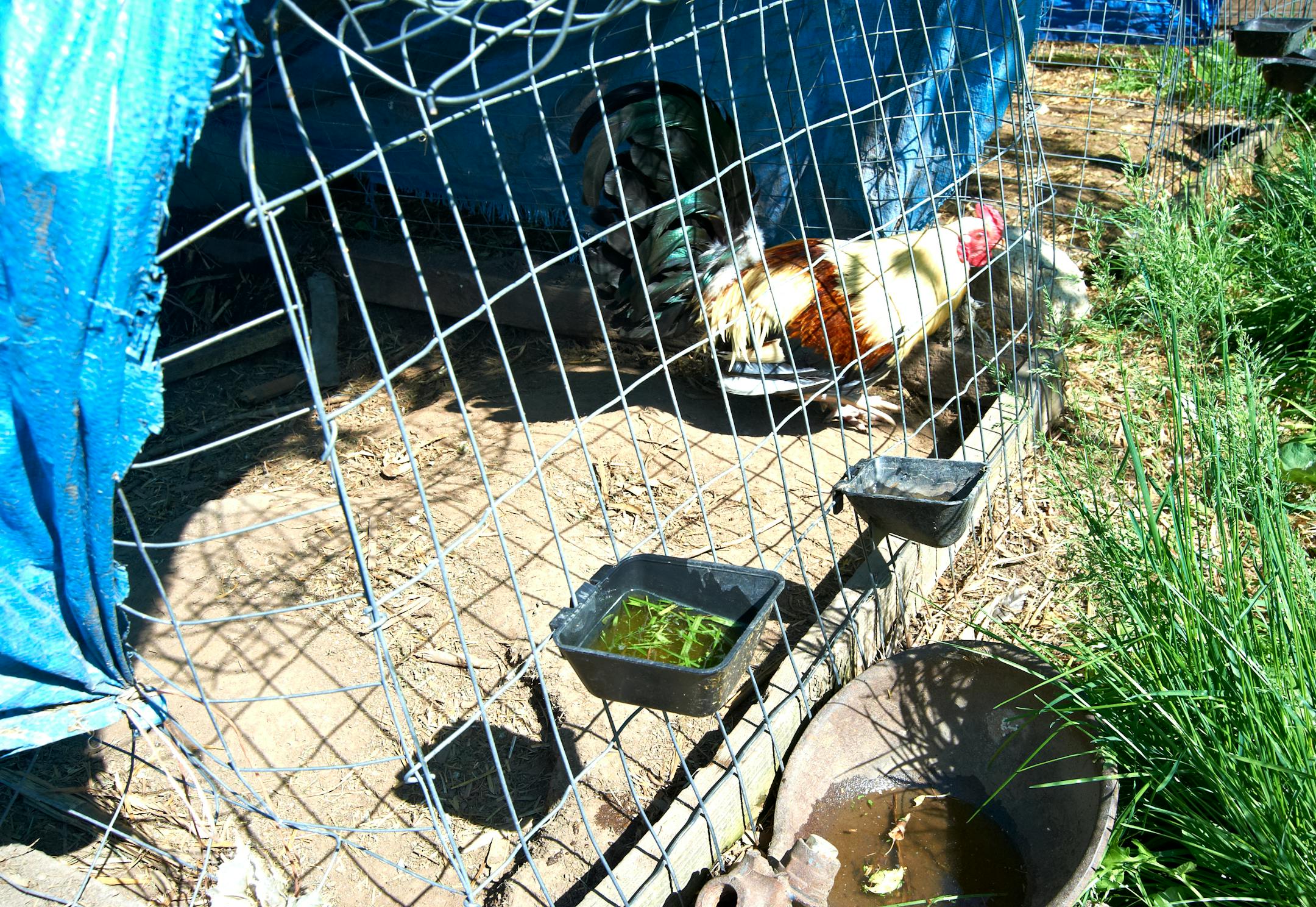
Rickey could not identify the overall condition of the birds, but expects the case building against those arrested will involve animal cruelty and animal fighting charges. Hundreds of birds were living in makeshift conditions, some with no food or water, and others had injuries consistent with fighting.
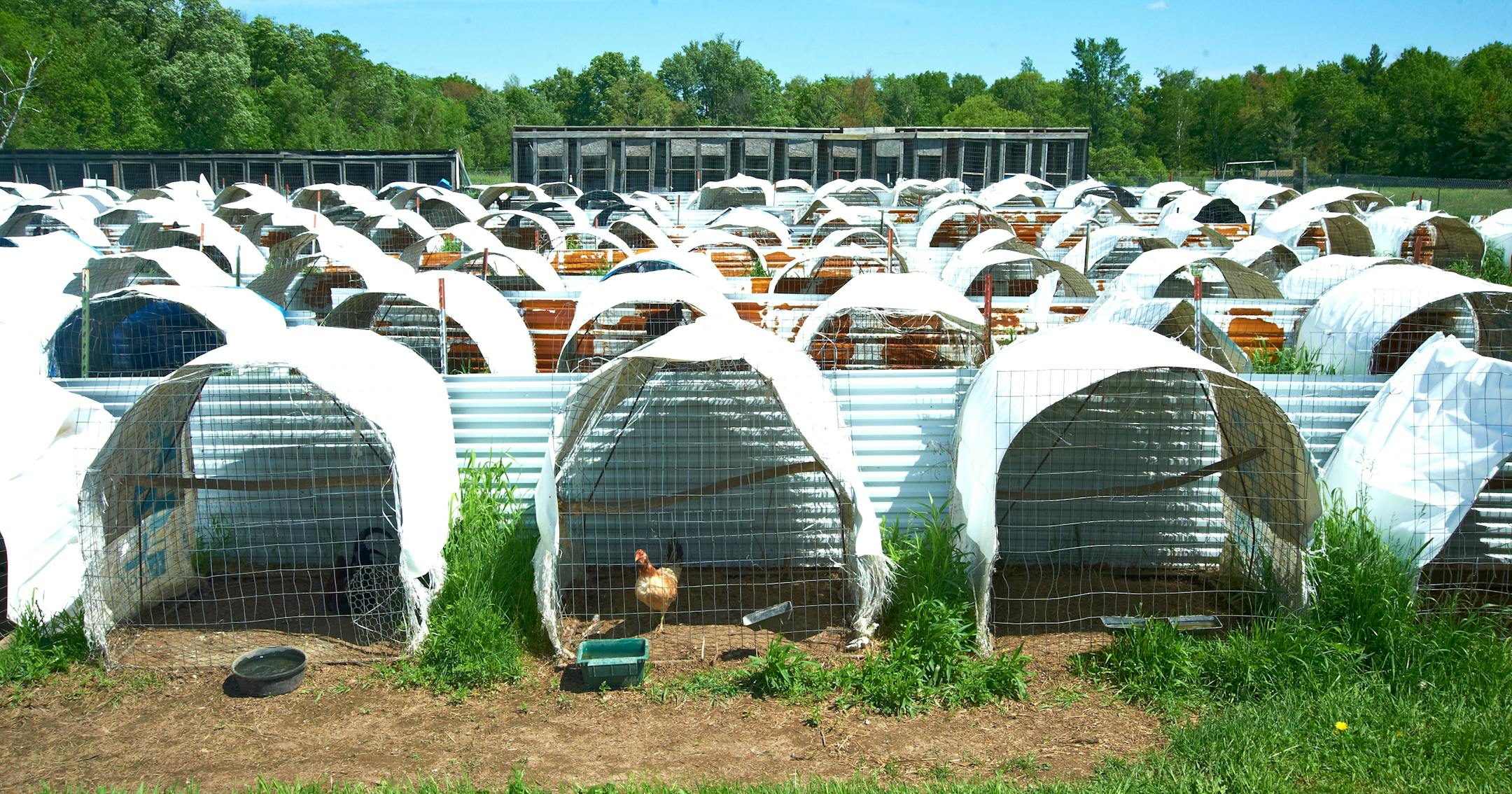
Cockfighting in this part of the U.S. usually involves hundreds of birds, Rickey said. But larger rings like the Wisconsin operation are not unheard of. He said he worked on a case last year that involved more than 4,000 birds.

'A very large undertaking'

Rickey declined to say how the monthslong Wisconsin investigation came about. However, he said most investigations get their start with a tip from a concerned citizen. And he encouraged people to contact law enforcement or the ASPCA if they suspect animals are being mistreated.

Both sheriffs said the ASPCA's help was critical.

"This is a very large undertaking," St. Croix County Sheriff John Shilts said in a statement. "I want to thank the ASPCA for the expertise and resources that they have committed. Without them, law enforcement would struggle to manage these scenes."

During cockfights, birds commonly suffer injuries such as punctured lungs, broken bones and pierced eyes — often the result of knives and long, dagger-like "gaffs" attached to the birds to maximize injury. Steroids or other drugs are often administered to make the birds more aggressive.

In Wisconsin, conducting a cockfight and possessing birds for fighting are Class I felonies, punishable by up to 3½ years in prison and a maximum fine of $10,000. Being a spectator at a cockfight is a misdemeanor offense, according to the ASPCA.

Smith said he did not know how many investigators are working the case, other than "a lot." Besides the ASPCA, other agencies involved include the Animal Rescue League of Iowa, Fort Wayne (Ind.) Animal Care & Control and Heartland Farm Sanctuary of Verona, Wis.

"They have vets, even a mobile hospital here," Smith said. "They are helping identify each chicken with a number, how many were harmed. They can help see if there is a bird flu issue. Let's face it, we're cops, we don't know how to detect avian influenza. These people do."

Smith said he has worked on a few cases involving puppy mills before, but nothing quite like this.

"I never have personally been involved in a cockfighting ring before," he said, "and I hope it's the last."

James Walsh • 651-925-5041

Law enforcement officers, working in concert with dozens of investigators and veterinarians, searched four western Wisconsin farms Tuesday to crack down on what authorities have described as a massive cockfighting and breeding operation.
Law enforcement officers, working in concert with dozens of investigators and veterinarians, searched four western Wisconsin farms Tuesday to crack down on what authorities have described as a massive cockfighting and breeding operation. (Jenni Pinkley/The Minnesota Star Tribune)
Law enforcement officers, working in concert with dozens of investigators and veterinarians, searched four western Wisconsin farms Tuesday to crack down on what authorities have described as a massive cockfighting and breeding operation.
Law enforcement officers, working in concert with dozens of investigators and veterinarians, searched four western Wisconsin farms Tuesday to crack down on what authorities have described as a massive cockfighting and breeding operation. (Jenni Pinkley/The Minnesota Star Tribune)
about the writer

about the writer

James Walsh

Reporter

James Walsh is a reporter covering social services, focusing on issues involving disability, accessibility and aging. He has had myriad assignments over nearly 35 years at the Star Tribune, including federal courts, St. Paul neighborhoods and St. Paul schools.

See Moreicon

More from No Section

See More
FILE -- A rent deposit slot at an apartment complex in Tucker, Ga., on July 21, 2020. As an eviction crisis has seemed increasingly likely this summer, everyone in the housing market has made the same plea to Washington: Send money — lots of it — that would keep renters in their homes and landlords afloat. (Melissa Golden/The New York Times) ORG XMIT: XNYT58
Melissa Golden/The New York Times

It’s too soon to tell how much the immigration crackdown is to blame.