

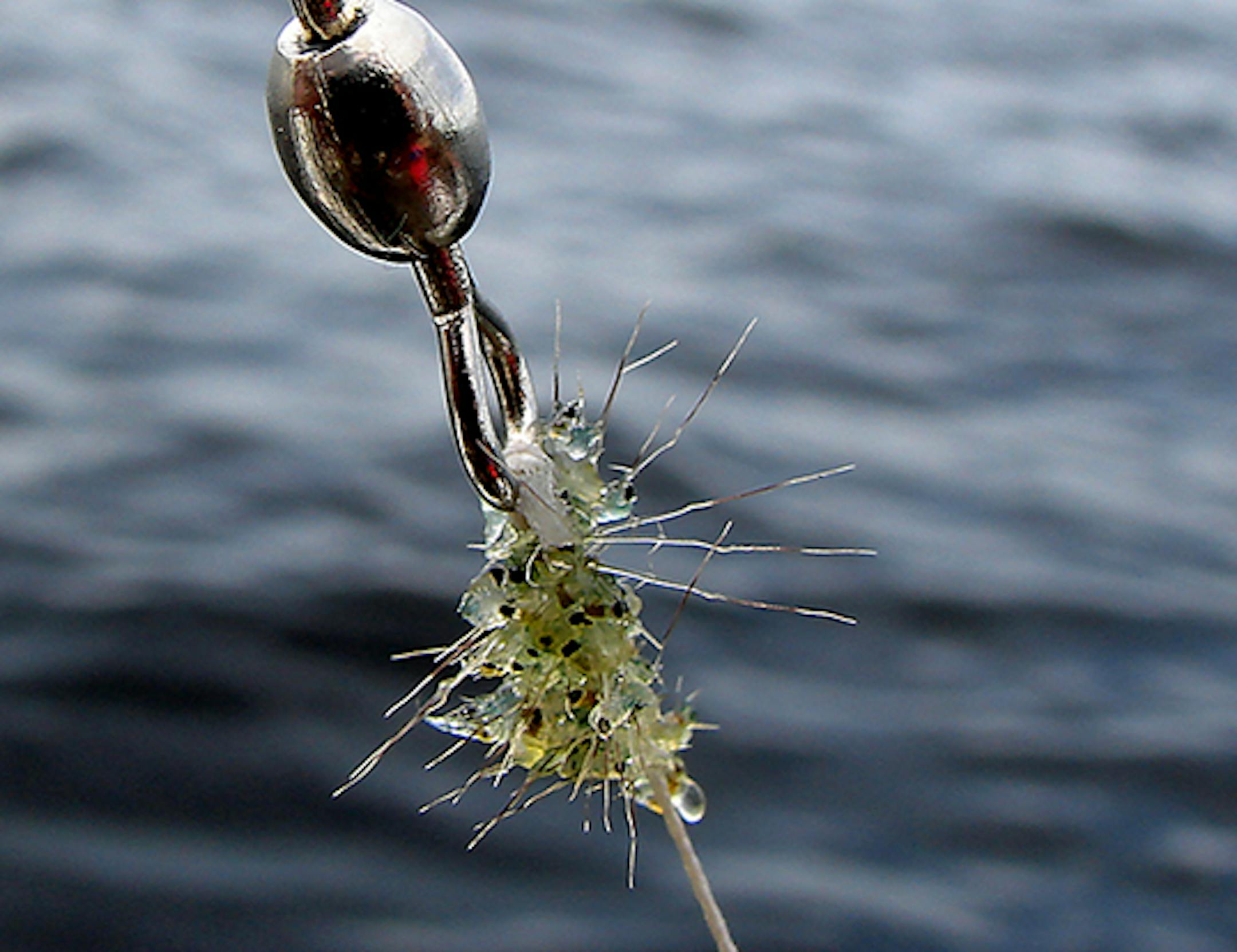
Not good news for Lake Vermilion: state officials have confirmed the popular northern Minnesota lake is infested with spiny waterfleas.
An invasive species native to Europe and Asia, spiny waterfleas disrupt the food web and competes with small fish as it forages on animal plankton such as daphnia. They were introduced into the Great Lakes by ballast water discharged from ocean-going ships.
Because of its long tail spike, spiny waterfleas aren't eaten by small fish.
Vermilion anglers recently reported suspected spiny waterfleas to Department of Natural Resources staff and supplied a specimen to the DNR fisheries office in Tower, where it was positively identified.
DNR aquatic biologists surveyed portions of the lake with plankton nets and weighted lines to confirm the presence of spiny waterflea in the lake. Live specimens were located near J B and Ely islands in the east basin.
Lake Vermilion and the Vermilion River will be designated as infested waters, and signs will be posted at public water access points to alert boaters and other recreationists. Crane Lake, a downstream water, is already designated for spiny waterflea.
"DNR staff are coordinating with the Bois Forte Band of Chippewa and U.S. Forest Service to alert boaters and other recreationists of the risk of spread," said Rich Rezanka, DNR aquatic biologist.
The species reproduces by a process called parthenogenesis. Most of the year, the species population is entirely female, which allows for rapid population growth. Microscopic spiny waterflea eggs are hardy and capable of overwintering in lakes, and their small size makes them an easy candidate for overland transfer in water or mud.


