

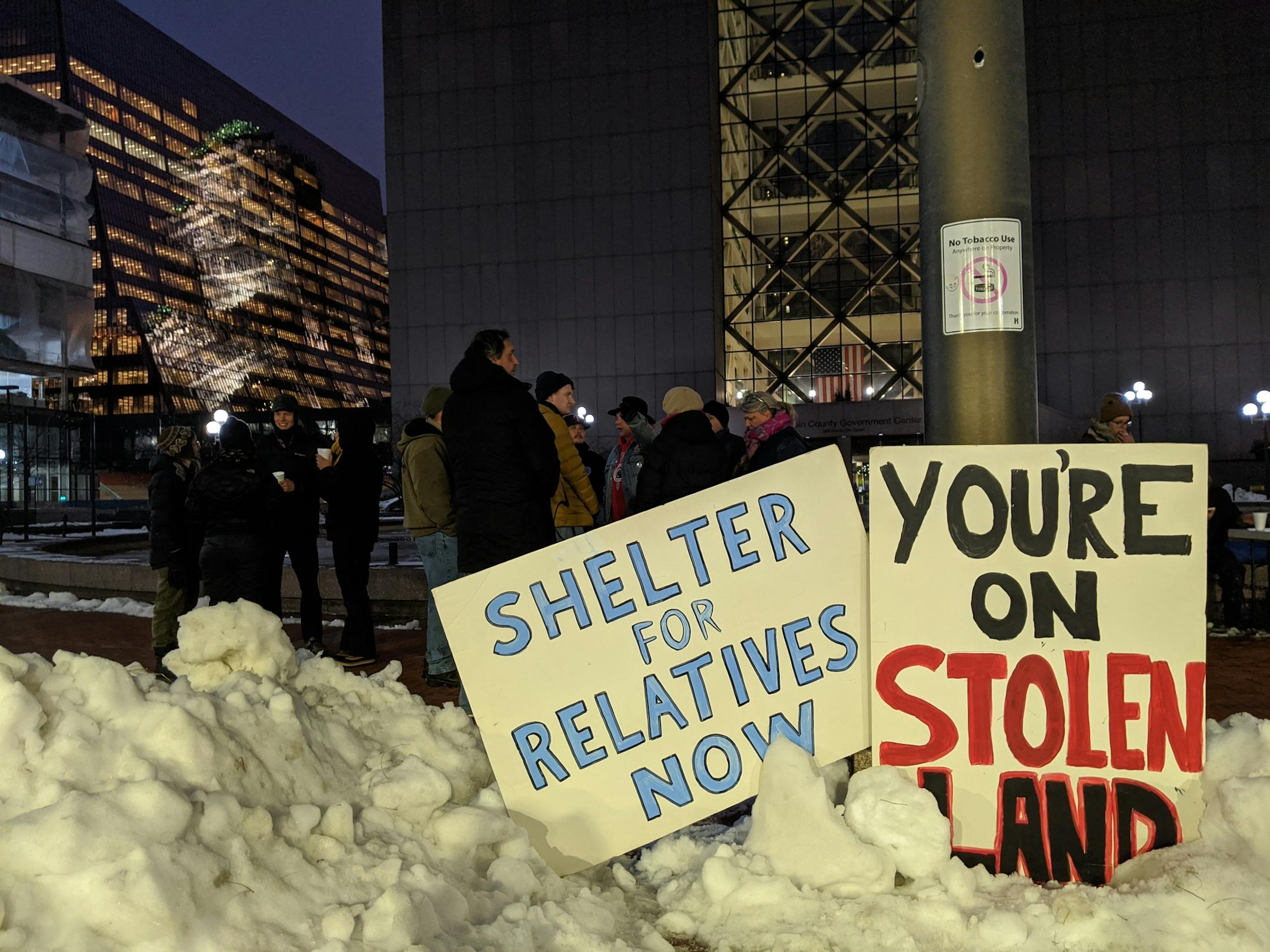
American Indian activists are escalating their campaign for more emergency shelter beds in Minnesota, while calling on civic leaders to respect a U.S. Supreme Court decision that protects people sleeping in public spaces from eviction.
Dozens of demonstrators with a group called Natives for Justice occupied the plaza in front of the Hennepin County Government Center in downtown Minneapolis on Friday night, where they repeated their demand for an overnight shelter that would respect their cultural heritage. The group also demanded an end to the "constant relocation and eviction" of homeless Natives from sleeping in public locations, such as under bridges, in buses or on sidewalks.
The protest comes less than a month after supporters of the same group marched onto a narrow stretch of land along Hiawatha and Franklin avenues that last fall was the temporary home of several hundred people living in tents, known as the "Wall of Forgotten Natives." On Friday, organizers said they would continue to occupy public spaces until officials develop a culturally specific shelter.
Such a shelter would hold community talking circles, elder counseling and spiritual healing ceremonies, such as cleansing with burning sage that are part of their tradition, organizers said.
In its takeover of public spaces, Natives for Justice has been emboldened by a Supreme Court decision last month that upheld a ruling that said homeless people have a constitutional right to sleep outside on public property if no shelter is available. A federal appeals court had ruled that an anti-camping ordinance in Boise, Idaho, violated the Eighth Amendment's prohibition of cruel and unusual punishment. Several large municipalities, including Los Angeles and Denver, are re-examining their ordinances.
Native leaders have objected to what they said are increasingly aggressive efforts to forcibly remove people attempting to sleep in public spaces, including Metro Transit buses and under bridges, which they contend only make matters worse by cutting people off from social services.
"The 'Wall of Forgotten Natives' showed that when we have the relatives together, then it's much easier for outreach workers … to come together and work with the relatives to get them into shelter [or] treatment," said Keiji Narikawa, one of the leaders of Natives for Justice, at Friday's protest. "Right now, this is a need that's not being met."
A severe shortage of affordable housing, rising rents and a protracted opioid epidemic have pushed a record number of Minnesotans to the streets. The crisis has hit the Native American community particularly hard. A 2018 survey by Wilder Research found that American Indians are disproportionately represented in Minnesota's homeless population. They represent 12% of adults statewide who are homeless, despite making up just 1% of the adult population. In Hennepin County, the disparities are even greater: Indians represented nearly 27% of the unsheltered population, according to the county's most recent point-in-time count.


