

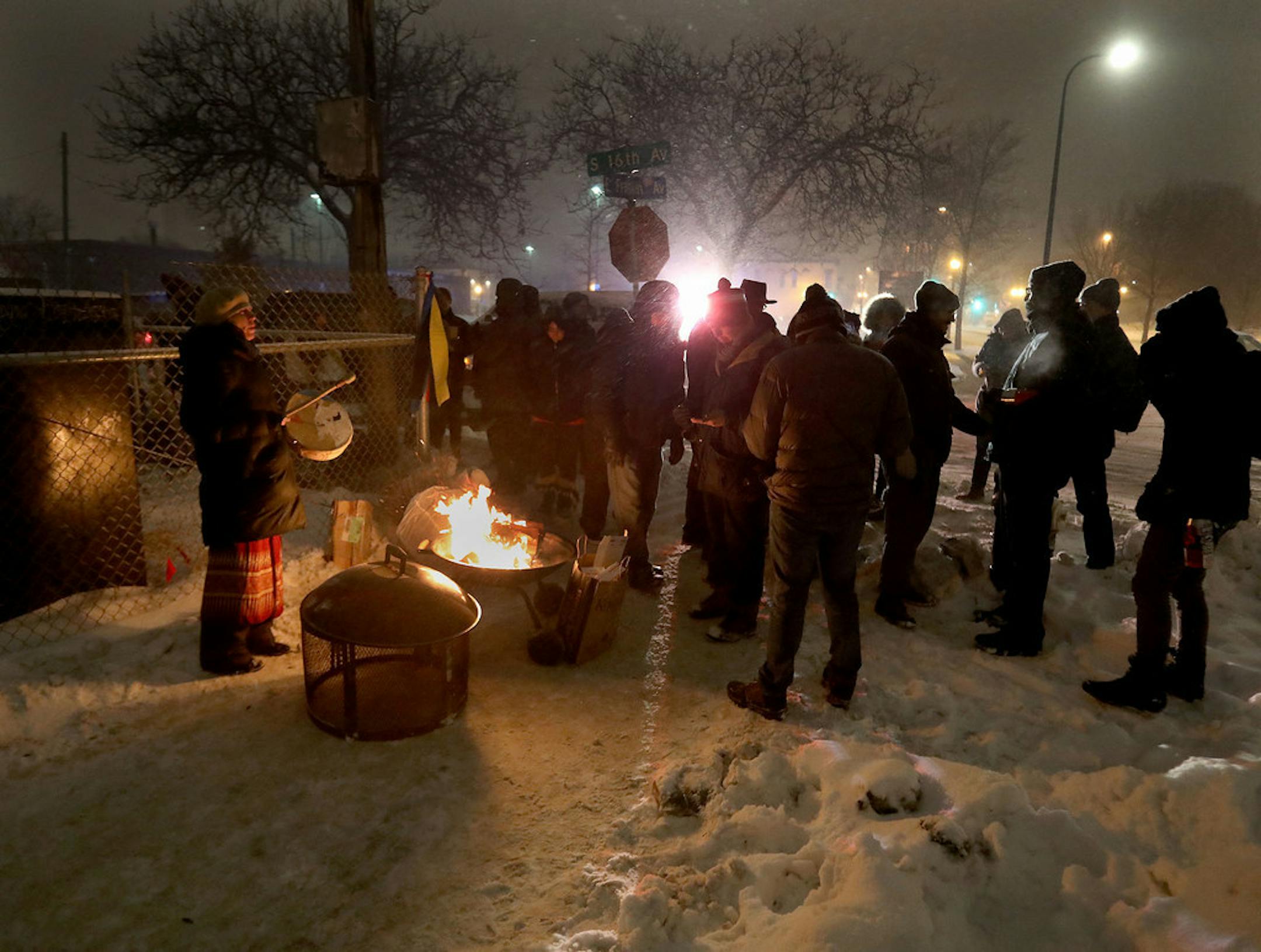
American Indian activists called off their two-day occupation at the site of a former homeless encampment in south Minneapolis while they negotiate with police and city officials over their demands for more emergency shelter beds.
Just past midnight on Friday, about 50 demonstrators marched onto a narrow stretch of land along Hiawatha and Franklin avenues that last fall was the temporary home of several hundred people living in tents, known as the "Wall of Forgotten Natives." They erected a tepee and read a statement demanding a stronger response to the housing crisis and a "culturally specific" overnight shelter for Natives experiencing homelessness.
Organizers of the civil disobedience action said Monday that they have reached a temporary agreement with Minneapolis city officials, whom they say have verbally committed to work with the Native community toward the creation of an overnight shelter that respects their cultural heritage. Such a shelter would hold community talking circles, elder counseling and spiritual healing ceremonies that are part of their tradition, organizers said.
As part of the agreement, Native activists have agreed to "stand down" from occupying the site, which is now covered in snow and surrounded by a locked fence. However, a tepee and a small tent remain on the snowy hilltop of the site and are visible from the highway. Organizers said the tepee is a memorial to those who suffered and died at the camp last year, as well as a symbolic claim to the land.
"The mayor said this is Dakota land, so how is this trespassing?" asked Shawn Phillips, pastoral minister of the Church of Gichitwaa Kateri in south Minneapolis, which has provided temporary shelter and served as a staging area for the protesters.
Organizers said they may return and establish a permanent encampment at the site if talks with local officials do not progress.
"Too many of our relatives feel invisible," said Keiji Narikawa, a Native community member and one of the organizers of last weekend's occupation. "The least the government can do … is to help them reconnect with who they are as indigenous peoples and feel empowered again."
A 2018 survey by Wilder Research found that American Indians are disproportionately represented in Minnesota's homeless population. They represent 12% of adults statewide who are homeless, despite making up just 1% of the adult population. In Hennepin County, the disparities are even greater: Indians represented nearly 27% of the unsheltered population, according to the county's most recent point-in-time count.


