

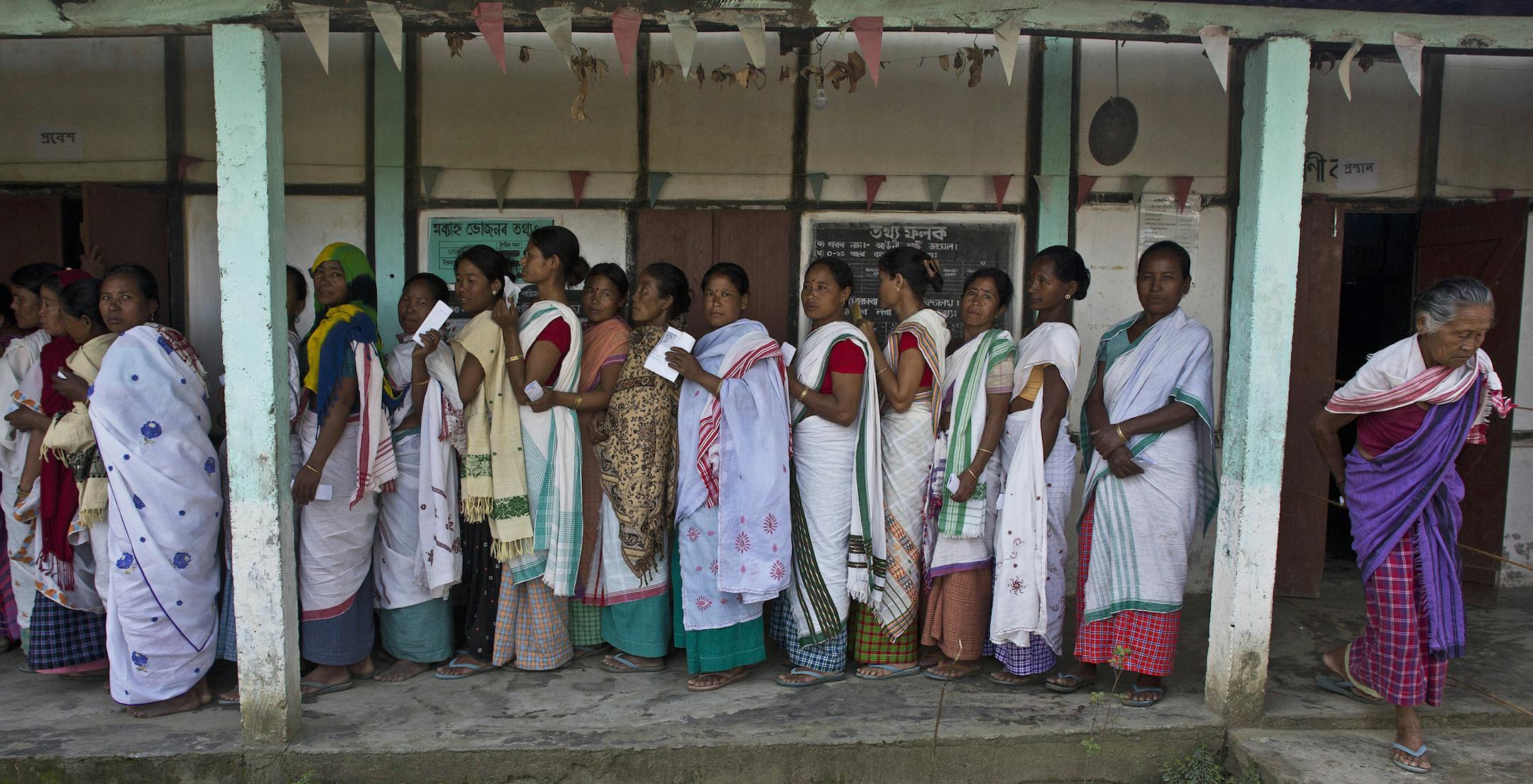
The world's biggest democracy, by the numbers:
900 million: the number of eligible voters.
2,000: registered political parties.
11 million: poll workers tending 2.3 million electronic voting machines, with ballots delivered by many methods, including boats, helicopters, trains and, this being India, elephants.
Five weeks: The span of the voting, which began on Thursday. (The campaign, of course, was much longer.) Results will be announced May 23.
Two: Despite the incredible complexity of India's election, it essentially is a binary choice between the two leading candidates for prime minister: Narendra Modi, the incumbent, and Rahul Gandhi, the top challenger.
One: Globally, this election sends a singular signal that democracy is still viable in an increasingly authoritarian world.
The Indian national election "comes at a time when democracy is under stress, and this is the single biggest exercise of whether it is dynamic in the largest electorate in the world," said Devesh Kapur, director of South Asia Programs at Johns Hopkins University's School of Advanced International Studies.


