

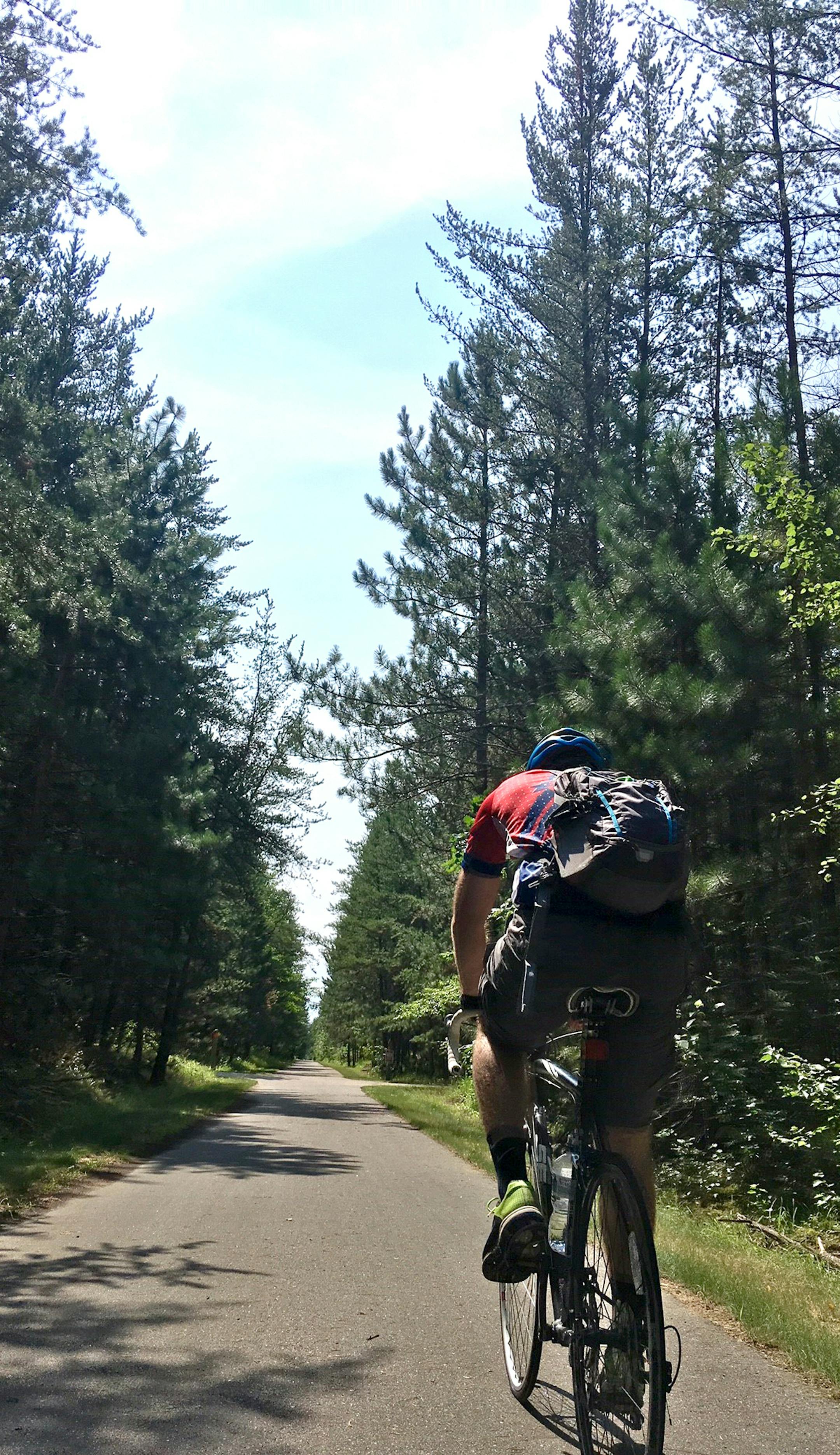
It was exactly 50 summers ago that Congress approved, and President Lyndon Johnson later signed, a law for "instituting a national system of recreation, scenic and historic trails" in the United States.
In a speech that by today's standards seems quaint in its hopeful public spiritedness, the president said, "We can and should have an abundance of trails for walking, cycling and horseback riding, in and close to our cities."
This was the National Trails System Act of 1968, part of which established the concept of "railbanking." Congress had been watching with growing alarm over decades as railroads abandoned precious rights of way, which were then snatched apart by developers and adjacent landowners. The answer was railbanking, which allowed abandoned rights of way to be acquired by local governments and nonprofits to manage for recreational purposes until such a time as the railroad service is restored.
In 1968, the only real vision of this future was in Wisconsin — the 32-mile Elroy-to-Sparta Trail, which opened in 1967 just two years after the track was abandoned. It was such a good idea that over the next 50 years, local governments have, according to the Rails-to-Trails Conservancy, opened 31,000 miles of trails. One of the nation's largest chunks (2,100 miles) is in Minnesota. The Munger, Paul Bunyan, Gateway, Cannon Valley, Cedar Lake, Luce and the Midtown — all are among those on reclaimed rail beds.
It's important to note on this 50th anniversary that not everyone is celebrating. From the start, less egalitarian interests have coveted this land. After cyclists, the next busiest group has been real estate lawyers. In 1983, with the courts busy with conversion opponents, Congress passed a Rails-to-Trails Act Amendment to the Trail Systems Act to strengthen local governments' ability to protect the rights of way for recreational trails. In 2008, Minnesota established its own state railbank "for the acquisition and preservation of abandoned rail lines and rights-of-way," for future public use.
If you think those laws were unnecessary, check out rails-to-trails property rights opposition groups such as the National Association of Reversionary Property Owners and, worse, a sect called Freedom for All Seasons, whose website prominently, even joyfully, features photographs of bicyclists being run over by cars. The Supreme Court in one case weakened the act.
A lot of people would feel more confident if Minnesota's U.S. Rep. James Oberstar was still alive, and in Congress. By most accounts he did more to fund and advance the case for human-powered transportation than any other public official. And no one seems to have stepped forward to assume his work advancing and defending cycling against its commercial and philosophical foes.
So here, in the spirit of the 50th anniversary of the rails-trails era, is a question for any of the many U.S. Senate, congressional, state legislative, or gubernatorial candidates you meet in this busy political year:


