

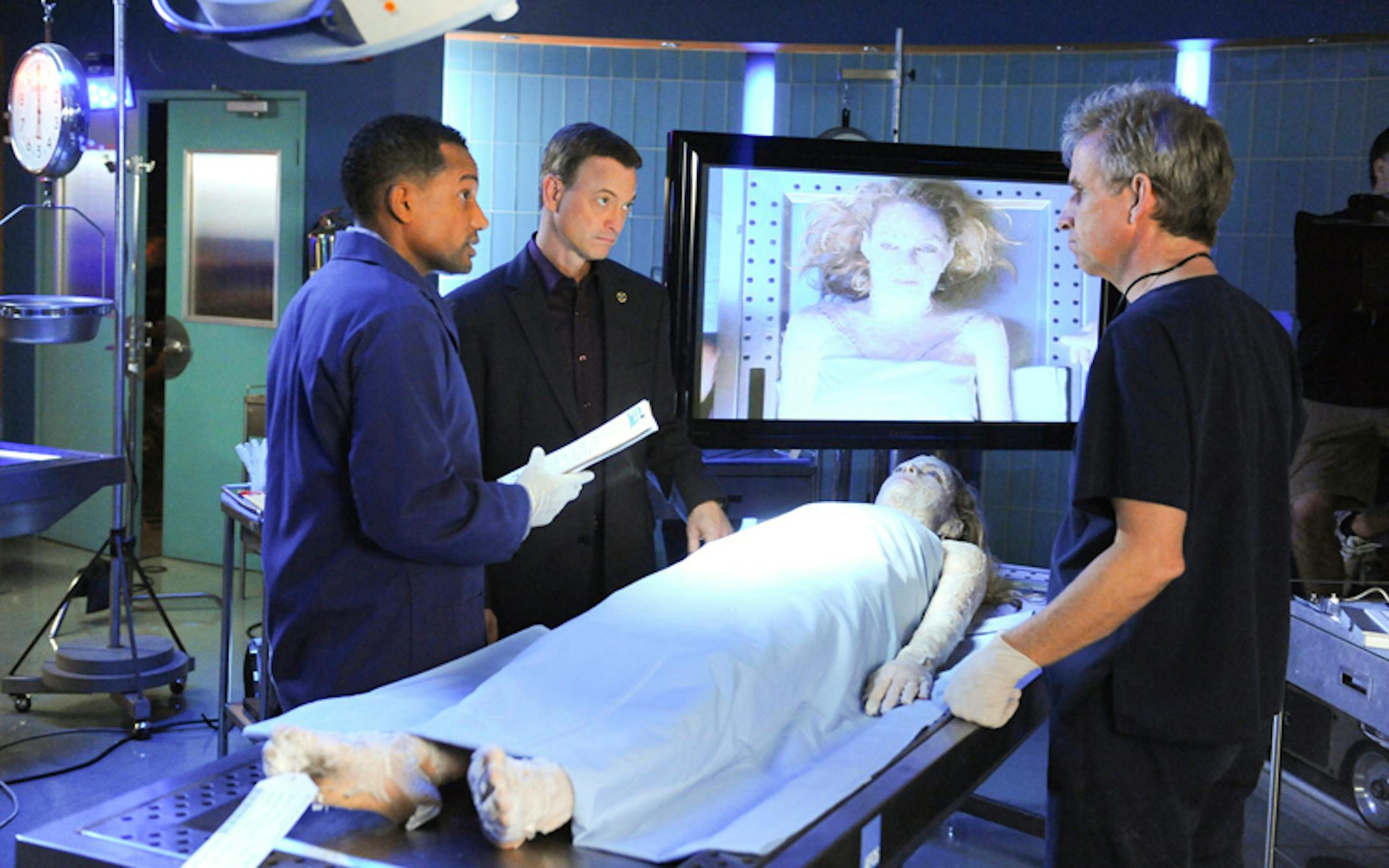
Everywhere you look, law enforcement and science seem to have formed a partnership. Look at the headlines on any given day, and there's something like "DNA convicts killer in 1992 cold case." Turn on the television, and there are the police in "CSI" and its innumerable clones solving cases with high-tech gadgets and test tubes and computers. The message is clear: The bad guys don't stand a chance against the police officer and the scientists working together.
There is some truth to this: DNA has become an identification tool of unequaled power. But look beyond DNA, and you'll see something different: When the science concerns eyewitness identification, suspect interrogations, or more traditional, non-DNA forensic testing, law enforcement doesn't embrace science. Most police agencies and prosecutor's offices in the United States actively resist the scientific findings on these common types of police investigation.
In these three crucial areas, there are years -- even decades -- of rigorous scientific studies. The science has identified specific problems, and it also has supplied solutions. And yet, law enforcement resists any change based on this work. Here are a few examples of what science tells us:
• When eyewitnesses view a lineup of people or photos in the traditional way -- that is, looking at them simultaneously -- error is introduced into the process. When witnesses view the people or photos one at a time -- sequentially -- those errors disappear.
• Most common forensic work, such as fingerprint analysis, ballistics and bite-mark identification, rely not on data-based comparisons but on human interpretation filtered through experience. They are not subject to a zero error rate, as their practitioners often contend, and they do not use many of the common procedures used in labs for scientific testing to screen out human cognitive biases.
• Contrary to popular belief, some people do confess to serious crimes they did not commit, even without physical abuse or mental infirmity. This can be reduced by recording all interrogations, from beginning to end, on basic recording equipment.
The reasons police departments and prosecutors' offices resist change are complex, but not mysterious. First, there are cognitive barriers: human thinking patterns like cognitive dissonance, loss aversion and status-quo bias. Second, there are institutional barriers. If police officers know they must make arrests to get ahead, just like prosecutors know they must get convictions to thrive, they will react with suspicion and resistance to anything that looks like it could make those things more difficult.
So, how do law-enforcement agencies in Minnesota and the Twin Cities measure up? Actually, they do better than most in the nation.


