

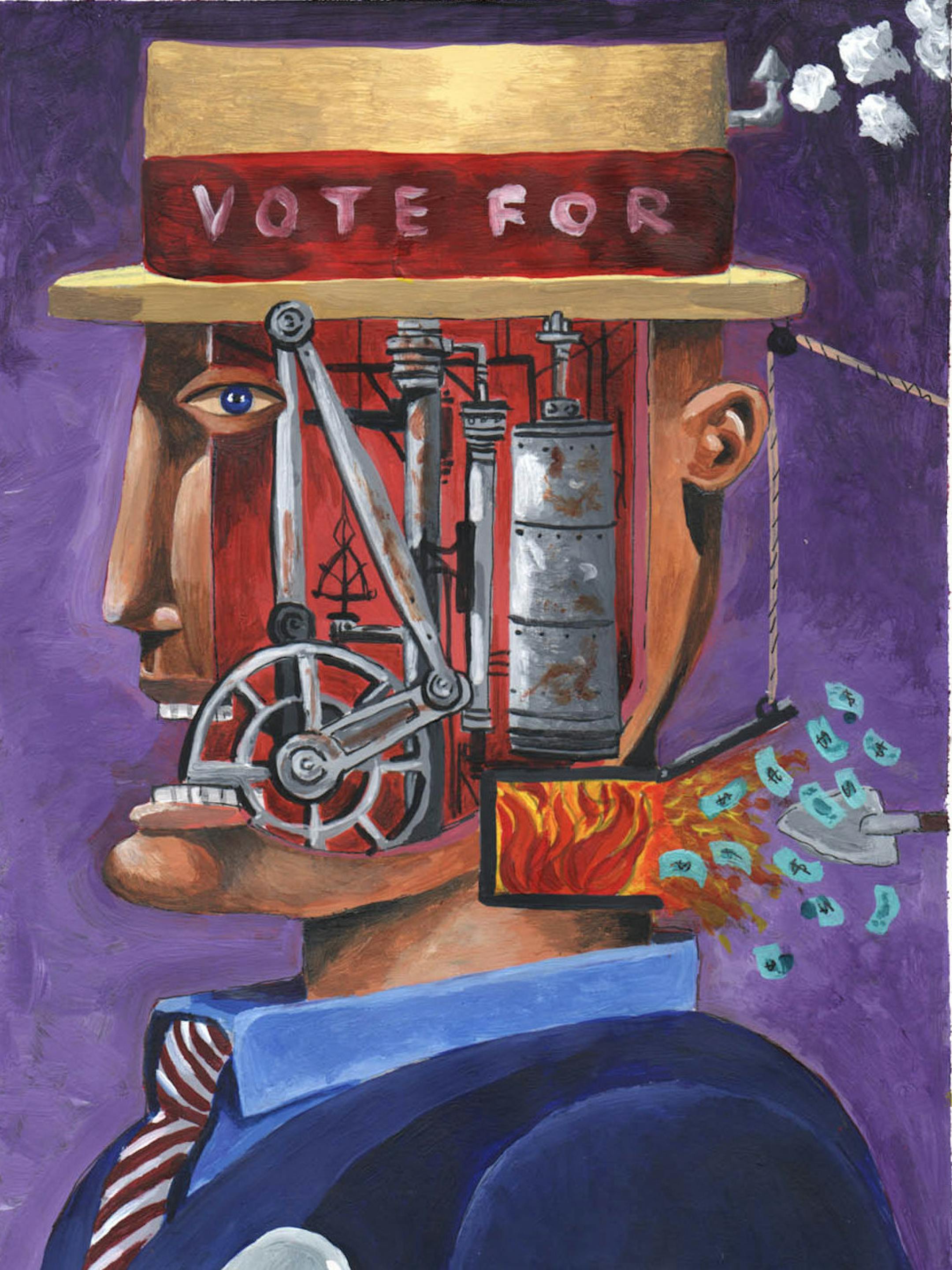
One morning last fall, just after the election, I had coffee with a disillusioned colleague — a tough-minded, veteran journalist, but not a political reporter.
This hard-boiled scribbler had just attended, on an "off-the-record" basis, a private political gathering where the election results were dissected. He was unpleasantly surprised that issues and principles had played almost no role in the analysis.
Instead, it was all unashamedly about political tactics — which districts had been targeted, with how much money, to stimulate which voter blocs, and how such soulless power-seeking maneuvers had worked out.
The image of my dismayed colleague encountering distasteful facts of political life — how cynically, and clinically, politics is practiced by professionals out of public sight — kept returning recently as I read a bracingly unsentimental and contrarian new e-book by Jonathan Rauch.
In "Political Realism: How Hacks, Machines, Big Money and Back-Room Deals Can Strengthen American Democracy," Rauch argues, in essence, that too much reform has ruined American politics.
A pundit and gay-rights activist affiliated with the Brookings Institution and the Atlantic, Rauch reports that he isn't out on this anti-reform limb on his own. He describes what he says is a growing school of scholarly thought.
These new "political realists," it seems, are reconsidering whether good-government purists' long crusade to banish political "bosses," "smoke-filled rooms" and "corruption" in every imaginable form may have utterly backfired. It may have perversely given us today's much-lamented plague of extremism and gridlock, worse than anything known in the supposed bad old days.
Certainly there is a widespread belief today that politics used to work better in America — that compromise once came more easily, while disagreements were often less bitter. We almost certainly exaggerate the change, and it has many possible causes.


