
In killing giraffe, Danish zoo fails basic test

Humans have responsibility to protect animals taken from their natural habitat.

Los Angeles Times
February 11, 2014 at 11:33PM
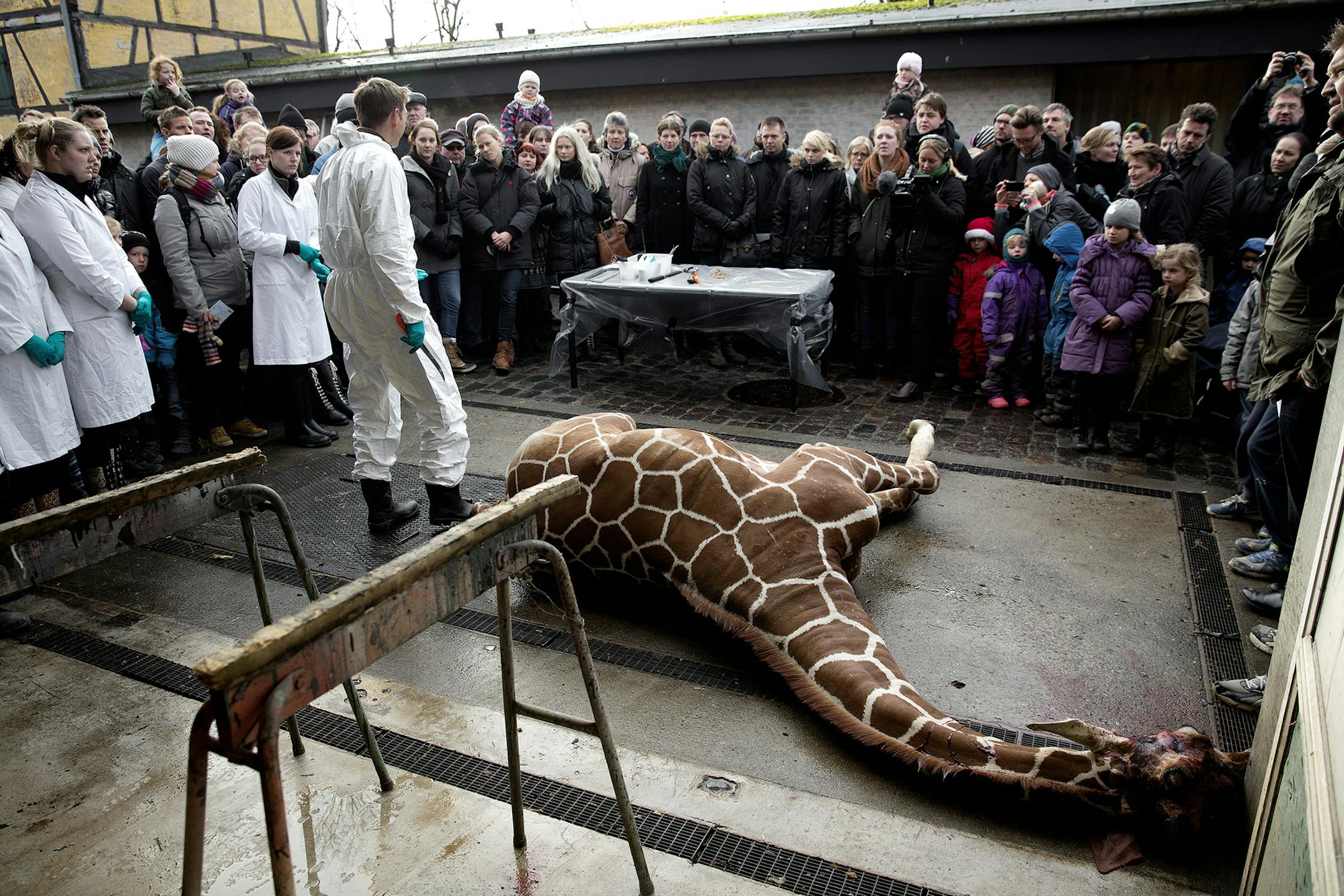
Marius, a male giraffe, lies dead before being dissected, after he was put down at Copenhagen Zoo on Sunday, Feb. 9, 2014. Copenhagen Zoo turned down offers from other zoos and 500,000 euros ($680,000) from a private individual to save the life of a healthy giraffe before killing and slaughtering it Sunday to follow inbreeding recommendations made by a European association. The 2-year-old male giraffe, named Marius, was put down using a bolt pistol and its meat will be fed to carnivores at the z
Marius, a male giraffe, lies dead before being dissected, after he was put down at Copenhagen Zoo on Sunday, Feb. 9, 2014. Copenhagen Zoo turned down offers from other zoos and 500,000 euros ($680,000) from a private individual to save the life of a healthy giraffe before killing and slaughtering it Sunday to follow inbreeding recommendations made by a European association. The 2-year-old male giraffe, named Marius, was put down using a bolt pistol and its meat will be fed to carnivores at the zoo, spokesman Tobias Stenbaek Bro said. Visitors, including children, were invited to watch while the giraffe was dissected. (The Minnesota Star Tribune)

The killing of a young giraffe at a Danish zoo — after which the animal was publicly butchered and fed to a lion — breaks what should be the most inviolate if unwritten contract when humans remove wild animals from their natural habitat: to protect and keep healthy those animals and their descendants.

A spokesman for the Copenhagen Zoo said the killing with a bolt gun of the 2-year-old giraffe was done to prevent inbreeding of the zoo's population. The zoo brushed off other options, such as giving the animal to another willing zoo (and there were several) or keeping it in a separate enclosure so that it would not breed. The zoo said it needed that space for more genetically useful animals.

The action, and the explanation, cast a harsh spotlight on the role of zoos, a role that is increasingly being questioned as we learn more about wild animals and their difficulties in captivity. Humans love zoos, and have for thousands of years. They entertain, delight and educate children and adults alike. But in recent years it has become clear that neither entertainment nor even education are enough; humans have weighty responsibilities that go with removing animals from the wild and putting them on display.

More than ever, zoos are taking responsibility for the well-being of their animals, which means keeping them alive and healthy as long as possible. That's not what happened here.

FROM AN EDITORIAL IN THE LOS ANGELES TIMES

about the writer

about the writer

Editorial

More from Commentaries

See More
card image
Alex Kormann/The Minnesota Star Tribune

The administration’s justifications keep changing. The focus on county jails is just one of the latest.

card image
card image